Tag Archives: International Film

Cultures Clash in Producer Yuanhao Du’s Kung Fu Western Good Friend from the West

Screen Shot 2019-08-22 at 11.05.10 AM

It’s difficult to make a film about the wrongs that have been done by the people of one culture to another, while still making something unusually fascinating and enjoyable. Quentin Tarantino did this with Django Unchained in recent times. It’s a delicate balance that is precarious in its manifestation. Good Friend from the West evokes shades of this, juggling the cultures of White settlers, Native Americans, and Chinese railworkers in the Old West. Late nineteenth-century United States is a vibrant petri dish for exhibiting this trio of vastly different cultures and their perceptions of each, as well as their confrontations. Executive Producer Yuanhao Du is more than a talented filmmaker; he has the perspective to bring essential elements to this film. A native of China who has made films in the US and throughout the world, Yuanhao was void of the template of manifesting this era of US history even though he was well aware of it. Lacking a pre-imposed idea of “how” a story set in the Western US Frontier “should” be told, this EP and his cast & crew created an immensely unique modern Western film. With some obvious nods to martial arts filmmaking techniques, there’s even a bit of whimsy to this story which is most certainly dark in its lesson.

Good Friend from the West takes place in 1873 as a Chinese railworker (played by Zhan Wang) makes a hasty escape from his indentured servitude on the expanding westward rail system construction. During his journey, he encounters a wounded cowboy (played by Dan Rutkowski) who is himself avoiding capture by Native American soldiers. When these Native Americans descend upon the duo, one of the most satisfying, surprising, and unintuitive scenes is presented. The film integrates 70’s Kung Fu film stylings as the railworker fights off the Native Americans. Not since films like Shaun of the Dead have we seen such an unusual and positive complementing mish-mash of genres. Producer Yuanhao relates, “This story combined three cool elements for me; a Western, a physical film, and Chinese and American sensibilities. At one time,  films about Chinese and American people working together were very hot; like those Jackie Chen movies. But now, people barely can see these kind of movies. Filming has magic that can influence people’s minds. If we want to reduce the misunderstanding between these two big countries with two different cultures, then as filmmakers we need to make more of these films. We have a lot of films to show how American and Chinese people are different but more importantly, we should find out what we share in common. If we want to survive, we need to know each other and work together.”

Shot in the desert on 35 MM Film, the production costs were ample. A blending of traditional Western meets Kung Fu action is also not the most obvious and easy concept to sell to investors. Yuanhao turned to crowdfunding to ensure sufficient funds for the film. While it has the obvious result of raising the necessary capital, Yuanhao reinforces that he saw this approach as being an added source of advertisement which greatly benefited the production as well. More than most, the concept of the film was a gamble. The physical and creative efforts of the cast and crew are obvious in the truly cinematic presentation of grand vistas and cultural clashes that are visible on-screen. The film’s cultural appeal and resonance is vetted by its status as an Official Selection at important events including the Hong Kong Film Art International Film Festival, Miami Independent Film Festival, Los Angeles Film & Script Festival, and awards from WordFest-Houston International Film & Video Festival (Gold Remi Award), International Independent Film Awards, European Cinematography AWARDS, and numerous others. For Yuanhao, it’s more about the reception he sees in the audience as he states, “It always feels good when I see that people like my films because I know deep down in their hearts, they agree with the philosophy of my films. I believe that this will eventually be the foundation of reducing the misunderstanding between different cultures.”

Michael Whalley steals the heart of ‘Jean’ and audiences in new film

There is a camaraderie that comes from playing sports. Everyone has the same goal, they wear the uniform, they experience the same victories and failures as a team. For New Zealand’s Michael Whalley, he experiences that same solidarity from acting. He represents the team while still shining on his own. He works with that team spirit to achieve the best result possible. He loves to play, and considers acting a serious game, as each new project brings a new match and a different opponent. To use such a metaphor shows how much Whalley appreciates the intricacies of his craft, and this understanding translates to raw talent for this celebrated actor.

With an esteemed resume and unparalleled versatility, Whalley is an internationally in-demand actor. While working on many acclaimed films, such as the 2015 award-winning feature Psychoanalysis, he has shown the world what he is capable of. His work on Slow West, alongside Michael Fassbender and Ben Mendelsohn, received praise from audiences and critics, and this trend occurs with almost everything Whalley takes on.

“To think I could be paid for doing the very thing I wanted to do every day was such an incredible thought, so I sought to make that my reality,” said Whalley.

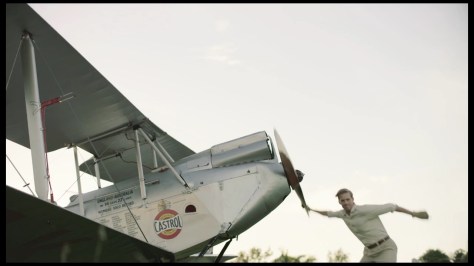
Earlier this year, one of Whalley’s newest films was once again a large success.  The actor played the leading character of Beverly Shepherd in the historical romance Jean. The film tells the story of Jean Batten, New Zealand’s greatest pilot, heroine, celebrity, and mystery. Beverly Shepherd is the romantic lead in the film. Beverly is a man with a strong moral backbone, a sense of fun for life and a determination to challenge for the things he wants in both affairs of his career and heart. Despite being the only son of wealthy Sydneysiders, he lacks the pretension of wealth. He can read people and knows instinctively if they are being untruthful. Independent and modern, he is attracted by Jean’s adventurous spirit and mystery. His greatest struggle is attempting to protect Jean from decisions that would put her in danger, only to have to accept that she isn’t someone who wants or needs protection. He knows he has to play a long game of love to not scare her away. Jean had lovers in her life, but Beverly is the one man who truly captures her heart. In the story, audiences see how headstrong Jean is with her life and career, and when Beverley sweeps in and shows her glimpses of recreation, fun and love, he innocently threatens her focus, creating Jean’s ultimate emotional conflict. Therefore, the filmmakers required a seasoned actor to play such a pivotal role in such an important story, and Whalley was the obvious choice, with the talent and passion to go with it.

JEAN 1 with Kate Eliot pic Ginnie Loane
Michael Whalley and Kate Elliot in Jean, photo by Ginnie Loane

“Especially in the past few years, it has been of growing importance to remind ourselves of the power women had in shaping the world. Too many films are one-sided in their portrayal of male heroes, and Jean was a heroine that defied the constraints of a male-driven world. The film, the first about Jean Batten, is a piece of entertainment, education and inspiration for New Zealand and the world to see. I had known of Jean Batten in the past, but this was a chance to see behind the tabloids and popular public image into the life of such a mysterious firebrand,” Whalley described.

After premiering earlier this year, the film has seen vast critical success. At the Film Awards New York 2017, Jean won an unprecedented nine awards, including “Best TV Movie” and “Best Drama Special”. These are immensely prestigious honors, as New York Festivals recognize only the best content from over 50 countries around the world. In addition, the film was successful commercially, airing on TVNZ, which reaches over 2 million people and has recently been acquired by distributor Banijay International for the ROW market. Such success could not have been possible without Whalley’s portrayal of Beverly.

“He brought a charm, wit and strength to the character of Beverly Shepherd that we could only imagine.” said the Producer and Writer of the film, Donna Malane.

Taking part in this period piece was enticing for Whalley, and as an actor he is always looking for new challenges and experiences to refine his talent. This story is set in the thirties, and Whalley researched the decade extensively to ensure he would completely transport audiences. Parts of this process were more fun than others, such as driving around an open top 1930s Model A Ford, and getting to know about the planes they were working with, which by a happy coincidence, were taught to Whalley by an old friend of his grandfather, Dennis. However, some parts of the preparation process were more grueling. Whalley had to take on the language, manner of speech and the classic nature of the period drama, and work to make that all ring true for his mouth, body and mind to create a genuine portrayal. To do this, Whalley infused his character with the parts of himself that fit best, which he tries to do for every role he can. This helps create an authenticity that captivates audiences, and what the actor is so well-known for.

Jean Ginnie Loane 2
Michael Whalley in Jean, photo by Ginnie Loane

Whalley says getting into the mindset of the time was made easier by the incredible costumes designed by Kirsty Cameron. As soon as he put on his gear, he felt clean, classic and upright. “Putting on my costume became a very important part of my morning ritual to get into Beverly’s shoes, literally,” he joked.

Improvisation also was a great tool for the actor when preparing for filming. During rehearsals with his co-star, Kate Elliott, they would have a series of improvisations around the scripted dialogue, which he says was a sure-fire way to find out what they knew or didn’t know about their characters and the world of the film. These exercises were helpful as the role of Beverly was a refreshing change for the actor, who often plays “punks and public nuisances”, and the character of Beverly is very dependable and ethical.

The actor also uses music frequently to prepare for roles. For Jean, Whalley made a playlist specific to what Beverly may have been listening to at the time, mixed with songs from Postmodern Jukebox to “get in the zone to play”, once again, similar to an athlete.

Undoubtedly, Jean is a must-see, and Whalley is enchanting in it, as he is so well-known to be. His passion for the story is evident, and his passion for what he does is even more so.

“This was a chance to act in an historical and important story in both New Zealand and International history. The true love of Jean Batten, at one point the world’s most famous and respected women. To play a character who had the charm, wit, intelligence and pilot skills to win the heart of the Lady that kept it locked away,” concluded Whalley.


Top photo by Ginnie Loane

BEHIND THE CAMERA AND THE SEA INSIDE

Back in 2004, when Juan Matias Ramos Mora received an invitation to be the Steadicam Operator on The Sea Inside, he had no idea that he would be part of an Academy Award-Winning film (the film received the Oscar for Best Foreign Film at the Academy Awards in 2005 and several European prizes in 2004 and 2005) as well as witness the evolution of an international star in the performance of Javier Bardem. If the truth be told, the only two factors that enticed Juan to join the film were his constant pursuit of challenging work and the opportunity to work with director Alejandro Aménabar. The tipping point in the career of artistic individuals like Juan Ramos often happen when it is the most unexpected and when accolades are not a factor in the equation. Now more than a decade later, The Sea Inside is just one of the many award-winning productions which Juan has worked on but it is possibly the one which delineates that point when many began to recognize his talent on an international scale. Recent series such as “Fear The Walking Dead” and “Mozart in the Jungle” display the eye and skillful camera work which brings a larger than life look to the small screen; one which Juan has used so many times on the big screen.

It is a common analogy but, pressure turns coal into a diamond; it can also refine professional skills. While Juan was already a respected camera operator prior to his work on the Oscar-Winning The Sea Inside, the experience of working with famed cinematographer Javier Aguirresarobe was both inspiring and challenging…in other words, pressure! Aguirresarobe is internationally recognized as one of the contemporary greats in cinematography. He has worked with the best camera operators and he expects the best. More than a decade ago, Juan admits that there were lessons for him to learn and Javier was a masterful teacher. Prior to The Sea Inside, the two had worked together on El milagro de P.tinto, which was the first film by Javier Fesser, a rather famous director in Spain. The fact that Javier wanted to work with Juan again speaks to his belief in the then young camera operator. Aguirresarobe comments, “As a cinematographer, I must sometimes rely on a Steadicam and Camera Operator for the crucial element of frame composition; it builds the visual narrative of the film and I must entrust it to someone who understands my vision, the director’s vision, and can deliver exactly what my critical eye demands. It’s not easy to find someone whom I can trust with this important role but Juan is one such professional. He has a keen eye for seeing things the way that I need them, even in very complex situations. When we were working together on Alejandro Amenabar’s Academy Award-Winning Film The Sea Inside, Juan was our Steadicam Operator. The complexity of the film would be a challenge for anyone and I am demanding as well. Juan delivered to perfection every time. Neither myself nor the director could have been more pleased with his incredible work on this film. I have worked with Juan on a number of films and he continuously brings this exemplary performance on all the productions he is a part of.”

The films’ director Alejandro Aménabar and Aguirresarobe work well together in part because they are both so discerning and scrutinizing.  Alejandro is a director who carefully picks out every tool he wants to use to tell the story. He’s young but he’s very classic in his language. His careful study of the greatest directors in film history has given him the perspective which created his reputation. Juan Ramos credits Aménabar with inspiring both panic and a call to greatness in his early career.

One of the unexpected pleasures and respite of his involvement in The Sea Inside was that it gave Juan the opportunity to work with Javier Bardem in one of his most important performances, and the one that would catapult him into international stardom. Juan recalls, “The extent of his preparation and dedication to the performance was pretty huge, which is why this role opened up so many opportunities for him. Watching such an actor at work was truly amazing. The only resource he had to convey in the movie was his face, and thus his performance. That means you have to be extremely precise. The camera has to be respectful of the internal process the actor goes through to get to those levels of interpretation. He was so immersed in the role that nothing really could go wrong. That made everyone in the film, who were already working at really high standards, deliver their best work. This ultimately meant that Bardem and Amenábar were the only ones in charge of bringing the character from one point in the story to another one. To see that depth of commitment was truly inspiring.”

The notoriety that the film and Juan’s work received opened numerous possibilities and productions for him both in his homeland of Spain and internationally. He was quickly invited to work on Jonathan Glazer’s first feature film, Sexy Beast, for which Ben Kingsley was nominated for Best Supporting Actor. More than a decade later as he looks back on his work on The Sea Inside and contemplates the most important lesson he learned, Juan confesses, “One of the things I realized was that this really young director was surrounding himself with the best people available, and that was a life lesson for me. There’s no better experience than working with people who know more than you and are more experienced than you.”