Category Archives: Reviews, Interviews & Features!

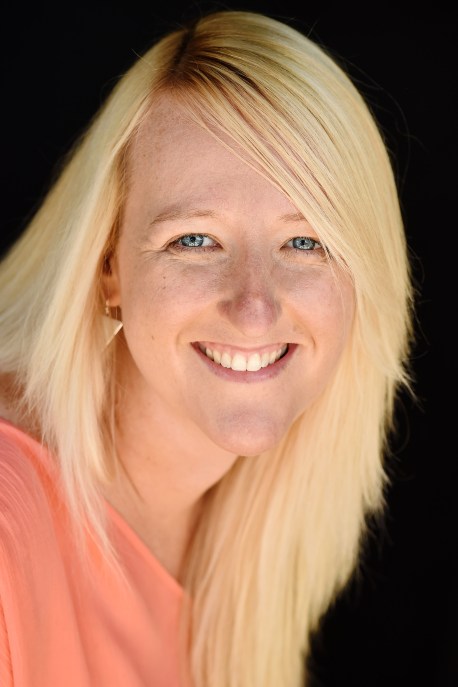
Award-winning actress Liane Grant shines on the Transatlantic stage & screen

liane 3
Actress Liane Grant

The prodigious talents of British actress, Liane Grant, seems to show no ends for she has received acclaim not only for her professional work in acting, directing, writing and producing on stage, but on the screen too; and on both sides of the Atlantic, no less. 

Recently Grant co-produced, wrote and played the lead role of Meredith in the American dystopian play, “Half Me, Half You”, which debuted at the Fresh Fruit Festival in New York in July 2018, and where Grant won the Outstanding Playwright Award. The hit production also led Grant’s costar, Jennifer Fouche, to earn the Outstanding Featured Performer Award.

“Acting is so much more skilled and complex, and uses so much brain power as well as heart and soul power, more so than I think many people realize,” said Grant, who has over 26 acting credits on stage and screen.

“It also forces me to be a better person because I’m constantly having to think about different stories and different kinds of people, and look at things from a multitude of perspectives.”

An alumnus of the prestigious Cambridge University in England, Grant also studied acting at the American Academy of Dramatic Arts (AADA) in New York for two years. In 2015 she co-founded her own production company, RoL’n Productions, through which she’s produced “Half Me, Half You”  and other acclaimed works.

RoL’n Productions focuses on providing opportunities for women in the arts and with an all-female cast, “Half Me, Half You”, which dramatizes issues of prejudice such as on race and gender, was no exception. Grant co-founded RoL’n Productions with Roxanne Lamendola, an American actress whom she met at AADA, the alma mater of some of the best actresses of their generation, from Lauren Bacall to Anne Bancroft of yesteryear, and Anne Hathaway and Jessica Chastain of today.

Taken-in-Marriage-poster
Poster for “Taken in Marriage”

However, Grant’s first theatre co-production for RoL’n Productions, the barbed comedy, “Taken in Marriage,” not only had an all-female cast but also linked her with yet another luminary of screen and stage, the three-time Oscar-winning actress Meryl Streep, as she performed in one of the lead roles of Andy, a part originated by Streep on Broadway in 1979.

“Working with so many talented women, knowing that we’d provided them with those opportunities to showcase their talents, was amazing,” said Grant, who ensured that seven production roles, in a variety of areas, were filled by women.

Grant co-produced “Taken in Marriage” in 2015 to be performed at the Waterloo East Theatre in London, England, with the sharp comedy focused on the character of the pretty and young Annie, as she sits in a basement on the eve of her wedding, surrounded by female family members, with long-lost feelings, frustrations and secrets on the verge of being revealed to much hilarity.

Liane Grant
Liane Grant in “Taken in Marriage”

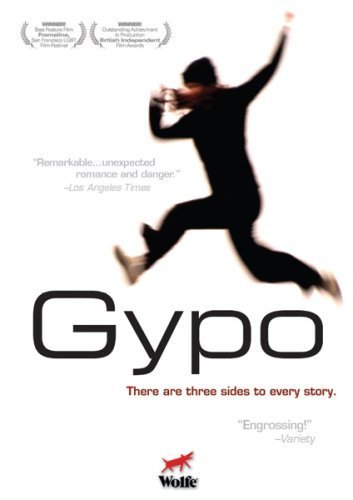
Grant’s debut in a feature film, “Gypo,” was in the UK in 2005, but it marked a strong start to her career, as the film not only won the British Independent Film Award for Best Achievement in Production but, more so, was directed by Jan Dunn, the multi-award-winning female auteur and one of the first British directors to be listed on the Hollywood Director’s List.

“Doing ‘Gypo’ was my first professional job, and my first feature film, and for that reason it will always be a standout project, let alone the amazing team of professionals I was able to work with,” said Grant, about her first professional role nearly fifteen years ago.

Grant plays a bully in “Gypo”, which charts the breakdown of a working class family in England, when the teenage daughter of a family befriends a refugee girl, with leading roles by actors Pauline McLynn, whose credits include Tom Cruise’s “Far & Away” and “Transformers: The Last Knight” and Paul McGann, who portrayed the iconic British character, Doctor Who, in 2013. 
Gypo
Film poster for “Gypo”

Moving seamlessly from stage to screen can be challenging for any actor, but for Grant, who has performed in four Shakespeare plays for theater in the US and the UK – including as a female Julius Caesar in an all-female production – her valuable training, skills and experience make the transition back and forth almost seamless.

“Theater is wholly unique because it allows for a direct and intimate relationship with the audience: even when you can’t see the under the stage lights, even when you are lost in your character and in the moment, you feel that connection and their presence in some way,” said Grant, who has performed at the famous Edinburgh Fringe and in England and New York.

“There is certainly an electricity, literally and metaphorically, when the camera is rolling, and screen work is exciting and alive in its own way, but they are very different processes: how you prepare the character may be exactly the same, but the process for that character to be brought to life is very different.”

It is an approach that stands Grant in good stead, as she prepares in 2020 for her latest on-screen role as the character, Stephanie Miles, in the new US television series “Emergency: LA” which focuses on fictional dramas based around the emergency services of Los Angeles’ fire, police and hospital services. 

“When I watched Julie Andrews in ‘The Sound of Music’, it changed my world: I didn’t just understand the magic of film but the magic of a performance speaking to you directly,” said Grant, who also starred in film, “The Parasite,” in 2016.

“So, honestly, my ultimate goal would be to make someone else feel the way Julie Andrews made me feel, to pay the gift forward.”


From Composing UEFA Anthems to Film Scores, Yohann Zveig’s Musical Genius

Yohann
French Composer Yohann Zveig

Whether it be the film scores and trailers that touch the hearts of audiences and create palpable emotion, or the anthems played at sporting events that energize stadium goers for the anticipated event, French composer and music producer Yohann Zveig is a master at creating compositions that enrapture fans around the world.

With its power to surpass language barriers, transform a listener’s emotional state and make a listener feel something, it’s no wonder that music plays such a massive role in film, something Yohann Zveig knows all about. Zveig has composed music for countless films including Sarah-Laure Estragnat’s film “Bleu comme la mère,” which took home the Prix Saint-Germain Award, the Best Family Short Film Award from the Los Angeles Olympus Film Festival and was selected for Cannes Film Festival’s Short Film Corner, “Honni soit qui mal y pense” with Sara Mortensen (“Contact”) and many more.

Zveig also recently produced, as well as composed the score for the films “Et Voilà!” starring multi-award winning French actor Moussa Maaskri (“Mondialito,” “22 Bullets”), Samuel Wizmane (“Le Môme”) and César Award nominee Sinclair (“The First Day of the Rest of Your Life”).

A comedy film that centers on a tyrannical boss who makes the lives of his employees a living hell, “Et Voilà!” was recently chosen as an Official Selection of the Paris Court Toujours Film Festival where it will screen later this month, and the C’est Pas La Taille Qui Compte Film Festival.

“As a composer, my role is to find the right tone between the emotion of the actor and the general mood of the film by creating this binder that is music. It is a very sensitive and precise work, one must never fall into excess and yet, we must bring something more,” explains Zveig.

“So many films go through the ages because they have a very strong musical identity, I could mention a dozen of them but the first one that comes to my mind is obviously the work of Ennio Moricone who left an incredible mark to the cinema of the twentieth century.”

Having collaborated with massive names in the industry including Disney, Visual Music, Position Music, RedCola, Glory Oath+Blood, Grooveworx, Dos Brains and more, Zveig is one of the rare individuals who has managed to turn their talent into an exuberantly successful career.

Growing up in France, Zveig immersed himself in music at a young age.

He recalls, “I couldn’t help myself from hitting everything I had at hand. My parents even reproached me for making too much noise in restaurants because I was unable to stay still. I took the cutlery and hit the glasses and plates.”

A skilled drummer, pianist and bassist, Zveig proved himself to be a musical prodigy at a young age when he was able to miraculously pick up instruments and without lessons, teach himself to play simply by ear.

“The percussions and drums were my first preferred instrument. I’ve always been attracted by rhythm and groove, and more generally by drummers. Then I played the piano for the melodies and harmony,” Zveig explains. “I had a musical ear and was able to play the tunes I could hear on the radio at our at home. After this, the fourth instrument I played was the bass, mostly on stage since I sang and played the bass together.”

The multi-talented musician first began singing and playing bass on stages across France with well known-musicians such as Mino Cinelu (Sting, Miles Davis, Stevie Wonder, Ray Charles), Vic Emerson (10 CC), Patrice Renson (Salif Keita, Vanessa Paradis, Mathieu Chedid) and Matthieu Chedid.

Whilst in his teens Zveig got his first computer, the Atari 520, a revolutionary moment in his life that allowed him to begin creating his own demos. From there, Zveig’s career unfolded at an incredible pace. His ability to create powerful, rhythmic and exciting compositions soon caught the attention of major sports franchises, such as the Union of European Football Associations (UEFA), which brought him on to create the famous anthem for the Europa League in 2009.

“I included strings, brass, choirs and a lot of percussions.The piece had to be recognizable, it had to be an anthem in its own right, and it had to go through the times and gather the fans in the stadium,” says Zveig.

Played in 185 countries around the world, as well as in commercials, Zveig’s UEFA Europa League anthem was played during all of the matches in the competition and it was the sound fans heard through the speakers as the players entered the field

He admits, “At each final the stadiums were full of 80,000 people. It was an incredible emotion, a crazy joy to hear so many people chant my anthem”

After composing for the UEFA Europa League Zveig went on to compose the anthem for the German Federation of Football aka Deutscher Fussball Bund, the biggest Football Association of Europe, and an associate of the UEFA. Another huge mark in his career, and one that was heard by fans across the world, Zveig’s anthem was the one that played when Germany won the FIFA World Cup in Brazil in 2014.

Though Zveig has achieved inimitable success composing anthems for sports teams around the world, his capacity to create music that help bring the stories within films to life and touch audiences on a deeper level is one of the aspects of his talent that makes him so unique.

“Overall I’ve been passionate about music and cinema forever,” explains Zveig. “Unconsciously I think I’ve always been attracted to film scores. For instance, I could go to the cinema to watch a movie only to listen to the score. I think I’ve listened to more than 300 films scores. I really love it.”

In 2016 Zveig earned a nomination for the Jury Prize from the Sundance Channel Shorts for his work as the composer on the French film “Premier Jour.” Directed by Yohann Charrin (“Ta Mort en Salopette”) and starring Luchon International Film Festival Award winner Thierry Neuvic (“Hereafter”) and Alain Figlarz (“The Bourne Identity”),“Premier Jour” also won the Silver Award from the Mindfield Film Festival Los Angeles, as well as Best Short from the Cognac Festival du Film Policier.

“I am convinced that some films would never have had the success they received from the public without the music they had… music is able to seek other emotions, stronger emotions, from people. Many theme songs are so recognizable and engraved that they will remain forever in people’s minds. I think this is the true talent of a composer,” admits Zveig. “Saying this, I immediately think of the score of ‘Back to the Future’ written by Alan Silvestri, which I adore and which carried me away… as much as the story in this movie. Just at the thought of it I have shivers down my spine. I am a big fan of American composers, I can not deny it.”

Inspired by the composer of yore, Zveig has become quite the inspirational composer himself and his work on films like “Half the Sky” aka “La Moitié du Ciel,” which earned numerous awards from the International Marrakech Film Festival, Tanger Film Festival, Tetouan Film Festival, Alexandria International Film Festival and more, are only the tip of the iceberg.

Recently Zveig composed the score for the rivetting horror film “Play or Die,” which was released earlier this year and directed by Jacques Kluger.

About composing for films, Zveig says, “The score of a film is there to emphasize, and I insist on the word emphasize, the emotions in a movie. At no time should the music be at odds with the dialogue or the acting of the actors.”

For “Play or Die,” which stars Charley Palmer Rothwell (“Darkest Hour”), Roxanne Mesquida (“Gossip Girl”) and Marie Zebukovic (“Interrail”), Zveig created a score that heightens the emotions and piques the audience’s anticipation at every turn.

“A horror movie is an alchemy between images and music. Yohann’s creation came to enrich my creation to make the film. What Yohann has created is an indispensable piece to the puzzle that constitutes the film. The music he imagined is very strong because it creates the chills and anxieties necessary for a good horror film,” explains “Play or Die” director Jacques Kluger.

“I wanted a music that supports the atmosphere and emotions that I wanted to create by the image. Yohann very quickly understood what I imagined and how to create a sound universe that enriches the images. We worked together in sharing to create a true entertainment experience.”

Zveig seems to live in the mode of ceaseless creation. Back in 2004 he founded the Paris-based music label and production company Boburst Productions, followed by the production company NJNL in 2016, which is based in Los Angeles. Over the past few years he’s composed and released several major albums including “Amsterdam Rhapsody,” “Bucharest Rhapsody,” “Dublin Rhapsody” and “Hamburg Rhapsody.”  Last year Zveig was tapped by Position Music in the U.S. to compose and produce the album “Darkwater.” With Position Music specializing in releasing music for trailers, Zveig went to work creating a thoroughly diverse album of 12 tracks where each song boasts a uniquely powerful rhythm using an array of instruments and emotive percussion.   

One of Zveig’s tracks off “Darkwater” was snatched up earlier this year to be used in the official trailer for the Lionsgate produced crime-thriller “Crypto” with Golden Globe nominated actor Kurt Russell and Luke Hemsworth from “Westworld.” 

Whether he is using his talent to convey the thrill of competition that fuels the hopes of eager footballers, or composing brilliant scores that help take the films he works on to the next level, Yohann Zveig is truly a rare breed of genius and he’s one that we can bet on hearing a lot more from for years to come.

Zveig says, “I’ve always loved creating melodies and themes from scratch, listening to my inspiration. Music is a bearer of emotions and this is precisely what I’ve always searched for in composing music– to feel strong emotions that I could give to people.”

The Common Thread of Great Films: Edward Line

Film editor Edward Line made his name editing commercials and music videos, working with award winning directors including Traktor, Matt Lambert, Paul Hunter, Jonas Akerlund and Lucy Tcherniak. A natural collaborator and storyteller it’s not surprising that his talent led him to cutting short films where he has continued to fine tune his craft. It’s a well-rounded career course which Line explains, “From years of cutting commercials and music videos, I have become very disciplined in how to tell stories efficiently and within a set duration. While these skills are transferable, working on short films has relieved me from editing to time restraints and allowed me to approach performances in different ways.  With short films, I’m always thinking of how an edit decision will affect the audience emotionally in a later scene, as character develops and stories unfold. This is true for commercials as well, but of course there is much more breadth in a short film which typically runs for 10-20 minutes, rather than a 30 second commercial.”

Confirming his affinity for narrative editing, Edward’s short film work has been selected and recognized at international film festivals including Tribeca, Sundance, BAFTA and The Academy Awards. Here’s a look at some of his favorite work.

The Counsellor – Hand

The Counselor 2

Not strictly a short film, but a notable promo film that showcased Edward’s sensibility for dialogue cutting.  The film was a collaboration with director Johnny Hardstaff and featured actors Michael Fassbender (Prometheus, Hunger) and Natalie Dormer (Game of Thrones) in a sexually charged scene that takes place in a lingerie store.  Edward subtly edited nuanced looks and dialogue to create a tension filled scene which left the audience asking questions, as intended by the filmmakers. This promo film was used by 20th Century Fox to market the release of Ridley Scott’s film The Counselor in 2013. He communicates, I really enjoyed editing this film. Apart from enjoying the first class performances from Michael and Natalie, the suspenseful and dreamy tone of the film was really appealing.  I enhanced this mood in the edit by paying close attention to the characters subtle eye movements and breathing, then hanging on these moments for longer than comfortable. During the edit, I added the ambient dream like soundtrack which further heightened the tension and atmosphere. When I showed the director my first cut he wasn’t expecting music, but he loved my music choice and it was included in the final film.”

St. Patrick’s Day 

St. Patrick's Day 1

In 2015 Edward teamed up with director Gary Shore to edit the film St. Patrick’s Day.  The film concerns a teacher who gets pregnant, with her doctor warning her, “we’re not certain with what.” It turns out to be (in a riff on the legend of st. Patrick expelling snakes from Ireland) a reptile, but her maternal love has no limits. The dark comedy was part of the “Holidays” anthology feature film and selected for the Tribeca film festival in 2016. Edwards relates, “I was keen to work with Gary Shore on a film after we had collaborated on two commercials in 2015.  Unlike the commercials, which were action packed and heavy in visual effects, this film is a pure narrative dark comedy. The film had over 12 scenes and included several nods to horror and comedy genres, which were fun to play with in the edit. These included creating a comical 1980s style documentary about the myth of St. Patrick. I edited this in a more literal ‘see-say’ style where the voiceover describes exactly what the images are doing, but in an exaggerated way. In the edit, we added a VHS video effect and traditional Irish music to add authenticity. We were so pleased with the resulting ‘mini-film’ that we used it for the opening scene.”

The Painters

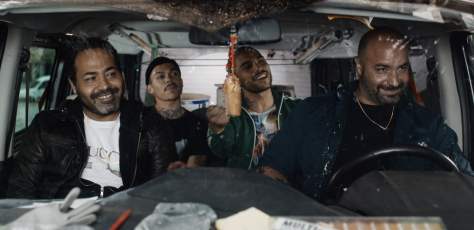
The Painters

In 2016 Edward teamed up with longtime collaborator and director Sam Larsson (of multi award-winning collective Traktor) to edit “The Painters”.  Edward recalls, “Sam and I worked together on my first commercial edit in 2011 and have collaborated numerous times since, so when he wrote his first short film it felt natural that we’d team up again.”

The short film follows four house painters who kill time in a parked van as they philosophize about life and recall anecdotes, revealing a glimpse of who they really are. The editor communicates, “This film was a dark comedy with some serious undertones and an editorial challenge being a pure dialogue piece that takes place in one location, inside a van. The success of the film relied heavily on my edit to keep it entertaining and it took some experimenting before we found the film’s rhythm. During the edit I wasn’t shy to cut lines from Sam’s script that we felt were not helping the story, and Sam was very open to my ideas and choices.  As ever with editing, it was important to cut in order to move the story forwards and for emotion, and this was a perfect film to test that theory.” Larrson notes his affinity for the professional partnership he has experienced with Line as he states, “I have always held held Ed Line in high regards for his professionalism and dedication ever since I started to work with him back in the mid 2000. Ed is a great collaborator and very adept at his craft. His intelligent story-telling and comedic instincts have made him a pleasure to work with on every job we have done together. His skills for sound design and broad musical knowledge are invaluable and elevate the films we have worked on. He has a profound dedication to each project and will often stay involved even after his defined role is complete. He is one of the first editors I turn to when I am crewing up for a project.”

The Painters was selected for L.A. Shorts Festival in 2019 and will continue to be seen on the festival circuit into 2020.

Wale

Wale1

Inspired by racial tensions in East London, “Wale” follows the story of an 18-year-old mobile mechanic, who learned his trade whilst serving time in a young offenders institution.  After his release, he attempts to get his business going after being hired by the mysterious character O’Brien.

The ongoing tone that permeates the film the story is one of suspense and masterfully achieved through a blend of the director’s vision and editor’s pacing. Edward’s influence is prominent from the opening montage of Wale in which the footage slows down, causing the image to ‘strobe’ as it repeats frames. This editorial technique helps to convey danger and unpredictability and sets the mood for the rest of the film.  Later, in the scene where Wale [the main character] goes to O’Brien’s house to discuss fixing his car; Edward identifies nuanced moments in the character’s performance and lingers on shots to cultivate an uneasy and mysterious tone. The editing is full of restraint in a key driving scene where Wale wrestles with many emotions as Edward holds the shots longer than one might think possible; allowing the audience to really feel Wale’s emotions and try to understand where his mind might be taking him. Edward magnanimously states, “sometimes not cutting is the best decision an editor can make.”

Director Barnaby Blackburn recalls, “Ed has an extraordinarily natural talent for storytelling. He is able to quickly grasp the vision of the filmmaker and translate it on to screen in addition to his innate understanding of the appropriate tone, pacing, and emotion for every film he works on. Ed is not afraid to experiment beyond the traditional norms of film editing, which continually makes for groundbreaking work that pushes the craft of editing, and filmmaking in a broader sense, forward.”

Wale was very well received and boasts an impressive festival run, winning the prestigious Grand Jury Award at Dances With Films and ‘Best Short Film’ at a further five festivals.  The culmination of its success came in being shortlisted for an Academy Award (Oscar) and subsequently being nominated for a BAFTA in the ‘Best Short Film’ category.

The success of the film points to the strength of the relationship between Director Barnaby Blackburn and Edward who have forged a strong working relationship.  As such, they collaborated again in 2019 and completed another short film Dad Was’. This film follows the story of Mattie, an eight –year-old boy as he gives the eulogy at his father’s funeral. The production reunited many of those who worked on ‘Wale’ and will be submitted to festivals in 2020.

Edward Line 5

(Editor Edward Line at work)


Alice Del Corso’s Novel “Magnolia Hearts On Fire: Vol 1” Becomes Award-Winning Film

Magnolia
Film Poster for “Magnolia: Hearts on Fire Vol. 1”

When it was published in Italy in November 2018, “Magnolia: Hearts on Fire Vol. 1” was undoubtedly a runaway success novel for its author, Alice Del Corso, but it was her proficient skills as a screenwriter that led the source material to be transformed into a multi-award winning film.

Resting on Del Corso’s penmanship of the triumphant novel and its successful transfer to the cinema screen, the film version of “Magnolia” won the Best Short Awards at the Rolling Ideas, Etna, Via dei Corti, Couch and The Monthly Film Festivals, as well as the Best Short Awards at the Crown Wood and Creation International Film Festivals. 

“I was living in London when I started to imagine this girl; her past, her dreams, but I had no time to write that story so I just paused it, waiting for a better moment to write it,” said Del Corso, whose industrious film career has included being a story editor and script doctor in the UK.

“That moment came three years later and it is a story that really made me feel so many emotions that I will always carry it in my heart.”

Hailing from Tuscany, Italy Del Corso has established an internationally acclaimed career as a screenwriter through her work on lauded films, such as “Inside,” “Apeiron, “Suspensum,” and “Alba,” for which she has remarkably already won eight awards and two nominations. 

In addition to her awards for “Magnolia,” Del Corso’s accolades for screenwriting for “Apeiron” have included winning the Best Short Film Award at the Hollywood Film Competition and Los Angeles CineFest, Best Drama Short Award at the Hollywood International Moving Pictures Film Festival,  Diamond Award Winner at the International Independent Film Awards, the Best of the Year Award at the Gold Movie Awards, as well as nominations at the Depth of Field International Film Festival Competition.

“I can say that I’ve always been writing stories,” said Del Corso, who has enjoyed critical praise for her work since her 20’s. “I had a journal where I used to try my ‘writing experiments,’ as I called them: some poems, ideas, dialogues of some characters I had imagined; everything that popped into my mind.” 

Taking nearly two years to complete, Del Corso’s 520-page book of “Magnolia” focuses on the romance, and subsequent drama, between Elise Sodderland, a raven-haired troubled young woman who has fled Glasgow to come to London after something terrible happens, and Colin Knight, a famous English entrepreneur.

“When I’m writing a story, I primarily follow the characters, their space inside the plot, their needs and goals, giving them priority above everything else,” said Del Corso. “I think that the only way to have a story that feels true is to create characters so real that it’s like knowing someone intimately.”

A quick hit in Italy, “Magnolia” regularly sells around 700 copies a month, a very significant number for the Italian market and a fitting testament to Del Corso’s highly-consummate writing.

Released in November 2018, the film version of “Magnolia” was directed by Del Corso’s husband, Philip Thomas Morelli, through their joint company, Castle View Studio, which they founded in 2013. In addition to garnering numerous awards, “Magnolia” earned Morelli a nomination for the Best Director Award at the 2020 Mabig Film Festival, which will take place next year. 

“In the film, we see the key moments of Elise’s life,” said Del Corso, about the film which has also received several nominations such as Best Director, Actor, Actress and Directing for the 2020 Mabig Film Festival as part of its official selection.

 “Her past, her fears, and also the moment that will change her life which is her first meeting with Colin, the male character of this story.”

“Magnolia” stars two Italian actors as its two romantic leads: Sara Matteucci, who has starred in the film “Love 14” and TV series “Sketch Up,” and whose character for the film is listed as Magnolia Queen; and Amedeo Andreozzi, who stars in the film “99.9%” and the TV series “Don Matteo”, who plays Colin.

Matteucci has been nominated for the Best Lead Actress Role for “Magnolia” at the 2020 Mabig Film Festival, whilst Rocco Fasano of “Skam Italia’ fame has been nominated for the Best Lead Actor for his portrayal of the lead antagonist, Ryan Mcneal. 

“Alice is the sweetest human being and a very talented writer: she has an immense inner world which very generously opens up to the audience,” said Fasano, who was also the lead male actor in Del Corso’s award-winning sci-fi film “Apeiron.”

“She’s proven herself capable of dealing elegantly with human emotions as well as with the design of different universes… she’s sensitive and her narrations are beautifully structured.”

In February 2019, Del Corso commenced writing her second novel, “Blossom,” and the sequel of “Magnolia” is scheduled to reach the silver screen in 2020, in which Fasano will once again take on a leading role.

Del Corso is also set to begin production on her Hollywood cinematic debut with the upcoming feature film “Memoria,” which is slated to begin filming in Atlanta, Georgia and will be directed by Morelli.

“We signed with an executive production company in Hollywood and we have a famous American actor attached to the project in the leading role, who really loved the story,” said Del Corso, who has written both the story and 125-page screenplay for the project.

“Unfortunately, we cannot reveal anything else at the moment.”


Xin Yi on finding her passion as 3D Artist

IMG_2032_1Growing up in China, Xin Yi always had a passion for drawing, but always considered it to be a hobby rather than a career. However, when she first saw the Pixar hit Up, everything began to change. She was instantly attracted to the stunning animation, with its fresh style, characters, and colors, with a beautiful story to tell. She immediately began envisioning creating similar content one day, combining her passion for the arts with her desire to tell stories. That was when she began considering a career in animation and visual effects, and the rest, as they say, is history.
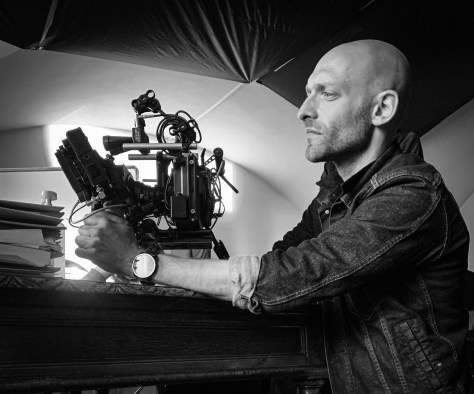
Yi is now a 3D Artist, creating beautiful effects, animations, and motion graphics that have been enjoyed by millions across the globe. A 3D Generalist does a little bit of everything, whether it’s making 3D objects, texturing, shading, lighting or rigging, which is like setting up the controls to prepare them for animation. However, Yi dedicates most of her time making 3D images look as realistic as she can using those skills and techniques.

“It is really exciting for me to have the opportunity to work with some amazing artists and use my skills to bring 3D to life. I also enjoy working with and learning from the best artists in the industry. I can learn a ton just by listening to them talk,” she said. “I really want to use my skills to tell stories and becoming a 3D Artist made my dream come true.”

Yi is known for a plethora of hit projects, including trailers for the video game Rocket League, the World of Warcraft Arena World Championship, NFL Redzone, Black Lightning, Call of Duty Black Ops 4 and Black Ops III, and many more. Every project she takes on is different, and no two days are the same.

“I face challenges almost every single day and that’s why I love what I do. It helps me learn something new every day and improve my skills. I enjoy the process of solving problems. Sometimes, of course, it can be frustrating, but just by thinking of the things that I am going to create makes it amazing. All the tiny learning pains go away, and all of the patience comes back. No matter how difficult I feel it is, I just keep in mind that I am going to make it,” she said.

Yi encourages anyone looking to get into visual effects to learn something new every day and set small goals. She used to write down her daily goals on stickers and in notebooks. This helped her maintain focus and continue to refine her skills, which she attributes to her quick growth in the industry.

“I’ve met many artists who are afraid to show people what they are doing. They think that they are not good enough or people are not going to like what they’ve created. Many times, I personally think their art is truly amazing. In my own opinion, I’ve never felt like I am super good at one thing either, but the goal is to be good at many things eventually. Everybody has different tastes; some people will like your work and others won’t. I often try to find many useful methods to improve myself so that next time when I am making a similar thing it will be even better. Just by imagining the next time, I am already happy,” she said.

Yi made it to where she is today by putting herself out there and listening to her mentors’ opinions and advice, even if she didn’t initially believe in it. Even when she doubted herself, the guidance of others pushed her to keep going. Everybody has different ways to feel motivated and finding what works for you is key.

“I originally realized that I wanted to get into art by reading and listening to fairy tales. All of the little creatures started to form in my brain, and I would just draw the little creature out or make some 3D models of them. I like to see a lot of stunning art from others, whether in the form of films, books, or paintings, etc. So, for me, I always like to check out other artists’ work and find it important in helping me grow as my own artist. There is so much amazing art in different mediums all around us. Just by looking at them I find motivation,” she concluded.


By John Susnik

Cinematographer Xavier Dolléans alternates between French primetime TV and Disruptive Digital

Cinematographer Xavier Dolléans
Cinematographer Xavier Dolléans on set of “Mental” shot by Thomas Gros

Internationally lauded French cinematographer Xavier Dolléans, who earned the Jury Award for Best Cinematography at the Slum Film Festival for his work on the film “Animal,” is no stranger to the technical intricacies of top-tier filmmaking. 

Dolléans, a proven master behind the lens, is the cinematographer responsible for shooting the first four seasons of “Skam France,” the largest global adaptation of the Norwegian teen drama, as well as the show’s upcoming fifth and sixth season.

As a cinematographer, versatility is one of his seasoned and sought after strengths, so it’s not at all surprising that he followed up “Skam France” by shooting two very different projects. After the first two seasons of “Skam France,” Dolléans came on board as the cinematographer behind the hit series “Red Shadows” (“Les Ombres Rouge”), which was broadcast during primetime on France’s C8, as well as the psychological youth drama “Mental,” which streams on the disruptive digital platform Slash TV owned by state broadcaster, France TV. 

“Red Shadows was a primetime show with a great cast, a very experienced director and big sets,” said Dolléans, who has won numerous awards for his work as a cinematographer. “I’m particularly happy with a party sequence where we had to reconstruct a full club with all the lights and sets as the whole crew did an amazing job, rigging and programing everything the way I wanted it to be.”

While “Red Shadows” was aimed at peak-viewing French TV and “Mental” was a purely digital content production aimed at modern viewers, the seasoned cinematographer navigated the differing productions with ease. Dolléans has built a formidable cinematography repertoire. For every project he takes on, he steps into the role as the leader of the entire camera department, and as such he is the one on set responsible for the art of photography and visual storytelling, including all of the on-screen visual elements from lighting and framing to camera angles and color palette.

With over 50 credits under his belt as a renowned director of photography, the most recent accolades in Dolléans’ 15-year career include winning the Best Cinematography Prize for “Rocambolesque” and “Animal” and at the Warsaw and Slum Film Festivals, and having his high-caliber work as the cinematographer behind the film “Ames Soeurs” featured at the prestigious Cannes Film Festival.

Dolléans’ vast skills and expansive experience in the field of cinematography allow him to be professionally ambidextrous in the projects he contributes to, allowing him to efficiently and effectively change gears from the big-budget series “Red Shadows” to more intimate productions like “Mental.”

“‘Mental’ was very different from ‘Red Shadows, as first of all, everything takes place inside the same building, the hospital,” said Dolléans. “Out of the 25 days of principal photography, 22 days were shot inside this place, with so many sets located inside it as well.”

Xavier Dolléans
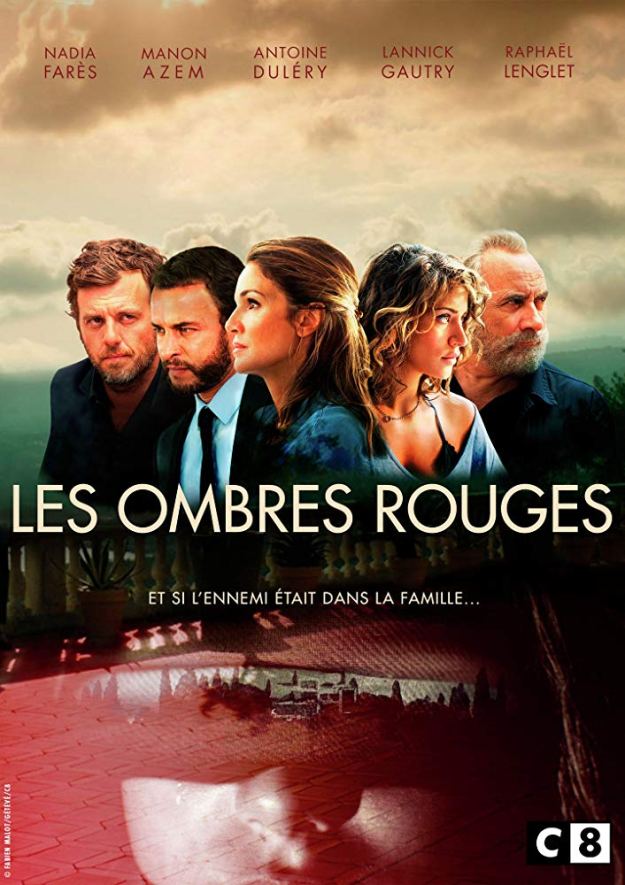
Poster for “Red Shadows” aka “Les Ombres Rouges”

Broadcast in 2019 with all six episodes expertly shot by Dolléans, “Red Shadows” is a crime drama that tells the story of Aurore Garnier, played by French actress Nadia Farès, a policewoman who searches for the truth after she discovers new clues about the disappearance of her five-year old sister in 1993.

Dolléans was hired on the show by Alban Etienne, the CEO of Banijay Studios France, a subsidiary of the Banijay Group, the world’s largest independent content producer in the world with revenues of around USD $1 billion. Etienne had previously worked with Dolléans on the first two seasons of “Skam France.” 

Despite “Red Shadows” being set in the famously vibrant region of Côte d’Azur region of France, Dolléans’ color palette for lensing the show was, in fact, decidedly absent of vibrant colors. 

“The show was set in the south of France, between Marseille and Aix-en-Provence… we absolutely wanted to avoid all clichés, meaning no big sun with blue sky,” said Dolléans. “We were actually at the opposite end, with a lot of darkness, and a harsh and inhospitable sun:  no red at all, but a lot of browns, dark greens and metallic blue skies.”

Despite the expansiveness of the vision of the series, and the resources and budget to match it, challenges arouse around capturing this on screen, but Dolléans’ work bears testimony to his highly-esteemed skills behind the camera.

He explains, “On this show, we had so many locations that it was very challenging to be ready in terms of the preparation time for each of them… Also, the weather was a big concern, we had a lot of rain during the first weeks and then a lot of wind that prevented us from using use butterfly and frame diffusions outside, as we originally planned.”

Despite the challenges though, Dolléans nailed his mark, endowing the series with a masterful visual language, just as the director had envisioned. 

In contrast, the upcoming series “Mental,” which follows four teenagers in a psychiatric hospital and consists of 10 episodes, allowed Dolléans’ a bit more freedom to innovate and exercise his exemplary camerawork due to the fact that the consistent nature of the set.

“I like working differently on every show. On ‘Mental’ I used the camera with an extension module that allowed me to detach the sensor and to be very lightweight. This configuration gave me the ability to be with the actor, very close, to move intuitively and to improvise a lot with them and with the director. It was interesting to shoot it this way,” explained Dolléans.

Xavier Dolléans
Xavier Dolléans on set of “Mental” shot by Thomas Gros

Though “Mental” has yet to be released, the series has already begun garnering awards, including the 21st La Rochelle Fiction TV Festival’s Best Series Award in the 26-minute category. Dolléans was recommended to join “Mental” after a headhunt from France TV, which also saw him team up with a previous collaborator from his previous four seasons on “Skam France.”

“On ‘Mental,’ we worked very closely with the production designer Edwige Le Carquet, who I know from my past collaborations on Skam France seasons one through four, to get a very distinctive look for this show,” said Dolléans. “We worked a lot during preparation time to define the color palette, which is fundamental for me when we want to set a look.”

Dolléans, who was key in the film “Speed/Dating” winning the Best Short Award at the Alpe D’Huez Film Festival in 2017, ensured the cinematic production value of  the series“Mental” by utilizing cameras on the set that are typically used for feature films.

 “In terms of equipment, I used the Sony Venice camera again after ‘Skam France,’ as I like it a lot for its perfect color rendition and its ability to go very deep in low lights,” said Dolléans. 

Following the highly anticipated release of the series “Mental,” Dolléans is slated to begin shooting the fifth season of the praised series “Skam France,” the first time the series, which has become a global phenomenon, will have original content separate from its Norwegian counterparts. He has also been tapped as the cinematographer for a new documentary film drama centered on the world-famous opera house in Paris, the Palais Garnier.

 “It’s a very interesting project about the Opéra Garnier’s creation and all the inventiveness and tenacity of Charles Garnier, its architect, during its construction,” said Dolléans about the elegant building commissioned by Emperor Napoleon III in France’s capital from 1861 to 1875.

 “I want to continue to work in the fiction world, as it is the place where I like expressing my sensitivity most,” adds Dolléans. “In my career, I hope to achieve many beautiful and important feature films… By important movies, I envision those with a universal scope that touches every person. I need to feel that my work has an impact in the everyday lives of people .”


An Empathetic Approach to Filmmaking with Producer Summer Xinlei Yang

Screen Shot 2020-01-15 at 6.21.35 AM

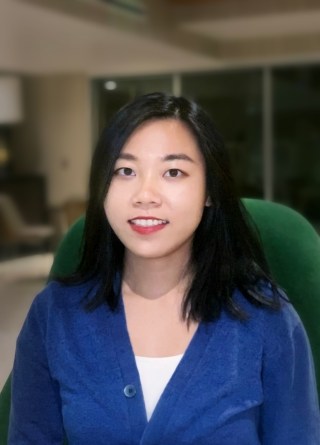
Producer Summer Xinlei Yang appears to have the golden touch when it comes to filmmaking. There are equal portions of passion and commitment applied to her work, the results of which speak for themselves. Her films repeatedly become Official Selections of Academy Award Qualifying Festivals and are met with overwhelmingly enthusiastic responses from the audiences who view them. As with anyone in the film industry, success is met when talent chooses the stories that they are most suited to tell. These days, Hollywood is discovering more than ever that certain individuals are perfectly suited to tell a certain kind of story. For Xinlei, this often means the tales of people involved in multicultural situations. As a native of China who has experienced success in both her home country and the US, Summer always finds the connective tissue of her experiences and that of the characters in the lauded films she has worked on.

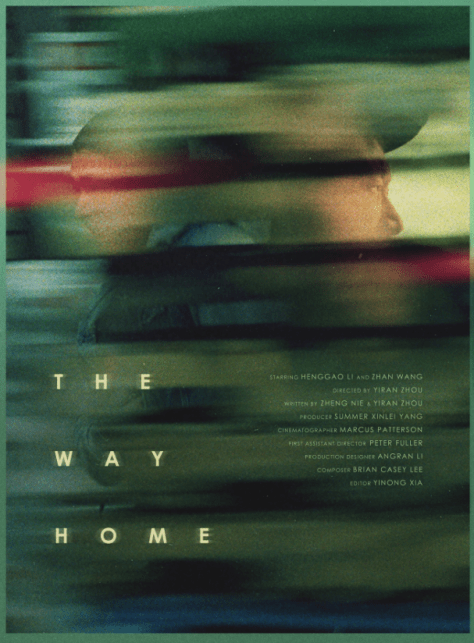
The Way Home is director Yiran Zhou’s heart wrenching tale of the modern day immigrant and an Official Selection at Academy Qualifying Film Festivals, including the 35th Santa Barbara International Film Festival, the 10th BronzeLens Film Festival, and winner of the International Vision Award at the Flickers’ Rhode Island International Film Festival. The Way Home is the story of two immigrants; 18-year-old Chinese-American Jimmy who seizes the opportunity to prove himself to a Chinatown hooligan and thirty-year-old Haiyang who followed a Coyote through the US-Mexican border years ago while his younger brother [Bin] fell ill. As Jimmy and Haiyang venture toward their own goals, it becomes clear that there is a very high price to pay. The film intimately follows them on their emotional, physical, and moral journeys, providing a timely exploration of family, identity, and sacrifice. The story was inspired by the director’s acquaintance with some Chinese factory workers in a Chinese food warehouse. Most of the employees at the establishment worked ninety hours or more per week. Contrasting the misconception that they were looking for a free ride, these workers came to America for the opportunity to make money to send home and support their loved ones. The film’s producer informs, “This story is about two different generations of Chinese immigrants is relevant and meaningful for the director and I as we are both from China. From the beginning of creating this story, both of us were adamant that the film should have a retrospective and dark tone to show the gap between the reality and immigrants’ American Dreams.” The Way Home was also selected by the 22nd Shanghai International Film Festival for its longest running competition, the Golden Goblet Award.

Xinlei worked with director Angela Chen on the film Our Home Here which was an Official Selection of the 22nd Reel Sisters of the Diaspora Film Festival (Past winners and attendees include Oscar nominated actress Rosie Perez; Emmy nominee JT Takagi; Sundance Film Festival nominee Terence Nance; Golden Globes and Emmy nominee Issa Rae, Ebony Jo-Ann, Screen Actors Guild Awards nominee Margot Bingham). This story centers around four individuals in a Texas city; nineteen-year-old Dylan, his older sister Rose, fourty-three-year-old fast-food worker Celine, and a twenty-one-year-old addict named Sean. Unbeknownst to these four, their lives will soon come together in a violent clash at the Sunny Meals drive-thru when Sean’s drug-bender takes a sinister turn, forever changing the trajectories of their lives, their careers, and their relationships. The film explores the desires for control, identity and family, as we intimately follow these characters during the day leading up to the incident. Although the story takes place in Texas, the actual filming location was in Los Angeles.

An even darker tale is found in the film When the Shadow Falls which Summer produced for director Jeseung Woo. After witnessing the suicide of a stranger, a woman named Jane becomes overwhelmingly haunted by the question of whether she could have done anything to help. Inspired by the director’s actual witnessing of a stranger’s suicide in Seoul, the subject matter hearkens back to the idea of many of Summer’s films which asks, “What is the pain that other’s experience which I am unaware of and how would this knowledge allow me to change my view of them?”

Screen Shot 2020-01-15 at 6.23.04 AM

If there is one unifying thread here, it is empathy. Film may be the most powerful tool in helping society feel what goes overlooked in the challenges of its members. To this end, filmmakers like Summer Xinlei and her peers offer the most benevolent choices for us all. The producer plans on maximizing this with her talent on an upcoming project, the documentary feature tentatively titled Frozen Fertility. She relates, “Soon after I decided to make a documentary about reproductive rights for women in China, a director friend of mine forwarded me the news of Teresa Xu, a women rights activist who hopes to freeze her eggs while she works to save money for a future family. Since China bars single women from the procedure, she decided to mount China’s first legal challenge of a law that limits fertility treatments to married couples only. I was so excited when I saw the news, and right away I reached out to her lawyer and herself about my documentary. Our shared understanding and first-hand experience with the subject immediately led her to agree to join our documentary filming. We were able to capture her story of going through the court and facing both local and international media. Her unique story appeared just as I was looking for subjects for my documentary feels like fate. I am just following my heart. The minute I saw the news I thought ‘I must take action now to film this significant moment.’ Summer is prompting all of us to take action with the incredible films she produces.

Composer Weijun Chen creates stunning chamber piece ‘Dancer’

Elegant, beautiful, and meticulously crafted. These are the most common adjectives listeners use to describe Weijun Chen’s work. As an industry-leading Chinese classical composer, he combines unique harmonic and orchestration sensibilities to create stunning pieces of music. His musical persona has been influenced by many aspects of his interests, surroundings, and diverse upbringing. His music is not meant to represent any particular musical style, but he is able to speak for his own musical identity.

“On the one hand, I grew up listening to Chinese vernacular music of the 90s. On the other hand, I was trained rigorously in Western classical music idiom, during which I developed strong interests in Renaissance music, late 19th-century Romanticism, Impressionism, contemporary music, and multimedia. However, rather than aligning myself with a particular style, or forcefully combining different styles, I simply allow my intuition to take over, and express my multitude of influences in a genuine and organic manner,” said Chen.

Throughout his esteemed career, Chen has continuously demonstrated his superb musical capabilities to audiences all around the world. His compositions, such as Watercolors, Three Earlier Songs, and Canoe tell pointed stories through beautiful melodies that evoke untold emotions to their listeners, all while playing at prestigious music festivals and venues.

One such music festival was the 2016 MATA Festival of New Music. MATA is one of the most renowned new music festivals in the world, taking place annually in New York City. Chen was chosen out of 1,156 submissions that year for the chamber version of his piece Dancer. The artist director of MATA was Du Yun at the time, a Pulitzer-Prize winner. The piece was performed by Ensemble Linea, a leading new music ensemble based in France, conducted by Jean-Philippe Wurtz. The performance took place at the National Sawdust in Brooklyn, NY. Chen received a positive review from MusicalAmerica after the premiere. It then went on to the 2016 “June in Buffalo” Festival and was performed by Ensemble Dal Niente, a leading new music group based in Chicago, conducted by Michael Lewanski and the 2018 University of South Florida New-Music Festival & Symposium, performed by the USF New Music Consortium, conducted by Matthew Kennedy.

Dancer is a difficult piece to write and even more difficult to play for the ensemble, as the detailed rhythmic notations and complex harmonic sonorities require both individual virtuosic playing as well as a high level of ensemble work. I definitely breathed a sigh of relief after the successful premiere and was grateful for Maestro JP and the musicians of Ensemble Linea,” said Chen. “It was an honor to be featured at the MATA Festival and to meet their artistic director, Du Yun. Surrounded by more than a dozen of the world’s most talented young composers and hearing everyone’s music was both humbling and eye-opening. Each one of us showcases a strong, original, and unique musical voice, that collectively shows a diverse and vibrant contemporary music scene today.”

Dancer for chamber ensemble (flute, clarinet, piano, violin, and cello) is written in four sections. The opening section features a series of scales that overlap on top of each other, creating slow harmonic movement. The second section features a prominent melody that resembles passionate Spanish dance, although the melodic line quickly starts to break down and the texture becomes increasingly erratic. This leads to the third section: It is fast and energetic, with a strong pulse in the background. After reaching the climactic point, the last section returns to the slow tempo of the opening section, although it features a much more somber tone. The scale returns as well, albeit in the form of one long and continuous descent that spans the entire section.

It took Chen over six months to write Dancer. It was a challenging project on a technical level, due to the intentional restrictive use of the materials (scales only) as well as the instrumentation itself. The quintet of flute, clarinet, piano, violin, and cello, known as the Pierrot ensemble in contemporary music, is difficult to blend and balance due to the vastly different sound quality of each instrument, according to Chen. However, these two challenges complement each other, and the distinctive color of each individual instrument crystallizes the contrapuntal development of the otherwise limited musical materials.

“This piece reflects on the moment when technique becomes art. Growing up as a child pianist, I plodded through endless scalar exercises, passing the time by imagining my fingers as dancers gliding across the keyboard. Scales, sometimes embellished, sometimes transparent, form the musical fabric of the work, which consciously tries not to evoke keyboard exercises, instead seeking an elegance beneath its technically complicated surface,” he said.

After the success of the chamber version of Dancer, Chen decided to write it for an orchestra as well. The orchestral version received great praise, and demonstrates both Chen’s vast musical knowledge, and also his versatility. Undoubtedly, he is a force to be reckoned with as a classical composer, and we can expect to hear many more beautiful compositions from him in the years to come.

“The art of composition goes beyond a pencil and pieces of paper. Live life to the fullest: go on adventures, embrace nature, and explore cultures, all of which enrich your creative life. Of course, never stop learning and perfecting your craft. Seek mentors in and out of schools, and find music communities around you. Know and love the repertoire! Listen and study the music composed by the masters of the past as well as present. Listen to music of all genres and go to concerts as often as you can,” he advised. “Concert music is meant to be experienced live, and you can also meet your fellow composers, conductors, and musicians there.”

With those wise words for those looking to follow in his footsteps, be sure to keep an eye (and ear) out for Chen’s future works.

Filmmaking Team Philip Morelli and Alice Del Corso Behind the Upcoming Film “Memoria”

"Memoria"
Film Poster for “Memoria”

Italian filmmakers Philip Morelli and Alice Del Corso are creating quite a buzz with news of their upcoming sci-fi feature film “Memoria,” which is slated to begin shooting in Atlanta, GA next year.

With Philip as the director and Alice as the screenwriter behind all of their joint projects, the duo, who happen to be married, have carved out a strong reputation for delivering award-winning work, such as the multi-award winning films “Magnolia: Hearts on Fire Vol. 1” and “Apeiron.” 

Taking place 20 years in the future, “Memoria” depicts an emotionless society where drastic changes in human evolution resulting from Memoria’s technology have further compounded the   ethnic and socioeconomic divide between people on earth. “Memoria” brings to the screen a relatable and foreshadowing story of the far-reaching effects of technology gone wrong, one where a new and innovative technology that could have been used to improve people’s lives and cure illnesses has instead been used to increase the money gap and further divide people.

Philip and Alice initially found their inspiration for “Memoria” after reading a 2017 article about a brain technology that could expand human intelligence and provide the possibility to upload and download data through the cloud. 

“We started to think about all the implications that this technology could have in real life, and that’s where it all started,” says Alice. 

The buzz the highly-anticipated film “Memoria” has been earning around the globe is due in part to the couple’s previous success in the genre. Back in 2015 Philip directed the sci-fi film “Apeiron,” which Alice wrote the screenplay for; and their joint efforts garnered extensive international praise. The brilliant sci-fi film depicts a highly cinematic post-apocalyptic story that took audiences and festival judges by storm, with “Apeiron” earning numerous awards including the Best of the Year Award from the Gold Movie Awards, Best Short Award from the Hollywood Film Competition, Best Trailer Award from the International Independent Film Awards, Best Drama Short Award from the Hollywood International Moving Pictures Film Festival, the Best Short Awards from both the 2017 and 2019 editions of  Los Angeles CineFest, and more. We need not look further than “Apeiron” to see just how effectively Philip and Alice can bring a powerful sci-fi story to the screen. 

“Apeiron” lead actress Beatrice Gattai (“Wedding in Rome”) says, “Alice’s writing and Filippo’s visions are something most could only wish to aim at. They are a truly inspiring artistic couple. They are a great team. She has the imagination and he has the sensitivity to understand and bring to life what she had imagined… The stories they create are mind blowing.”

Img_5
Philip Morelli on set of “Apeiron” shot by Donatello Gradassi

Though their previous success has undoubtedly given Philip and Alice a strong foundation to stand upon as a filmmaking team, what they have come up with for “Memoria” is unique, relevant and appealing on its own.

“Technology has really changed lives in a better way, but every progress brings some light and some darkness with it,” says Philip. “With Memoria I want to go deep and bring all these aspects to the light, in the most real way, as it could happen tomorrow. I want to connect with the audience, give them a close look at the characters, then going close-up in the suburbs and extreme wide in the city. My characters have real issues, so I will shoot in 35 mm to bring these feelings out in the light.”

With Philip and Alice behind the film “Memoria,” the film is assured to be a flawless production and surefire hit with audiences. Last year the duo turned heads with their award-winning film “Magnolia: Hearts on Fire Vol. 1,” which starred Rocco Fasano (“Tender Eyes,” “SKAM Italia”), Amedeo Andreozzi (“Don Matteo”) and Sara Matteucci (“Sketch Up,” “Love 14”).

Rocco Fasano, who plays the villain in the film, says “Working with [Philip and Alice] was an absolutely beautiful, enriching experience. They work as a couple and they work as a team, and they manage to deliver an idea in a clean, rational, straight forward way, and they give so much room for you as an actor.”

Based on Alice’s novel of the same name, “Magnolia: Hearts on Fire Vol. 1” is a uniquely crafted romance film that follows Elise, a young woman who desperately tries to escape her traumatic past by changing her name and moving to London. Viewers are led into Alice’s life through a series of flashbacks that reveal her past and her first encounter with Colin, a man that would forever change her life; with the overall message of the story begging the question of whether the very thing one is running from is in fact, the only thing that can make them happy in the end.

Turning Alice’s engaging novel into the screenplay for the first in a series of “Magnolia” films that the couple intend to make, Philip drew upon his expansive creativity and took a unique approach with his direction for “Magnolia: Hearts on Fire Vol. 1.”

“Being that this a romance, I tried to do something completely different from my usual style. Longer takes in order to spend more time with the characters and catch their emotions, which also gave the audience some time to feel each shot,” Philip explains. 

“I played a lot with silhouettes, making them more evocative and I used slow motion to emphasize the dramatic parts of the story. Mixing all of these techniques I tried to show the love between Elise and Colin, without hiding the sadness that sometimes we feel in the plot.”

Alice Del Corso and Philip Morelli

One of the things that makes Philip and Alice such a cutting edge team is their desire to stay ahead of the curve and infuse their work with innovative techniques. A prime example is the scene in “Magnolia: Hearts of Fire Vol 1” where they captured ink in water in motion. 

“In Magnolia there’s a lot that happens on the outside, but there’s also a lot that happens on the inside, in the subconscious, and I wanted to represent this with water,” explains Philip. “I used this technique that involves a particular ink which has a density that makes it move in slow motion without the need to use a high-frame rate in the camera. I used it both for the quotes that represent Elise’s thoughts, and also for a real book copy that I submerged in a tank.”

Released in 2018, “Magnolia: Hearts of Fire Vol 1” earned astonishing praise throughout the industry with the film taking home numerous awards from festivals earlier this year, including the Crown Wood International Film Festival, Creation International Film Festival, Via dei Corti, TMFF Film Festival, Rolling Ideas, Etna Film Festival, Couch Film Festival and more. The film has also been chosen as an Official Selection of the 2020 Mabig Film Festival, where it has been nominated for several awards including Best Directing, Best Actor, Best Actress and Best Editing.

They prepare everything from the smallest details, and they always make each crew member feel comfortable,” says Lorenzo Costagliola, the cinematographer behind “Magnolia: Hearts of Fire Vol 1” and “Apeiron.” 

“Philip and Alice have plenty of ideas, and they have enough experience to understand if an idea is working or not, without wasting anyone’s time. What makes them really strong is the ability to create harmony on set. They solve everything with tranquility and professionalism and no one ever complained. Is not that easy to find those qualities in other projects, that’s why I always love working with them, because it’s like having your family on set.”

Aside from their upcoming film “Memoria,” Philip and Alice are also in the process of making the follow-up film for “Magnolia,” which is expected to be released next year.

At the end of the day, Philip and Alice are a brilliant filmmaking team due to their ability to merge their individual creative talents together in service of the story. Even more importantly though is that their respect for the power of collaboration doesn’t with them, it extends to include their entire crew, so it’s no wonder why those they work with, such as cinematographer Lorenzo Costagliola and actor Rocco Fassano, who were each involved in “Apeiron” and “Magnolia: Hearts of Fire Vol 1,” continue to work with them time and time again.

“Cinema is made by people, so the first important thing is to be surrounded by people you trust, that have good ideas and are willing to get involved in that journey with you. Teamwork is the key word, not only in cinema but in everything else,” says Philip. “A solid story is another important aspect of making movies, a story that you can feel moving inside you just by reading the script. The audience’s acceptance is always the major challenge, but if you have a really good story and a really good team, you will make good cinema for sure.” 

The founders of the production company Castle View Studio, Philip Morelli and Alice Del Corso are in no shortage of powerful and inspiring stories, and having proven that they have the talent to bring them to life on screen, they’re definitely a team audience’s should get to know.


Sound Editor Jingjue Zhou works with Narval Films on impactful new film ‘Pier Las Vegas’

Sound. It is 50 per cent of the movie watching experience. A simple rain drop to a massive explosion would not be made possible without the hard work of the sound editors behind-the-scenes that work tirelessly to create an authentic sound that allows audiences to be immersed by what they are taking in on screen. China’s Jingjue Zhou knows this better than most. This celebrated sound editor has worked on all genres of movies and television shows and is always refining her talents. She is a true storyteller, using sound to subtly enhance a script, creating drama and emotion through the sense in a beautiful and natural way.

Whether taking in her work at SeaWorld Orlando’s “Sesame Street Land” interactive game plays, or through award-winning films such as Spring Flower, millions around the world have appreciated Zhou’s extraordinary sound work. Her versatility and commitment to storytelling through sound make her a force to be reckoned with in the industry, and despite her success, she remains committed to her craft, simply enjoying what she does.

The highlight of her esteemed career came when working with Narval Films LLC. She has worked on several films for the renowned production company, including the documentary Road to Olympia, which tells the story of a Chinese bodybuilding athlete. Long Wu is a celebrity athlete with millions of fans on social media. He is the first Chinese IFBB pro card holder and first Chinese to compete professionally in Olympia.  It’s a story about his career journey over the past 10 years. The film was broadcast on China Central Television, the biggest TV platform in China, and the social media platform Weibo, achieving 1.5M views and 6.9K likes.

“From this film, I got to learn all the hardships Long Wu has been through and the essence of success in one’s career. Long Wu, though successful, is still very humble, hardworking and extremely self-disciplined. I am proud to be on the team telling this story so more people can get to know such a cool person and sport,” said Zhou.

Zhou’s favorite project with the production company, however, is the film Pier Las Vegas. The story is about Gao Xing, a hearing-disabled and vocally impaired person from a small town in China, who works as an ordinary housekeeper at a Las Vegas casino hotel, and always rummages through the guests’ luggage secretly while cleaning the room to search for clues about his sister who was adopted by an American family long ago. However, Gao’s life changes one afternoon when a massive shooting occurs at the music festival outside of the hotel.

“This fictional story takes place during the real life event of the tragic Las Vegas mass shooting. The people killed are not numbers. They have their own life stories and families. The movie is a portrait of one of them. It’s a powerful story that helps people remember those who die in these events and reflects on our society,” said Zhou. “What’s the problem and how can we change it? This film evokes those questions.”

Pier Las Vegas is a drama with an experimental storytelling style. It is directed by Yun Xie, a talented Chinese director. Her award-winning movie Truth or Dare has had a very successful theatrical release all over China. Zhou was happy to work with her on such an important film as Pier Las Vegas.

The sound editing in the film is very heavy and challenging as the main character is constantly in and out of a dream state. Zhou had the chance to play with lots of interesting plug ins and synthesizers to generate her own sound palette.

“It’s fun and challenging when it comes to sound editing for dreamy sequences. The director always said to me that it was my moment to shine. We wanted to create a feeling of being out of place in these dream sequences. We were really happy that all the sound came organically to make the audience feel the same way the character feels,” said Zhou.

Zhou’s hard work more than paid off as Pier Las Vegas has seen immense success all over the world. The film premiered in China’s top art house film festival earlier this year and has been an Official Selection at six prestigious festivals so far. It was also nominated for several awards, and Zhou is thrilled to see where it will go next.

“I am so happy it got the recognition internationally, especially in my home country of China. It’s selected to be in the competition of First International Film Festival, taking place in Xining. Every year, all the top artists and first-class Asian film committees will attend this film festival. Some people tell me that my sound work helped them so much on understanding the style and story of the movie, and that couldn’t make me happier,” she concluded.


By John Michaels
Photo by Tianyi Wang