All posts by pressva

LINZEE BARCLAY CHALLENGES HISTORICAL STEREOTYPES IN “HOMEFRONT”

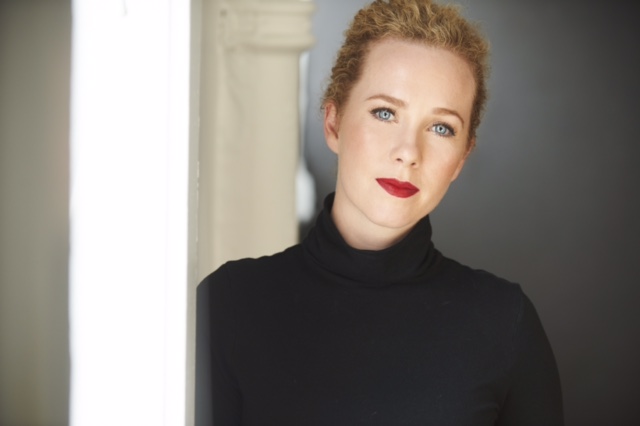
Love and war are the two most prevalent themes in cinema. Perhaps that is because everyone has been touched by one of these factors, all too often by both. The later makes for great action and outrage; portraying the humanity and inspiring sympathy for those on the unpopular side of history can often be a herculean task. Linzee Barclay understands this very well. In 2015’s HOMEFRONT she plays Elisabeth; a mother, wife, and German caught in the middle of one of World War II’s worst battles. The film had many lofty goals, not the least of which was being a bi-lingual with both English and German dialogue. HOMEFRONT won Best Picture, Best Sound, and Best Production Design (as well as nominations for Best Director and People’s Choice) at the Sheridan Screen Art Awards in addition to being screened at the Oakville Film and Arts Festival and the 2015 Buffer Film Festival in Toronto.

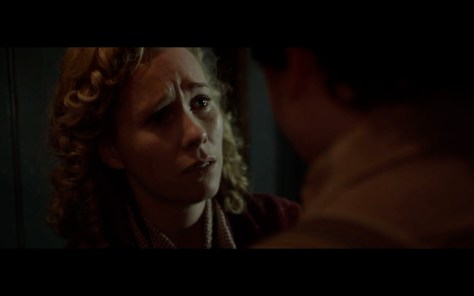
The setting of HOMEFRONT is the Ardennes Forest and also the location of WWII’s “Battle of the Bulge.” The film is less about this pivotal confrontation between German, Russian, British, and American forces than the war’s toll on the people in the Ardennes. 1944 was several years into the war and less than a year before its recognized conclusion. All sides had been exhausted and had recognized their losses. For Linzee’s character Elizabeth, it was the realization of many things. Exhausted by a long war, she understood that the war had only brought destruction to her country and her family. Her husband was likely dead and there was danger all around her and her son. When a wounded American soldier finds his way to her home, with an SS officer on his heels; Elisabeth and her son Fritz (played by C.J. Dube) are convinced to protect him at their likely personal peril. Finding the caring and altruistic side of a likely former Nazi sympathizer is not an easy goal for any actress. HOMEFRONT writer and director Jamie Banks confirms that Linzee was an obvious choice for the role of Elizabeth stating, “She just blew me away in casting. Linzee can convey so much with just her face. In real life she is bubbly, outgoing, funny, yet when she became Elisabeth she truly was a different person. She executed the German Dialogue so flawlessly that even Germans were praising the German dialogue in the film. Linzee is extremely intelligent. This allows her to see what makes a character unique. I immediately knew that she was our Elisabeth.”

IMG_3218

The intensity of the storyline needed to be matched in the actor’s performances. Producer Sarah Thompson was looking for something strong, convincing, and understated in Elisabeth. Although Barclay’s execution of the dialogue was impressive, Thompson was looking for an unspoken sense of depth and intensity. Sarah notes, “Linzee brought an entirely new side to Elisabeth that was not on paper. The physicality and mannerisms that she introduced played a huge part in the audience’s reaction to her. The amount of passion and emotion she gave off with just a look sold us. Her eyes said it all. Her interpretation from just the sides let us know that she would give us endless possibilities.”

HOMFRONT may be a war film but it doesn’t glorify war. Rather than an encouraging tale, the film depicts how some people lose the ability to care for others and the desperation with which others cling to it. As a mother who takes part in a ruse to protect a wounded soldier who is by definition at the time, the enemy; Elisabeth protects the American in an attempt to cling to her good side, while risking her own life. Above it all is her goal to protect her son. Barclay’s convincing portrayal brings the viewer to challenge the dichotomous relationship of what historical propaganda may tell us about someone and human nature itself. Jamie Banks attributes much of the film’s success to Linzee stating, “Linzee provided an intense emotional authenticity to the film that allowed it to succeed. In a very real way, she made the film. Any of the intense emotions a viewer feels are channeled through Linzee. She draws you into the film and makes the danger real. She makes you think, ‘God, she’s in a dangerous situation!’ In any period piece, immersion is crucial, and Linzee provided that immersion for our film.”

Barclay has been a part of many award-winning films and television presentations including The Real Inglorious Bastards which won a 2014 Canadian Screen Award & an Official Selection at the Cornwall Film Festival for Frontier. The Screen Media Award which HOMEFRONT received was particularly meaningful to her. The actress explains, “Elisabeth was very special to me. There are things about her that we can all relate to like loving your family and wanting to protect them. It was the differences that we don’t all share that are the joy of discovering and portraying a character like her. I’ve studied a lot about history of that time and women’s roles in Nazi Germany. My knowledge of the German language was obviously a major asset but, to challenge the stereotype of someone like Elisabeth can be a great discovery. I had to be very specific with her body language and the physical approach to her. The key to it is to finding the humanity. Everyone is flawed in some respect. When a character seemingly ‘wins’ in a story, they are also ultimately losing something dear to them. One just takes precedence over the other.”

Although it wasn’t “method producing” or method acting; the film’s location, in a cabin, in Canada, in the dead of winter…obviously aided the cast of Rylan Wilkie, Mike Koras, and CJ Dube in accessing the harsh message of the storyline. Linzee confesses, “On the third night around 3am actor Rylan Wilkie (who played a very convincingly intimidating SS Soldier) and I got a case of the giggles during a take and couldn’t shake them for a bit. Unfortunately for him, he was standing outside in the dead of winter waiting on an apple box to come in to the cabin and I couldn’t open the door without laughing at him. Yet, when it was time to bring the emotional gravitas of the character to the scene, Barclay was always prepared. Producer Sarah Thompson confirms, “Linzee’s portrayal of Elisabeth and the raw emotion she brought to the film is one of the main reasons the film had such a strong reaction from audiences. The way she openly wept while holding her son at the end sent chills through people’s backs and left a lasting impression that could not be shaken.”
IMG_3217

Within days of wrapping HOMEFRONT, Linzee was cast as Sharlene in the CW series Reign. Her portrayal of this sassy, cockney harlot, in many ways the comedic relief of the series, is in sharp contrast to Elisabeth and the weight of her circumstances. Both characters are equally convincing in the hand of this adept actress. Also in Linzee’s immediate future is her appearance on the CBC TV series Murdoch Mysteries. This Canadian actress continues to cross character borders and national borders with a variety of productions, following her muse as fans follow her career.

Music Writer Nick Fulton’s Manifest Destiny

Nick Fulton has deftly parlayed his personal interest in pop music into a successful career as a professional writer. The New Zealand-born Fulton’s concise, insightful style, impeccable taste and natural affinity for his subject have enabled him to go, in a decade’s time, from startup blogger to internationally recognized voice. His groundbreaking Einstein Music Journal was one of the first web presences in the remote island nation and virtually introduced the music blog format there.

For Fulton, it came together almost by chance. “I started writing after a friend encouraged me to start a blog,” he said. “In 2004 very few people in New Zealand were blogging, so it was pretty exciting to enter that space. It also meant that the people I connected with online were mostly outside my local community. I made friends and connected with other writers in Sydney, Los Angeles and London.

“Around that time I tried to connect with a couple of print publications that were based in Auckland, which is where all the major publications in New Zealand are based,” Fulton said. “But I was living in Wellington and struggled to find my way in. As a result, I started writing more frequently on my blog, which later evolved into Einstein Music Journal (EMJ). I got another writer on board and used Myspace to reach out to bands and music blogs in other countries. Before long we had a steady readership, and when we eventually launched Einstein Music Journal in 2006 we were able to throw a massive party and sell out one of Auckland’s best live music venues.”

“We operated slightly differently to the traditional music media,” Fulton said. “We didn’t always go through conventional channels to secure a story. We quickly gained a reputation for being bold and enthusiastic, and many publicists and record labels responded well to us. On several occasions we managed to secure stories that much bigger publications and other established writers in New Zealand missed out on.”

From this somewhat cheeky Do-It-Yourself start, Fulton, thanks to a reputation which was gaining respect and admiration beyond New Zealand, found respectability being thrust upon him and soon eschewed such pop guerilla tactics.

“My biggest achievement is finding an audience for my writing outside of New Zealand,” Fulton said. “With EMJ, I had regular readers in New York. LA and Australia. More recently I’ve worked with influential writers like Jessica Hopper, Cuepoint’s Jonathan Shecter and co-authored a column with hip hop writer Michael ‘DJ’ Pizzo. Being personally asked by Shecter to contribute to his publication was such an honor, and one that I will never forget. He wrote to me after I self-published an article on Medium, asking if he could republish my story on Cuepoint and if I’d be willing to join him as a writer and editor there.”

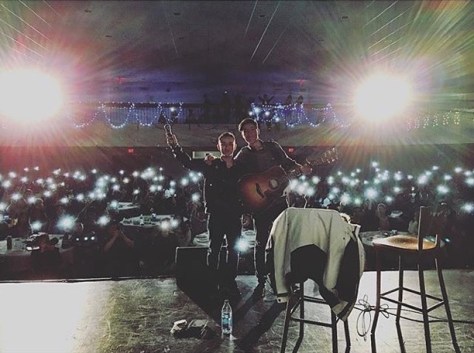
This natural momentum has served the writer well, and Fulton’s aim is always true—his 2015 Pitchfork magazine editorial “It’s Time to Put Our Cameras Away” (which called for a cessation of fan cellphone recording at concerts) not only inspired a contrarian clickbait response from venerable NYC weekly the Village Voice, it coincided with the practical use at numerous music and comedy performances of a variety anti-cell phone technology, a practice that is steadily growing.

“I like writing about a potential trend, or an unusual observation,” Fulton said. “My Pitchfork Op-Ed started a healthy debate online and had an overwhelmingly positive response. Pitchfork‘s Facebook and Twitter received a lot of comments, mostly agreeing with me, which was good. The only real dissent was shown by that writer at the Voice, who penned a response telling people to keep doing whatever they wanted. I think he thought I was being too politically correct.”

With a kaleidoscopic range of subjects from world class pop superstars to offbeat independents like Italian noise rockers Father Murphy, offbeat New York hip-hop group Das Racist, New Zealand filmmaker-music video director Simon Ward or a behind the scenes piece of music studio production Fulton’s analytical easy going methodology always holds the reader

“Nick’s a great guy and a great writer,” broadcaster David Klein said. “EMJ was one of the key music blogs in the country, and one that was a real defining authority. We met when he was a guest on a radio show I hosted. It was awesome to have Nick onboard, he always presented interesting new music, and could speak about it with a good understanding of trends, composition, and just the way music appeals to you at an emotional level. I’d trust Nick’s taste, and the quality of his writing is what has made him so successful. And he is always expanding his range –I just read something about music studio production he’d written a few weeks ago, and it was great.”

Now an almost ubiquitous figure in the local music scene, Fulton’s achievements and variety of outlets continue to grow.

“Being viewed by the public as an expert in my field is one the highest honors,” Fulton said. “I’m proud of the times I was invited on to radio shows, to comment publicly about a trend in music or share my thoughts on a popular band. Now my goal is to become a trusted voice outside of New Zealand and Australia. I’d like to immerse myself in the American music scene for a while and soak up as much knowledge as possible. I got a taste of it all when I visited in 2012, but there’s still so much to discover and write about.”

Fulton’s elegant yet hard charging style has taken him far, but the writer is just now really coming into his own, and this success is very easily explained.

“Working with Nick was great,“ editor Katy Hall said. “He’s the kind of writer you hope will stumble into your inbox at some point but rarely does. He’s personable, professional, knows how to stick to a deadline, and most importantly, he always delivered really high-quality work. It was engaging, tailored to the publication’s tone and needed no editing. I don’t want this to sound cheesy or overhyped; it was just the reality of working with a great writer.”


Adrian Puan is first Malaysian songwriter to be signed to U.S. label

Some people are born with talent that they don’t realize right away. With no training, they can master something that someone else has spent their life studying. That is certainly the case with Adrian Puan.

Puan was born in a small town in a state called Melaka and moved to the capital city of Malaysia, Kuala Lumpur when he was 8. Now, he is recognized internationally as a songwriter and composer.

“To be honest, growing up, I never knew that one day I’d be involved in music or anything related to it, simply because I never had the interest in music, much less play it,” he said. “I guess it all started when I began organizing events in the university I studied in.”

Puan used to be an organizer during his studies, which required him to network with local musicians and constantly keep a lookout for upcoming talents to perform in my events.

“That was when I got to know the band Beat The System and we all became best friends. It wasn’t until in 2012 when Gerald, the drummer of Beat The System, asked for my assistance in writing some lyrics for a song the band was working on and he realized that I had the talent in songwriting. Gerald then began to push me to come up with melodies for a chorus, or a bridge, and subsequently a full song.”

The songs that Puan had co-written with the band went on to win multiple awards in the Asian region. “Shine” won Song of the Year, Best Genre Bender, and Best Collaboration at the Asian Voice Independent Music Awards in 2012, and another song titled “Hero” went on to win Song of the Year at the Asian Bite My Music Global Awards in 2013. Puan also won third place for a song that he submitted to the Malaysian Revival Songwriting Competition (MRSC) in 2013.

“That reassured me that I could actually write songs,” he said. “I didn’t have any sort of training. I used to write tons and tons of poems when I was younger and that’s the closest thing I did to songwriting at the time.”

Now, it is evident to everyone that works with Puan that he was meant to be a songwriter.

“Adrian has the ability to compose songs that are very relevant to the listeners now, he writes melodies that are catchy and it resonates with the listeners,” said Amelia Tan, director of Malaysian Revival Songwriting Competition.

“Working with Adrian was a great experience, he surely portrayed a very professional working attitude and took his craft very seriously,” said Mokhtaza Ahmad, head of A&R Warner Music Malaysia.

Songwriting allows Puan to write stories, to express his deepest feelings, and to channel his creative senses in melodically designed tunes that transport him to a place and time of familiarity or to a place that only he can imagine.

“It gives me no greater joy when the songs I create elicit strong emotional responses from those who heard them,” he said. “I always believe that music is an agent of cure to the human soul and I’m just glad that I get to be a part of it.”

However, the craft does not come without its challenges. Every writer experience a creative block every once in a while.

“As I don’t play the piano or guitar or any other music instruments, unlike most songwriters I can’t play some random chords and create melodies based off them. Melodies come to me by inspiration and imagination. It may happen at any time of the day like how ideas would. It comes when I’m sleeping or when I go for a walk outside or sometimes even when I’m taking a shower. There are times when I’d be able to write a few songs in a day, but there are also times when I won’t get a single song-worthy melody for months on end,” he described. “I also face certain challenges while songwriting especially when I can’t find the right words or a right tune to accurately describe what it is I want to convey. In writing lyrics, it’s particularly frustrating when the word you want doesn’t fit into what I’d call ‘a melody pocket’ whereby the sound of a syllable doesn’t pair well with a particular music note.”

He certainly overcomes all obstacles, being the very first Malaysian songwriter to get signed to a U.S. record label.

“My inspiration comes from many places. I’d say the love I have for God, my family and friends is the main inspiration for me to write music. Coming to learn of other people’s life stories and experiences inspire me to write as well. Having gone through much heartache and disappointment in my own life’s journey certainly do inspire me to write music that other people can relate to,” he said. “It’s funny how much less lonely we feel when we realize that we’re not the only ones feeling whatever it is we’re feeling and that somewhere in the world someone’s feeling the exact same thing as we are, and I believe music does that, it tells a story about the human life, its ups and downs, assuring its listeners that they’re not alone.”

Puan is now located in New York City, working with Beat The System on their upcoming album. He is officially a band member, coming a long way from being their “number one fan.” He says the music industry in American has many more possibilities for him as a songwriter.

“Coming from a small town in Malaysia where music is not as widely celebrated as it is here, my goal has always been to further my career in America as I know the people here deeply value the art of music. Back home, the English music market is too small and it’s saturated with delusional musicians who refuse to transcend the already low music standards. Instead of being supportive of one another and building each other up, they’d tear you down just to get ahead in the music scene. On the other hand, the music community that I’ve gotten to know in New York has been nothing but supportive and one can sense their genuine joy and pride whenever a musician they know has achieved something significant,” he said. “The music environment that the U.S. has created is unbelievably conducive and it is no wonder why every musician from any parts of Asia aspires to make music here. From music facilities to opportunities, no other country compares to the U.S. Like people always say, if you want to make it big in the global music scene, you’d have to make it big in America.”

Puan wants to continue to be the best songwriter he can be, and write for a variety of different artists across all genres.

“Despite pop being my absolute favorite music genre, I’ve had melodies recorded that lean toward rock, R&B, and even country music. There are also songs that I’ve written which I believe would be a perfect fit for certain artists that I look forward to working with and my goal is to make that happen,” he concluded.

Self-taught guitarist Stewart Sellan Beats The System

65560_439995558259_6593501_n
Stewart Sellan started playing in church, and has an established fan base with Beat The System.

It is always inspiring when people take charge of what they want. When you see someone never give up, it makes you feel like you can do the same. That is exactly what Malaysian born musician Stewart Sellan did.

Sellan was not did not have an opportunity to study music formally. He continued his education as an engineer, but never lost his passion for music. He took lessons at church. He spent hours watching videos, teaching himself, and perfecting his craft. He took the initiative to form a band knowing that he was destined to play music for a living.

Sellan is the founding member of the successful Malaysian rock ground Beat The System. The band has gone on to have over 130,000 views on YouTube. In 2010, Beat the System was certified with Tipped to Be the Next Big Thing by the Asian Voice Independent Awards committee, and in 2012 they were awarded Song of The Year in Asian Voice Independent Music Awards for the single ‘Shine’.

“Beat The System was formed because of my strong passion in music and I always believed in what I’m writing and playing,” said Sellan.

Sellan and the band have relocated from Malaysia to New York City. The move has opened up opportunities that Sellan thought were not possible at home.

“Music scenes in Malaysia are very limited for upcoming or new bands unless they are signed under a label or well connected. Being a newly formed band, Beat The System had a tough time to get performance slots in any major gigs as most organizers would prefer established bands due to the tickets sales revenue. This situation had forced Beat the System to perform in many Battle of the Bands talent shows in order to gain recognition among the Event Organizers and to establish a name for the band itself,” he described. “This helped us to see the existing standards of other bands and helped us to improve and be competitive, subsequently always being among the top three finalist in any Battle of the Bands.”

Sellan says this experience opened doors to perform in most college events, public events and music festivals held throughout Malaysia. However, not all events were paying gigs, so the sole goal was to something gain a fan base which could help in future album sales. Throughout the years, Sellan the band was able to establish a decent amount of fan base and being recognize as top performing band in the local scene.

“I always compared us with bands for US, UK and Europe and believed our music is on par with their standards,” said Sellan.” I wanted us to venture out from Malaysia to be known among the international artists. After performances in Malaysia, a lot of people would give good reviews about the songs and live performances both by local and foreign crowds. We also had encouragement from friends, family and music related personnel to venture out from Malaysia music scene.”

One of these connections was Diana Meltzer, an American music industry executive, owner of Monster Hits. Being recognized by Meltzer is attributed to success in the industry, as she is known as the “Woman with the Golden Ears,” and she heard something from the Malaysian rock band that she knew was something special.

“Stewart’s a serious guitar player being that he gets right down to work whenever it is asked of him. Working with him is simple and straightforward, he understands his role very well and is always open to suggestions when it comes to his guitar playing,” said Meltzer.

Sellan says Meltzer guides the band to write songs that are up to industry standard, teaches the business in music industry and constantly advises on the band’s journey. He also works with the band’s producer Andy Anderson, who is known for his work with Shinedown and many more, and helped Sellan understand how to get a good guitar sound for recording. The band’s mixing engineer Damien Page Lewis, who is known for his work with Mariah Carey, Selena Gomez, Katy Perry and more, helped Sellan understand how to find a balanced sound for a good recording.

Sellan has also been influenced by bands like Nirvana, Deep Purple, Mr.Big, Metallica, Megadeth, Pantera, Stryper.

“Seeing them on live performances on TV always wanted me to do something similar,” he said.

Now, Beat The System consists of lead vocalist May Leigh, drummer and composer Gerald Sellan and composer Adrian Puan. The band has both a professional and personal relationship.

 “Stewart’s idea on the guitar and bass guitar arrangements certainly makes the song unique and makes it one of a kind, it enhances the melody structure of a song. This is very important and that is why he is a big asset to Beat The System,” said Gerald Sellan.

Beat The System has released two singles this year, and is set to release their album Journey.

Check out their single Be Your Own here.

Sound Engineer Daniel Hernandez craftily enhances both music and film

IMG_2072
Sound Engineer Daniel Hernandez

Making music is hard. Playing an instrument takes years of training and dedication. Being able to read music is similar to learning a new language. Writing music requires a type of creativity that is hard to come by. However, being a sound engineer adds an element that few can master. Not only do you have to be able to truly understand music, you have to have an appreciation and understanding of the truly technical aspects to it.

Daniel Hernandez is truly gifted in this matter. Starting as a musician, he has seamlessly penetrated the audio engineering world, receiving international recognition in film, television, and music.

In a short time, Hernandez has had many achievements in sound. He did the sound and music for the short film Angeles Rotos, which just received a Bronze Remi Award at the World Fest Houston International Film & Video Festival, and was also an official selection at the 2015 Dominican Film Festival, the El Ojo Cojo International Film Festival, the International Puerto Rican Heritage Film Festival, the Guayaquil International Film Festival, the Cine Fine Arts International Film Festival, and the Best Shorts Competition. The teaser he worked on for the television program Citizen of the World was an official selection at the 2015 Audience Awards and an honorable mention for On Location: LA Video Project at the New Filmmakers Film Festival.

Hernandez loves the versatility of being a sound engineer. There are a variety of tasks that can be done at any given time that can drastically alter the outcome of a film, song, or video.

“I like the abstraction of the process, either capturing the sound, or manipulating it. I like studying the acoustics of a room and its interaction with a specific sound, something that I do a lot when I’m recording music, when you use a specific room and a specific gear to enhance an instrument or give it a color,” he said. “When I’m recording sounds in a film production as a sound mixer, you are in a constant battle with the ambience to capture the sounds as cleanly as possible.”

Part of these tasks include mixing, which is something Hernandez enjoys.

“I like to use the stereo field and hear the sounds moving around according to the beat if it’s a song or to the picture if it’s a film score, or a sound design. I like to create a space with frequencies, reverbs, and volumes,” he said. “Mixing is like creating a three-dimensional collage of sounds and space.”

For Hernandez, his love for music led him to being a sound engineer.

“I always liked to experiment with effect pedals, and as a musician I use them all the time. That search of unique sounds sparked my interest in the field. I started as a music engineer producing some of my own songs and friends’ songs, but then, I started helping a friend with some film projects as sound mixer, which opened a whole new path in my career. That’s how I ended up doing movies.”

Director Jamie Esteban worked with Hernandez on several projects over the last few years, and describes him as a true pleasure to work with.

“His experience in the sound department is, in my opinion, above average and it always gives me a better understanding of the projects from this specific point of view. From sound recording and sound design, to sound mixing and music composing, Daniel’s work is always carefully done, astonishingly creative and professional in every detail,” described Esteban. “Daniel is also a very good listener. This, in my opinion, is the key for a good sound engineer. Daniel won’t usually take any risk creative wise until he makes sure he understands the goal of that decision throughout conversation and smart questioning, so when he does, his suggestions are always on point and helpful towards a good final result.”

Hernandez also had the opportunity to work on a feature film directed by the Goya nominated Cristina Trenas, titled From 7 to Eleven.

“Daniel always has valuable input to help the execution of the story and make the shoot move forward efficiently,” said Trenas. “The importance of sound is always underestimated when making movies. If sound is not properly done the story is ruined and the audience will immediately disconnect from the story. This is why it is vital to make sure that sound is taken care of by professional like Dani, who has mastered the craft after years of experience. He is always at the top of his game, providing a reliable and outstanding service.”

On his path as a musician, Hernandez is an integral part of the successful band the LA Brownies, which gives him the opportunity not only to play guitar, but to work on the technicalities of the sound.

“Daniel has a natural gift as a producer and a sound engineer. His professionalism in the studio is next to none. His musical ear was able to interpret my drum and rhythmic patterns into works of art,” said Michael Delgado, the drummer for the LA Brownies. “With the success of our first two albums we were able to produce seven professionally produced music videos to accompany singles and hits. Daniel’s experience as a sound engineer aided in the making of many of the band’s music videos. With his experience working on professional film and TV sets, Daniel was able to assist the producer and camera crew in the production of some of the most fan favorite music videos.”

Despite all of his success, Hernandez still says there are challenges to his chosen profession, and it is difficult to not get lost in the technical talk that comes with knowing the ins and outs of the craft so well.

“We engineers talk about timbre, frequencies, microphones, and reverbs and compression. Those are very abstracts concepts, and a very technical language, that makes the communication flow a little bumpy sometimes,” he described.

But he also says that is not the hardest part.

“I think the biggest challenge as a sound engineer is the creativity that exists behind the technique, on how to be original and not falling into repeating just a pattern,” said Hernandez. “Also, how to break those rules and experiment. This is a constant challenge because in my opinion every project has its own character, therefore you need to break some rules in order to enhance the project.”

Success keeps coming for Hernandez. The LA Brownies are releasing their third album titled Maybe, and he is set to compose the score and take care of the sound design for Lia Chapman’s new short film In My Mother’s Arms.

Guitarist Teddy Fan Tours With Hit YouTube Sensation Jason Chen

Jason Chen UMass Amherst

The YouTube generation is among us. This day in age, whether you’re a millennial or not, millions of social media goers are turning to this entertainment platform in search of videos of all kinds. The influence of online video is growing, so much so that performers are now making a living off of generating content for it. YouTube Singer and Artist Jason Chen is no stranger to using this tactic to market and make a name for himself and recently, he secured the widely successful guitarist, Teddy Fan, as accompaniment in touring, playing and creating with him.

Originally from Hong Kong, Fan has been playing the guitar since he was twelve years old and as of July 2015, now holds an Associate Degree in Guitar Performance from the Musicians Institute in Hollywood, California. “I love to perform,” Fan stated, and was very quick to add, “I always have – I really enjoy being on stage. Growing up, all I wanted to be was a rock star guitar player, so I decided to become a guitarist.”

After graduating from the Musicians Institute, one of Fan’s teachers and greatest mentors, Katsuya Sezaki, hired the musical genius as his recording guitarist. From there, Fan’s professional career took off and he immediately began booking gigs, several of them including Chen.

Fan and Chen have been working with one another since February of 2016, together becoming a viral musical success. “Teddy showed up at the right time,” Chen answered, when asked how the duo initially came about; a mutual friend initially introduced the pair to one another. “I needed a new guitarist, and that’s when Teddy came into the picture. He was a really talented musician whom I enjoyed working with. So, I asked him to be my guitarist.”

With over 1,300,000 subscribers on YouTube, Chen’s international fan base had already been vast. Resultantly, after forming a team with the acclaimed singer, Fan’s network of followers and subscribers expanded as well.

Jason Chen UIC

Together, Fan and Chen host live acoustic performances. These performances usually consist of a thirty-minute set where the musicians perform covers of preexisting, popular songs as well as some of Chan’s originals. It is Fan’s responsibility to rearrange these covers into acoustic versions. “The acoustic version of a song has to be simple,” Fan explained. “This is because there’s only one singer’s voice singing live, and I wouldn’t want to over cover his voice. The singer is who should take over more. Usually, I just listen to the song, pick the main rhythm and that’s what I play, unless there’s also an important instrumental portion of the song that needs to be covered, too.”

These talents of Fan’s are skills that Chen greatly relies on in order to ensure a successful and entertaining performance. “Teddy can always come up with a nice rhythm on this guitar to back me up when I sing. Each time I ask him to play a song, he learns it very quickly and precisely. He’s always really helpful with arranging sets and always comes prepared. I just feel really comfortable playing with Teddy. I really trust him,” Chen commented.

So far, the pair has toured in Chicago, Boston and Seattle, booking gigs at Northwestern University, Brandeis University and the University of Washington. They’ve played cover songs such as “Love Yourself” by Justin Bieber, “All of Me” by John Legend and “Stay for With Me” by Sam Hunt for their audiences, as well as a one of Chen’s most popular original songs titled “Best Friend.” “We usually play hip, pop songs depending on what’s popular at the time,” Fan shared. “Two of my personal favorites that we’ve covered are “Umbrella” by Rihanna and “When I Was Your Man” by Bruno Mars.”

Following each performance of 5-6 songs, Fan and Chen always hold a meet and greet with their fans. “The first meet and greet we held was the first time I was asked by fans to sign autographs and take photos. That was so memorable for me,” Fan recalled. “There was one time, while we were performing on stage, an audience member was non-stop screaming my name, which was cool because usually fans are screaming out Jason’s name a lot. After the performance at our meet and greet, she ran over to me and told me how much she loved my work and really wanted to take a photo with me. It was such a crazy experience; I didn’t expect it at all. Working with Jason has made me feel like my career is headed to a new level.”

While Fan solely plays guitar for Chen, he also dabbles with singing and song writing on his own. “Working in music means committing to the type of job where you never know when and where your success will come from, so you can never give up,” Fan said. “My ultimate dream is being a singer-songwriter. I really enjoy writing and performing music. That’s all I want in my life.”

Jason Chen Brandeis University

For more information on Teddy Fan, please visit: https://soundcloud.com/teddyfan

For more information on Jason Chen, please visit: http://jasondchen.com
https://www.facebook.com/JasonChenMusic/?fref=ts

Hunter Phoenix Soars to International Success as a Model and Actress

Actress-Model Hunter Phoenix is petite in stature, but carries a larger-than-life persona when she steps into the room. Phenomenally vibrant and immensely talented, the Toronto-born Phoenix exudes ambition that has gained her an impressive resume and roster of professional achievements.

“When I was a little girl I always wanted to be a model; but I was never very tall – I really didn’t think I had a chance since most famous models are 5’9 or more.” Phoenix said. “I was studying theater in school, and working in a bar to pay off my student loan when a casting director for a beer commercial came in and asked the owner if he ‘could recommend any beautiful girls for the spot.’ He suggested me. I went out on my first modeling audition, kind of by accident. I was up against 400 other girls, and I got the job—I thought ‘hey this is easy!’ And that was how I became a ‘Bud Girl,’ I did several posters and even live appearances. The Budweiser thing was a long term project, and it was a sweet gig. I was on my way.”

With a potent combination of warm personal charm and a figure of rare, profoundly appealing symmetry, Phoenix’s launch in the business steadily built momentum. “With the high visibility of the Budweiser campaign it was easy to get a modeling and commercial agent and I began doing more on camera stuff,” Phoenix said. “I started doing television commercials and it all just really took off. Soon, I was also doing a lot of print work, beauty products and food stuff. You just go where the work is.”

Phoenix ably floated through an impressive series of assignments, representing a broad spectrum of internationally known products from fashion and cosmetics, automobiles and electronics to food and drink.

“It was not an area of life that was too difficult, modeling is much more complicated now because of all the multiple online profiles and social media that you have to maintain.” Phoenix said. “But if you are signed with a top agency, clients trust their reputation and will book you based on pictures and previous work. They often just call and you really don’t have to audition as much. But it’s not always perfect. There are challenges—the difficult shoots.”

“I remember one where we had a done a year’s worth of commercials in four weeks and we were at the tail end of it all, working in the studio, and it was late, late at night, 3 or 4 o’clock in the morning. They were struggling to get the lights and the angle just right and at one point they had to put an asbestos filter over my head so my hair wouldn’t catch on fire! Tempers get short, and people get frustrated in the middle of the night. That was pretty crazy. Or the outdoors bikini stuff, they want it for summer so you’re out there and it’s March, you have to get your feet in the water and look like you’re warm and happy and of course it’s really freezing.”

Phoenix, who has also distinguished herself as a successful film and television actress, invariably transforms any such challenge into a positive, and with an intuitive knack for wringing out every available scintilla of knowledge from a situation, she uses each experience to her professional advantage.

“Theater and acting are great for the emotional side, but modeling has taught me very valuable lessons about business.” Phoenix said. “As a model, when you show up, you’re a brand ambassador but you’re also the last one to the party, and there’s been this huge complex campaign all worked out before you arrive. I learn a lot on set just keeping my mouth shut and observing, there are a lot of very sharp people from the ad agencies, and it’s taught me a lot about business in general. Everything is done on a very tight time frame—if you don’t respond to a call from your agent within 20 minutes you’ll lose the job. So it’s taught me to be punctual, adaptable and professional.”

With over fifteen years of experience, Phoenix remains an in-demand, versatile force in the industry, working up close as a hand model, appearing in print ads and acting in television spots.

“I still do lots of beauty stuff, a great deal of it in Europe.” Phoenix said. “I just signed with two new agents, one in Milan and one in Berlin, so there’s a good chance I’ll be doing jobs over there soon. I do a lot of travel, it’s one of the most wonderful aspects of the job. You get to meet cool people in all sorts of beautiful locations. I love getting that phone call, where they say ‘Okay you need to catch a flight to Paris in two days’—I just love that. There’s nothing else like it.”

Sound designer Veronica Li’s work takes a STAND

Every film tells a story. Every person that touches that film contributes to telling it. For a film about music and dance, the sound often replaces speech. The sound tells the story.

Sound designer Veronica Li knows this better than most. Her innate talent of working with sound compels audiences, which earned her the Faculty Award for Outstanding Sound at the 2014 First Look Film Festival.

STAND is a documentary about a Krump dance group in South Los Angeles. The subject of the film that discuss social problems through an art form and explore how art can affect people really attracted me.

Full of stomps, jabs, and something called ‘the get-off’, Krump is a cathartic release of emotion. It’s a dance form that is aggressive and loud, but can also be an intimate portrait of individual struggle. As an alternative to the rough streets of Los Angeles, a Krump group called Demolition Crew offers the youth a safe haven to express themselves.

STAND follows one of the crew’s leaders, ‘Krucial the Liberator’, a 24-year old South Los Angeles born and bred Krumper, as she uses her love of Krump to build a safer community in an area known for its history of violence.

“It was a wonderful experience working on STAND,” said Li. “Every crew member on the team was great. And since I also recorded production sound on the project, I got really close to the characters and the story.”

STAND has been recognized continuously for its powerful story and filmmaking. Originally released in July of 2013, it has gone on to receive several awards and nominations. These include the 2013 Director’s Guild of America (DGA) Jury Award for Latino Filmmaker, the 2014 San Francisco Dance Film Festival for Best Student Film, Indiefest’s award for Best Documentary Short, and nominated for Best Documentary at the 2014 First Film Festival. It also was an official selection in in 2014 for ONE LENS Film Festival, Pan African Film Festival, Beijing Film Academy International Student Festival, Chicago International Social Change Film Festival, and the SOUQ Film Festival in Italy.

Melanie D’Andrea, the director of STAND, attributes much of the film’s success to Li’s work.

“Veronica has proved herself to be masterful through an impressive variety of successful projects,” said D’Andrea. “What I love about working with Veronica, besides her respect to the material and her attentiveness to detail, is that she always pushes the soundscape of the film and presents very bold and emotive choices. Veronica’s talent and dedication to the art of sound design has no doubt opened many opportunities for her career. She has rapidly grown and evolved as a Sound Designer and Sound Editor and I am proud to see her credits expanding. I am eager to see her vision continue to be a part of Hollywood.”

Since working together on STAND, D’Andrea has reached out to Li to work on many projects.

“The director Melanie takes sound design very seriously and willing to experiment and explore with sound,” described Li. “It was an luxury as sound designer to have a director who is very creative and open to suggestions.”

Because STAND is truly a film about social problems, there were challenges that came along with properly telling the story.

“We tried to combine signature sounds in South LA sound scape into the sound design and also tried to make it work with the dance and music rhythms, which is quite challenging,” described Li. “There was scene when Krucial, our main character, was dancing on a overpass above the railway. The sound design of train, siren, metal sound elements from jail and ambiences worked so well. I feel it’s a scene that tell story and convey emotions purely through cinematic language without words. It’s very powerful.”

The sound is it’s own character in the film, and Li is the creator of that. She managed to tell an important story using no words, and allowed herself to be impacted by the work she was doing.

“There was moment that as the filmmakers we got so moved by our characters and situation that we had to hold our emotions in order to capture those moments perfectly, and those kind of feelings helped a lot when I started to design sound,” she said. “I felt I really connected to the characters, I was with them, I was one of them. STAND is not just a project, it’s such a unique life experience that I’ll always remember.”

Before Lights, Camera, Action! You Need Set Design.

For a director to let go of the reigns and trust a set designer without the nagging impulse to micromanage is a sign of true excellence on the part of the decorator. That’s at least the sentiment expressed by most every director who has worked with seasoned set decorator, Nancy Niksic.

Niksic, owner of a most impressive roster of achievements, just wrapped working alongside acclaimed film director and screenwriter, Azazel Jacobs (“Terri,” “Momma’s Man,” and “The Good Times Kid”) who raved about her invaluable work. “Nancy Niksic worked as my set decorator, and possess an exceptional ability to find unique and fitting set pieces, then decorates the set with a realism that adds to the character development. Nancy has true artistic talent and is an asset to work with. She understands my vision, which is incredibly beneficial to me as a director and to the success of my shoot.”

unnamed
Nancy Niksic is one of today’s premier set decorators who has crafted the look of many TV, film and commercial sets.


With 24 years of experience under her tool belt, Nancy has seen a variety of TV, film and commercial sets to visual perfection as set designer and decorator. Niksic’s versatility and adaptability are part and parcel of what has earned her keep amongst the greatest in the entertainment industry — including the Canadian “Amazing Race.” Niksic worked as the art director on the 1st season of the “Amazing Race,” and as production designer on the 2nd and 3rd seasons.

Niksic is the ultimate multitasker on set, with a strong comedy leaning as her niche. “ I look at it as an opportunity to have fun and really expand my creativity” says Niksic about her comedic set decorating sensibilities. “I’ve alway been super passionate about this niche market, especially the quirkiness and how odd some pieces have to be. Being a set decorator is all about contributing, and that takes understanding the joke and the tone and the subtleties of comedy. To make comedy work, there’s a tricky balance, knowing when to be understated and when to go big and in your face.”

Niksic nails the unassuming, keeping the audience unaware of the set decor, but at the same time having the pieces contribute to the comedic tone. “The audience won’t be able to put their finger on why it’s working, but it does. Directors like that I understand this. I love to scour the city for the perfect pieces,” adds Niksic.

Her comedic touch garnered her work on two seasons of “The Jon Dore Television Show” on The Comedy Network, as well as the short film “The Truth About Head” directed by Dale Heslip, which won several awards at Cannes.

Niksic recently worked on content for the comedy web­series by Sarah Silverman, Michael Cera, Tim & Eric, and Reggie Watts called “JASH.” The content produced by co­founder Daniel Kellison (original executive producer for “Jimmy Kimmel Live”), was about three CIA agents living in horrible quarters in Aleppo, Syria, so the set had to look believable. “I had to make it look real, while also finding space to add comedic elements,” said Niksic. “I collaborated with the directors on the nuances of the set, trying to play it so the audience gets a real feel for the environment, while also putting in elements to accent the comedy.”

What sets Niksic apart from her competitors is that she is not limited to the entertainment realm alone. Niksic handled the decor and design as well as the styling of a renowned rock & roll inspired hair salon in Toronto called “Grateful Head” [pictured below]. She truly does it all. Whereas most designers who work in film wouldn’t normally venture in this space, Niksic will not turn down creative work, making her one of the most multifaceted designers in the game.


unnamed3

unnamed4

Nancy Niksic is a set designer extraordinaire, willing to work in any creative environment necessary. She knows what she, the audience and director/client want, and she stops at nothing to get it.

For Niksic, it’s about quickly understanding the director and the direction, and about establishing immediate trust while shouldering some of the weight the director carries. Her evolved sense of humor certainly comes in handy on any kind of set, keeping the list of opportunities running endlessly.

Film Editor Pavel Khanyutin Cuts to the Heart of the Matter

The film editor is one of cinema’s true behind the scenes wizards, one who can escalate the intensity of any sequence, deftly manipulating the action and emotion in a way few other production contributors—whether writer, actor or director—are as readily able to match. Russian editor and visual effects supervisor Pavel Khanyutin, known for cutting with surgical precision and an acute sense of pace, is an ideal example of this dynamic, almost alchemical skill.

For more than a decade, Khanyutin has exerted a strong influence on his country’s visual experience, as a film editor and through his influential use of CGI—he made significant impact supervising VFX in Timur Bekmambetov’s popular 2004 fantasy thriller Night Watch and Andrey Kavun’s 2010 war drama Kandagar. He also excels in his other professional capacity, conceiving and directing commercial advertising spots.

Khanyutin’s relish is evident in whatever he takes on, and his 16 years as a creator of television spots for high end prestige clients have been an enjoyable pursuit that has produced many notable achievements, crafting memorable pieces for Google, Coca Cola, Ikea, Pepsi’s Adrenaline Rush, Panasonic, Mars, Nike, cellular network Megafon and many others.

“In advertising the tough deadlines and limited time make the process almost like a competitive sport.” Khanyutin said. “However, there always remain enough possibilities for creative work, in the storytelling and sophisticated editing.”

But it’s working as an editor and visual effects supervisor where he derives the most satisfaction; in Russia, after all, the art of film cutting has a particularly rich heritage, going back to groundbreaking mid-1920’s giants Sergei Eisenstein and Grigor Aleksandrov.

“In editing, the possibilities are nearly unlimited, and it’s almost impossible to overestimate its importance.” Khanyutin said. “It’s a language in which films speak to the viewer’s unconsciousness, and it can deliver every shade of emotion, just as speech does. This is the most interesting, most complicated aspect and is also what allows a film to really get inside a viewer’s head. It’s almost like metaphysics—a visual philosophy.”

“Each project is interesting in its own way.” He said. “Editing documentary films is a very special process, you could almost say that the movie is coming to life in the editing room—getting precise emotions, different shades, from the material is the challenge—to create a great piece of work. I am lucky that I had a lot of documentary experience at the beginning of my career.”

Khanyutin’s personal involvement with every project is intense. “Working on a feature film is a different matter.” Khanyutin said. “To tell a colorful story, it’s very important to really dip down into it, to lead everything through one’s own self, to believe in characters, yet always be sensible. Then every cut will be as conscious and meaningful as sounds in speech. And the time spent in the editing room—it could be one month or one year—becomes part of you. You even see it in dreams.”

That tireless commitment to film gains Khanyutin tremendous professional advantage. “I’ve worked with Pavel as directors and editors always work together—I’ve dropped material off at his door to do with as he pleases, and I’ve sat, lurking over his shoulder, for up to a dozen hours at a time.” Film maker-screenwriter Michael Kupisk said. “In both cases I found Pavel’s instinct and touch to be invaluable in terms of defining the final outcome of the product. He was able to show me angles and methods of delivering a beat or turn that I hadn’t anticipated and is always thinking of how to make the movie better. What I admire most about Pavel is his innate rhythm and instinct. He adds something to the project that is satisfying to both the filmmakers’ vision and the audience’s viewership of the material.”

Khanyutin’s singular grasp on how best to manipulate raw footage is an invaluable asset, and his singular propensity to anticipate and deliver a finished product that really reaches deep down into an audience’s emotions qualifies him as a cinema auteur with illimitable potential. For Khanyutin, his professional goals are simple and straightforward, best summed up in three words:

“More good movies.”