All posts by pressva

Keanu Uchida: “dance cannot ever cease to be part of me”

Keanu Uchida has been dancing since he was four years old. At that age, it is easy to do what you are told, and not what you love. But for him, that was definitely not the case.

Uchida was born and raised in Ottawa, the capital of Canada, and is now known on both the stage and the screen as a dancer. He has been recognized on an international platform, and has been awarded for his abilities. However, he does not dance for the recognition he now receives but rather because it is his passion. “Wherever life takes me I will always turn my gaze to dance and to what it offers me. For me, that is what pursuit of a life in dance consists of,” he said. “I don’t think there was ever a formative moment leading me to pursue a life in dance. Rather, there may have been a gradual realization that dance cannot ever cease to be part of me. Everything varies, especially my understanding and appreciation of dance. But what doesn’t is its consistency: it has always offered a safe headspace, an escape from reality, or what I perceive to be real for that matter. I’m always guaranteed a fresh slate of exploration and a resultant discovery process when I dance.”

Uchida’s first performance was at the age of five, when he began his journey into competitive dance. Since that time, he has had many achievements. In July of 2011, Uchida was awarded the title of Teen Male Dancer of the Year at the American Dance Awards. This international dance title competition was held in Boston, Massachusetts and congregates title winners from across the USA, Canada and South Africa. The dancers engage in an opening number choreography and are judged in audition classes before the Teen Title evening, where each dancer has a chance to compete his solo. Uchida was crowned at the end of the night for his unique Charlie Chaplin inspired solo “Charlie”. As a winner Uchida was invited to be featured in the title winner opening number the following year. He also participated in the collaborative group dance highlighting the 2011 Dancers of the Year.

Uchida’s affiliation with The Dance Awards has brought him many opportunities. It serves as the international summer event for JUMP, NUVO and 24/7 Dance Conventions. Hundreds of winners from the regional events of these conventions met in NYC to compete for the “Best Dancer Competition”. Uchida competed in a week of heavy audition process, opening number rehearsal, improvisation and solo performance. After a first round of performances he was invited to compete in the top ten solo improvisation competition. He was then selected to be among the top 3 senior males, all hailing from Toronto, Canada. After one last performance, Uchida was awarded the title of Senior Male Best Dancer on the final gala evening. Along with a $1500 prize, he was invited to tour with the regional conventions the following year. He was given the opportunity to tour with many of the most recognized choreographers in the industry, to name a few:  Travis Wall, Mia Michaels, Mandy Moore, Sonia Tayeh, Stacey Tookey, Jason Parsons, Lauren Adams, Teddy Forance, Nick Lazzarini, Misha Gabriel and Al Blackstone.

“Dance is my medium to explore as a dancer. You are able to reflect on everything as you would regularly. You dance out of joy, through the sorrow, you dance to question and to speak out. I’m fortunate to dance because I can feel a lot of ways and not need the rhetoric to convey,” said Uchida.

Last spring, Uchida had the opportunity to play a vital role in the workshop process of the new Toronto original equine production Dancer. Mounted by Cats producer Marlene Smith and John Mckellar, this musical features some of Canada’s most talented contemporary dancers and internationally recognized artist Stacey Tookey. Uchida was casted as Northern Dancer, the principle of the performance. The show is expected to debut during spring 2017 at Toronto’s Elgin Theatre, one of Canada’s most revered performance locations.

Despite this, one of Uchida’s all time performances was a personal creation, his solo entitled Spark.

“For this I put together a musical piece with my percussion skills and then filtered the music with movement. To perform this dance was incredibly personal and empowering. It was a then-and-there reminder of what it means to be a dancer and why it can never cease to be part of me,” he said.

Uchida’s career has been filled with success. In 2013, he was asked to attend the Juilliard Summer intensive, which he describes as one of the best experiences to date.

“Forty-four dancers were selected to participate in this three-week experience. I was the only selected Canadian. Every morning we were lead through a ballet or men’s ballet, and modern class, followed through with anatomy, music, improvisation technique, yoga, partnering, and given a chance to work with a selected choreographer in the evening to create a ten-minute work,” he said. “The talent and the assortment of knowledge and experience among the dancers was riveting.”

Jason Parsons, choreographer and teacher at the international Nuvo Dance Convention, believes that Uchida’s fearlessness, curiosity, and humility make him a fantastic dancer: “I like Keanu for his work ethic, and for what he brings into the dance space as both an artist and mover,” said Parsons. “I’ve been fortunate to witness his choices and the development of his creative mind over time in my classes. I’m inspired to get the opportunity to work with such an open and inspired soul.”

JUMP choreographer and Capezio ACE award winner of 2015 Kirsten Russell has worked with Uchida both on and off stage, and believes he has outstanding abilities. “Working with Keanu is a privilege. He lights up any room with his humble spirit and positive attitude. I admire him for many reasons, but mostly because he is always putting forward his best possible effort no matter the situation. Never complaining, always listening, and extremely thankful for any opportunity that comes his way. I wish I could work with him more often, as he brings out the best in me while I am on the job. He is the definition of professional,” described Rusell. “Keanu began assisting me almost a year ago, and had never taken my class before he was dancing on stage with me. He not only adapts to choreography very quickly, but he also executes movement exactly how it’s given unless asked otherwise. Any correction given, he is the first to apply it. This fact alone makes him not only good at what he does, but extremely smart at what he does. He is one of the most talented dancers in North America, and anyone would be lucky to work with him.”

For Uchida, dance also acts as a type of therapy, helping him in tough situations.

“Despite the fluctuations of my life I am consistently able to come back to dance and, as mentioned, dance through it all,” he said. “I think the most comfort comes in that I always have a safe haven of exploration. I’m able to learn from the hardships and face them with dance.”

“I’ve gradually fallen in love with performance,” he concluded. “It makes me feel like no other; to embody, to reenact, to feel in front of an audience and share this stream of information is something quite special.”
Simone Lombardo revolutionizes visual effects

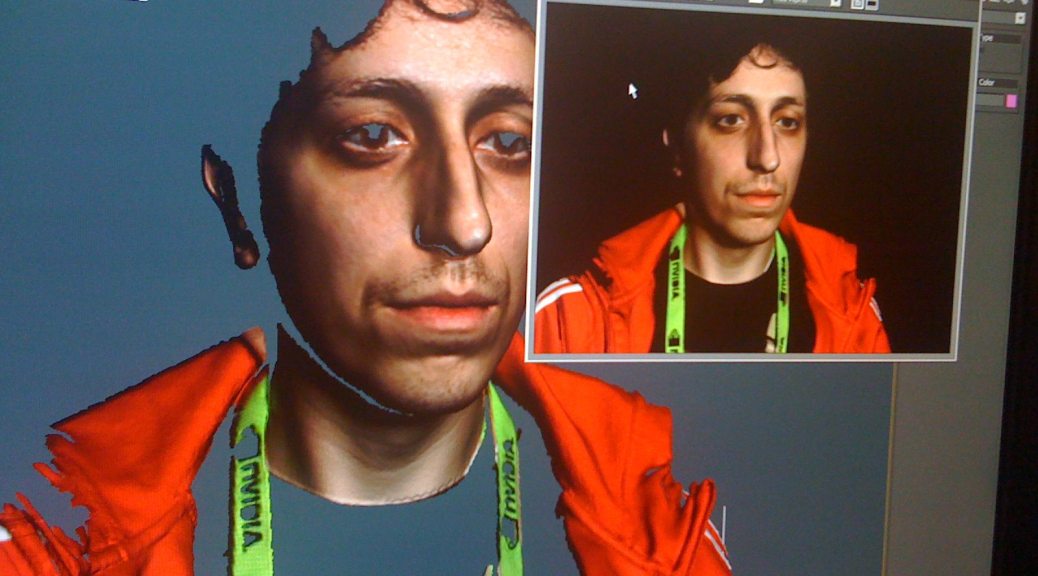
Simone Lombardo has always known he wanted to do visual effects. Although it may not have been a dominant industry, growing up in Liege, Belgium, he never strayed from that path.

From the time he was eight and first had the opportunity to play with a computer in school, Lombardo had a passion. He did not accept just being good, he is exceptional. And since then, he has worked on films and video games that have been recognized all over the world.

Lombardo worked on the visual effects for the blockbuster films The Maze Runner and The Maze Runner: Scorch Trials, which together grossed over $600 million in the box offices worldwide. Lombardo’s touch is a contributor to that.

Maze Runner Escape Version was really special, because it gave me the opportunity to test my pipeline, a pipeline in which not many people believed in. I always wanted to use game engine technology to render movies. Doing the escape version of Maze Runner was a big chance to prove it could work. We had so many shots to do in such a short time, but the pipeline held it together and we did deliver. This was the first time, (and only time I believe, with Maze Runner Scorch Trials Escape) that a game engine was used to render a AAA movie for theatrical release,” he described. “I use this project as proof that I was not crazy when, 5 years ago, I was advocating to use game engine instead of renderer for movies. I’ve done it, proved it can be done, I can now move to the next step.”

The Maze Runner films are widely regarded as having outstanding visual effects, and Lombardo’s vision saw to that.

“It was a year of taking risks, but finally it was done,” he continued. “Some people before that were not taking video game engine seriously.”

Lombardo’s determination to stay up-to-date with technology in his industry has led him to be recognized internationally in his field. He was an honorable mention at the CG Society International Challenge Spectacular, and first runner up at the Journey Begins. He won the Vocation Foundation Price in Belgium, in the CG Animation category in 2007, and is in the official 3dsmax Bible Book of 2008 and 2009.

He also had the opportunity to work on several commercials during his career with the production company Luxoom, an experience that Lombardo describes as “special.”

“I went to China without really any idea of what I would be doing, but I ended up at Luxoom, fresh from my training in Visual FX and particles work, and I had the chance to be one of the only people there with understanding of fluid dynamic and advance particles work,” he said. “So working at Luxoom let me use that knowledge on amazing project, and work with great brand like Porsche, BMW and Mercedes. But even more, it taught me efficiency. We had no time to do these projects, while in movies you have rarely have enough time to do what you really want, in commercials it’s even more challenging. We did one mini-cooper event video in 2 days once, from storyboard to shooting and post. And we were only 4 guys.”

“What I liked as well, is that it was the first time I saw general manager being so hands-on. Tobias Sievers, the GM of Luxoom Shanghai at the time, was an amazing artist and technical guy. Many times he jumped on the project and actually made it so that we would deliver. He was at the office longer than anybody else. This was a great experience and a big learning step in my life” he continued.

Alexandre Ouairy worked with Lombardo at Luxoom for a variety of different commercials.

“Simone Lombardo and myself work together on several national and international campaign during our time in China, at Luxoom and Idcreation. While pushing the limit of technology and executing pixel perfect 3D rendering for the like of Porsche, BMW, Audi, Nike, he was simultaneously taking online courses learning to program particles rendering,” said Ouairy. “It is always mesmerizing to see the speed of execution Simone can achieve and the dedication he put to is work, mixing his learning from the world of video game production with 3D rendering. Simone shows a passion and commitment to its industry that you rarely see.”

Lombardo uses the skills he has from working on video games such as Soul Caliber V, Resident Evil, and films such as Hugo and combines the two different technologies.

“They are really different but similar industries,” he said. “I like working on both video games and film. I like the polishing and real-life implementation of the movies part, and the time you can spend on one shot. But there is also frustration on the time you have to wait, and the politics involved. On the other side, video games are all about optimization. You have a finite number of memory, any draw call you can save, the better it is. It’s cheating to the extreme, but everything is real time.”

It is no wonder that with knowing the technology so intricately, Lombardo is regarded as an expert in visual effects in both film and gaming.

A GOOD ZOMBIE IS A FRESH ZOMBIE

Imagine that you wake up hanging upside down in a tree, not knowing how you got there. You look down and see zombies. What do you do? Most of us have seen enough episodes of The Walking Dead to know how to handle the situation. You get down as quickly as possible, avoid the zombies, and try to find living companions to band together with in order to survive. Easier said than done…and what about that troubling amnesia? That leaves a lot of questions unanswered. It’s an interesting premise; part horror movie and part action film. These are the thoughts of Bruno Nunez Romagnoli when he decided to make his first film Zombie Games. Bruno wanted to film his first big project in his homeland of Argentina with a large cast and zombies are…well, popular for lack of a better word. He reveals, “It’s not that I’m the biggest fan of zombie movies. I’ve seen the films and television shows that most people have seen. I wanted to do something new with the genre. The premise is that of a zombie film but it is actually an action movie. The twist in Zombie Games is that it actually takes place in a videogame. It is a computer reality.”

Romagnoli plays the lead character Dennis in Zombie Games. In the tradition of Hollywood icons like Sylvester Stallone, Bruno not only starred in his first big film but he wrote and directed it. This is a herculean task to say the least, made somewhat more ominous by the fact that it was not planned. Romagnoli recalls, “I had studied acting and directing in my homeland of Argentina and I wanted this first film to be a big production. I had written it and planned on throwing myself heavily into the role. I knew that I would have to be in the best possible shape to be believable to the audience as a real action leading man. That was already daunting enough. It turned out that it was just going to work out better if I was directing because I had this unique idea in my mind and it was very difficult to describe the approach. In the end, it was just going to happen more efficiently and more accurately if I directed myself. Sometimes you have to bite off more than you can chew. I know that there are people who can act and direct at the same time without much difficulty but it was hard for me on this film. I had a second director on some of the shoots because there was physically no way for me to do both. That added a lot of time due to the long conversations between the two of us in order for me to explain how things needed to look.”

zombie games 2

The biggest reason for the difficulty in having another director on Zombie Games was the original direction and the look that Bruno wanted. Zombie movies were everywhere but his movie would be at its core an action movie that takes place with the characters trapped inside a video game. Romagnoli explains, “The new approach to the film is that the character are basically trapped inside a videogame, a computer reality where the creatures are the zombies. The editing of the movie itself is determined by the videogame, the glitches, mistakes, holograms, technology; it is kind of a futuristic place. I wouldn’t say that is a horror film, it’s science fiction with action and adventure.” While many movies are creating video games from the premise of a movie to generate revenue, Bruno is reverse engineering this process. His original video game concept didn’t translate completely and he had to tweak some of his concepts. He confirms, “It was very hard to manifest all of the things that I wanted for the film. The first idea was to do it in the forest but with futuristic weapons to create a contrast but it didn’t have the exact look that I was going for.  I have to admit I changed the script about five times before I decided on the final version. Some things were changing while filming, but that’s normal for me because I like to improvise a lot.” One of Bruno’s costars in Zombie Games, Lautaro Bertoglio, was well aware of Romangoli’s tendency to be impetuous commenting, “, Bruno was one of the greatest partners I’ve ever had on set; we got each other’s energy so quick. The connection was powerful in front of the camera. He likes to improvise a lot. He really surprised me in one of the scenes. I was supposed to take a gun out of my bag and point it at him. He didn’t tell me but, he had taken it out of the bag before the scene started. Here I was in the middle of the scene and I was looking for my gun while the camera was rolling…in front of the entire cast and crew! Bruno whistled, I looked at him and he threw me the gun. The reactions were amazing! I was stunned with actual fear in my eyes. He loved it, so it stayed in the movie.”


Although wearing three hats on the making of Zombie Games was quite daunting, Romagnoli is certain that it is what enabled him to successfully achieve the goals he set out for the film. He reveals that, “In all movies you have a hero; the secret to a great lead character is the small details. My character was an antihero. You can see that he doesn’t treat people nicely, so how could the audience like a person like that? What you have to do is just add a small scene where you push the audience to like him. In Zombie Games I made Dennis an Elvis Presley fan. People like these small details. They start liking the character because they recognize something of themselves in him. I think it is also very important is to keep some parts of your character’s life a secret. When the audience knows your character completely they become bored. In real life you don’t know everything about another person; what their true motivation or intent is. Dennis knows how to fight against zombies but you don’t know why. You can see that he knows things about that world that we don’t.  Those details keep the character interesting. As a writer, keeping those things in mind helped me a lot to achieve the character in the moment of filming. If I didn’t have all of these perspectives, I might have pushed for something to be more or less obvious but as the writer/director/lead actor, I knew just how much should come out on camera to the audience. It added to the intrigue and suspense.”

Bruno Nunez Romagnoli is one of those young determined triple threat talents in the vein of Kevin Costner and the aforementioned Sylvester Stallone. He has vision, talent, and the determination to make films even when it seems impossible. It is perhaps most eloquently stated by another of his costars in Zombie Games, James Bonfiglio, in his remark, “The thing I can say about Bruno is that he has presence anywhere he goes. He also has a powerful voice. He can carry a movie on his shoulders without a problem. A lot of actors want to do that but not many can command your attention the way Bruno does. He can take it out and be a leader to the rest of the cast.”

zombie games 3

MONICA SMITH ADDS LAUGHS STANDING SHOULDER TO SHOULDER WITH SOME OF THE BIGGEST NAMES IN HOLLYWOOD

“There is no I in TEAM.” We all know the phrase and exactly what it means; don’t be motivated to be the star. Yet, in some situations there are those individuals who are team players that still manage to get noticed. Monika Smith is one such individual. Although she has spent her entire life being part of a group, she has carved out a very unique career for herself. As a successful model, improv comedian, and actress, she has established herself in Hollywood as a “go to” actress with the skill, looks, and intense work ethic to make any role believable. It is ironic that by spending her entire life aspiring to be part of an ensemble she has become the most memorable person in any group. In a conversation with Smith, she continually directs the praise to those she has worked with and often refers to influences that are ensemble players. Actors frequently use the word generous to describe those acting partners whom enable them to explore creativity and enhance the scene with honesty. If this is the acting benchmark, it seems that being a generous person has resulted in Smith becoming one of Hollywood’s most noticed comedic actresses.

As a young girl, Monika was always pulled towards comedy. It was always the edgy and experimental forms that gained her attention, such as Saturday Night Live and Canada’s own Kids in the Hall. From an early age, Smith knew that she wanted to act and that comedy was the correct expression of that desire. Years later Monika would work with Cheri Oteri (SNL) and Kevin McDonald (Kids in the Hall) while being one of the stars of TBS’s Who Gets the Last Laugh. Smith states that she considers it an important personal achievement, “Making Cheri and Kevin laugh so much was a very gratifying moment for me. When someone who has had such impact on you from a very young age proceeds to give you such compliments and praise about how funny you are it is almost unbelievable.”

1402826_10151627279385997_224451799_o

Before devoting her life to acting and comedy, Smith had a bright future with both the Ford and Elite modeling agencies. Working as an international model may have been lucrative and enticing for a young girl but she soon realized that denying her true passion of comedic acting would only serve to frustrate her. Charging forward, she began to work with the Second City Touring Company in Toronto. Soon realizing that Los Angeles held even greater opportunities for someone who is driven, she relocated and began working with the Upright Citizens Brigade (UCB) as well as Second City and Nerdist. Improv sketch comedy was instinctual for her and it wasn’t long before she was teaching at these sketch comedy institutions, including travelling to China to help start their first long form improv school and direct their first show. Second City and UCB have given us some of the most important and recognizable names in comedy including; Bill Murray, Tina Fey, John Candy, Amy Poehler, Adam McKay, among others. Smith confirms that her time with these groups taught her one of the cornerstones of improv sketch comedy. She states, “I think the most important skill I learned from improv is ‘yes-ing’ your partner and what they say to you. It’s a wonderful thing to trust another person implicitly and know that whatever they say I’ll add to and we’ll create something together. I have no idea how many improv scenes or shows I’ve done at this point, but all of them have been different and special.” This perspective and demeanor led to Monika’s starring roles of multiple seasons of shows like MTV’s Disaster Date and TBS’s Who Gets the Last Laugh. These type of shows required actors who were at the highest level of improv comedy. Nick Kriess (Who Gets the Last Laugh producer) comments, “Who Gets the Last Laugh? was a hit due in large part to Monika’s extensive improv background.  Monika has managed to make a strong career out of her fantastic comedic sensibilities and her amazing way of always knowing the best direction to take a scene in no matter what is thrown her way.” Joel Zimmer (Disaster Date producer) adds, “There was no possible way that Disaster Date would work without Monika taking control.  The show called for Monika to play her character for hours at a time.  There were no cuts like a normal production.  Only an actor with an abundance of improv talent like Monika could convince unsuspecting contestants that this was a real date and that she was a real person.”

While becoming established as one of LA’s most in demand comedy improv actors, Smith has also directed her career path towards film and television. Adult Swim’s Newsreaders, The Tonight Show, and even Funny or Die (which garnered Smith a best actress award at the 48 Hour Film Festival for ‘Les Douchbags Horribles’) have all made use of Monika’s exceptional talent, among many others. Actress Brea Grant (Friday Night Lights, Heroes, Dexter) is one of the many highly notable actresses who recognize Smith’s abilities and presence. Grant comments, “Monika Smith is one of the best improvisers in Los Angeles right now. She has worked very hard to hone her skills and is both a great teacher and performer. I love working with her because she is always professional and hilarious but also really supports and lifts up anyone who she is working with. She is a comedian to watch as she will be huge in the next few years.”

Most recently, Monika has been known to viewers as Sylvia on the STARZ series Blunt Talk. Playing a porn star involved with Adrian Scarborough (Gosford Park, The King’s Speech)’s character and acting in scenes with luminaries like Patrick Stewart (the star of Blunt Talk), she brings an endearing side to her character’s provocative profession. The ensemble cast could easily be intimidating for any actor but Smith seems to handle herself with the same confidence and comfort she has exhibited in so many less scripted venues. Duncan Birmingham (writer/producer for Blunt Talk) declares, “Monika is one of the best actors I have worked with during my illustrious career.  I have worked with the likes of the tremendously gifted, Oscar nominated director David Fincher, and currently, the legendary Patrick Stewart (who was nominated for a Golden Globe for Blunt Talk), but Monika holds her ground with those luminaries with ease.” Smith’s performances became so successful that her role, which was added part way through season one, was added to the second season of Blunt Talk.

Monika Smith’s story is literally the Hollywood Dream. A small girl from another country, with stars in her eyes, works hard to become a peer to the gifted creative individuals who inspired her. With self determination, hard work, and a large dose of talent, Smith has created the situations that have led to her success while constantly challenging herself to evolve. Part of what makes it so endearing is that she is constantly focusing on the opportunity to place focus on the talented professionals with whom she is surrounded. As the arc of her career continues to ascend, it will be exciting to see the new challenges that she will undoubtedly take on.

Brazilian actress Priscila Zortea takes Journey to the big screen

A Journey to a Journey Poster (1)
A Journey to a Journey will be screened at the Indie Gathering International Film Festival later this month.

Priscila Zortea’s first love was dancing. Growing up in Brazil, she started dancing young and a few years later, she fell in love with acting as well.

She went on to be a professional dancer for LA KISS, and in terms of acting did stage plays and musicals. When the feature film A Journey to a Journey came along, Zortea really got to show the versatile artist she always was.

A Journey to a Journey is a satire on the hazy goals that keep society running. After a brilliant university student is rejected from a prestigious research program, his subsequent investigation uncovers the shocking truth about the nameless, timeless society in which he lives. The film, shot in June 2015, has been receiving attention. There was a screening in Los Angeles last November, and this month the film will be screened at the Indie Gathering International Film Festival in Ohio, where it won first place in feature sci-fi category. The film is currently a semi-finalist for Los Angeles Cine Fest.

Zortea plays the role of Mysterious Girl in A Journey to a Journey, an important and unique role.

“She’s not exactly real, she only exists in the imagination of the main character of the film, John,” described Zortea. “It was my first feature film on a leading role so this experience will be unforgettable for sure. I love the character because she was extremely playful with John and dared him to be courageous and fight for what he believed was right.”

Zortea had the challenge of playing a pivotal role in the movie. Since Mysterious Girl is only seen by one character in the film, she had to dominate the screen in each scene to truly bring the story to life.

“I really enjoy playing mysterious characters that you don’t know exactly what their story is,” she said. “This one in particular we don’t even know if she exists, so it was really fun.”

Not only was it Zortea’s first feature film, but it was also the first film for many involved. She says this made the experience extremely special.

“Every scene of the film has a different light color and it looks great,” she added.

The role brought challenges for Zortea that she overcame magnificently according to writer, director, and producer Barry Germansky. Zortea describes a scene in particular where her character is supposed to appear to John, played by Riley Neldam, from under his bed and that one was particularly tricky to figure out a way of shooting it to make it look magical.

“It was a pleasure working with Priscila from beginning to end, and it was magical to see her bring her character to life. She appears in one of my favorite sequences in the film: when John, the main character, has a surreal encounter with her in his apartment,” described Germansky. “Not many actresses could have risen to the challenges posed by that sequence. She had to make it believable that she had entered his apartment out of nowhere; she crawls out from under his bed. She performed the sequence in a matter-of-fact sort of way, and this decision went a long way to making the sequence successful.”

Germansky says Zortea conveyed the right balance of mystery, sensuality, and sophistication to portray the role of Mysterious Girl.

“She plays the main character’s imaginary lover, so all of the aforementioned qualities were essential,” he said. “Priscila is dedicated to her art, and her passion at once fuels and cements this dedication. Collaborating with her is always a rewarding experience. I know she will show up ready to perform, and I know that she will put her entire body and soul into her performance. Loyalty is one of the qualities I admire most in a person, and Priscila has it in spades.”

PZ-058
Priscila Zortea plays Mysterious Girl in the film.

Working with Germansky and Neldam was a wonderful experience for Zortea. Because the character of John was the only character that could see her character, the only actor Zortea had the opportunity to work with was Neldam. This led to a great partnership.

“Since before the shoot, Riley and I got together to speak to Barry about the script and it was great to hear him talk about it and explain each character to us in detail. I had seen a play written by Barry in New York City but I was very curious to see what he would do with this film and his directorial debut. I think he did a great job. And working with Riley was great, he’s a very talented and well prepared actor and I think we got along really well, he made me feel very comfortable and made my work easy,” she said.

Zortea had been looking for the opportunity to be in a feature film, and was excited when Germansky invited her to act in A Journey to a Journey.

“I feel like this character is a great one for me since she’s very mysterious and it’s not specified where she comes from. The character is completely ambiguous and I feel that way in the casting world, so to find a character like that, well, it fit like a glove,” she said.

Zortea believes she has a few similarities to her character of Mysterious Girl.

“I think we’re both quite inhibited and say whatever comes to mind,” she said. “But, of course, I live in the real world.”

JAPAN IS A STATE OF MIND

IMG_0222

Everyone knows that person; the one who goes on vacation and returns with an affect. It might be a foreign accent or a way of dressing, possibly even eating patterns or mannerisms. The trait is off-putting to most of us. It can however, be a source of amusement as in the film JAPAN. The film is the brainchild of Canadian comedy group Tony Ho. One of JAPAN’s stars is the affable and amusing Adam Niebergall. Adam plays Marty, a character that all of us know. Niebergall’s performance, along with that of Roger Bainbridge [Nolan] and Miguel Rivas [Pat Dunkling], remind us of the interplay amongst a key group of great comic actors. Whether watching Laurel & Hardy, The Three Stooges, the Marx Brothers, or modern teams like Adam Sandler and Kevin Hart, the joy is always in witnessing their overcompensation towards the mundane and reminding us to laugh at the reflection of ourselves. Comedic greats allow us to remove the weight of things off our shoulders no matter what the setting. Niebergall and his costars fully achieve this goal in a hilarious take on office politics and the idea that the Rolling Stones expressed, “You can’t always get what you want but if you try sometime you find you get what you need.”

Any fan of either the British or American versions of TV’s The Office will readily be amused by JAPAN. An overly eager, somewhat politically incorrect boss like Pat Dunkling will seem incredibly familiar to fans of either show. Pat is not derivative of David Brent or Michael Scott but he is an archetype of this manner.  He is overly exuberant and we get the feeling that he very easily falls in and out of love with anything that he can take on as a persona to make himself more interesting, often to the discomfort of those around him. When Dunkling returns from holiday in Japan, he decides that he will have two interns compete for a paid position with the company via a karaoke battle. Rivas’s performance as Dunkling is well contained and not over the top, which is difficult considering his Japanese stereotype infused wardrobe, hair, and makeup. The true belly laughs are delivered courtesy of Marty and Nolan. While preparing for the competition, we see both men have a glimpse of their past as well as their future. The hyperbolic visions of both are there to tell us how we all invest a little too much of ourselves in every small event that occurs, or at least the ones we have deemed to be truly important.

IMG_0230 (640x640)

Niebergall has shown a wide range in films, although all have comedy at their core. In films like WANDA he plays a man who is at times threatening and quick to become violent; passionate and somewhat menacing. In Dissection it was fear; in Giordano it was desperation, but Marty in this film is a genuinely likeable and harmless guy. Viewer’s get the sense that Marty wants to do well but doesn’t want to step on anyone’s toes in the process…unless he is pushed, which happens in JAPAN. Niebergall (who won a Canadian Comedy Award in 2015) describes his character stating, “Marty is an unmotivated, classic privileged white male. He’s 25 years old and he’s never had anything to be afraid of except for maybe hard work. He comes from a long line of very successful men and he represents the apple that really did actually fall pretty far away from the tree, if trees could throw apples instead of dropping  them. However, when Marty’s sedentary bubble is burst by Pat Dunkling’s offer of a potential promotion he is suddenly willing to put his all into winning the competition. He feels he can make up for his whole life by trying hard for the first time in this moment. He’s a great character because he reminds me of myself and a lot of people I know who don’t really know or appreciate how good they have it sometimes.” Marty shows us that he is willing to do things he would not normally do because of his fear of failure. This includes copying Nolan’s choice of a Sophie B Hawkins song for the Karaoke battle as well as a hilarious attempt at a very uncomfortable lap dance in the work place. As with other Tony Ho films, it is the chemistry even more than the premise of the film which makes it so amusing and entertaining. Miguel Rivas [Dunkling] gives a large amount of credit for JAPAN’s success to Adam’s approach and improvising commenting, “I had a blast working on Japan with Adam and I love working with him in general. He’s super creative, energetic, and really odd in all the best possible ways. I just love his choices. I remember a point in the movie when his character (Marty) gets embarrassed so Adam stuck his whole torso in a filing cabinet drawer like an ostrich would do in order to hide. That’s such a funny way to express his shame. He’s great at adding stuff like that; stuff that isn’t already in the script. Sometimes he would do even more subtle things, like the way he wears his tie just a bit too short. It all comes together to round out a really weird, funny character. He has a really vibrant personality and it shows in his work. And his singing?? Those high notes!?? I think I remember the main reason we used Sophie B. Hawkins in the Karaoke competition was because Adam would go around singing “Damn I Wish I Was Your Lover” all the time as if it were a normal thing to do. Then we thought it would be so funny if both songs were by Sophie B. Hawkins so we chose “As I Lay Me Down” for Roger.” Roger Bainbridge confirms, “Working with Adam on the movie Japan was awesome. His voice was crucial for the piece, because he’s excellent at playing sweet, confused oddballs. He completely nailed the Marty character, this child struggling to be a grown up. His performance helped to set the tone for the entire film. Japan was one we never seemed to stop writing. Adam came up with some of my favorites, like having the misinformed Pat Dunkling character thinking that ‘massages in Japan are just sex’. We had to cut one of his favorites from the movie about Marty and Nolan venturing a guess that ‘Saki’ was ‘soccer for babies.’

IMG_0233 (412x554)

No spoilers here. Adam’s character Marty both does and does not win, you’ll have to go see JAPAN to truly understand. The film’s conclusion is not what the viewer takes away for the experience, rather it is Adams’s performance as Marty that endears you and causes you to hope for his success in spite of himself. It is easy to see the adult that is struggling to break through Adam’s stunted emotional growth. It’s the characteristic that Niebergall most enjoys about Marty. He reveals, “You can’t amuse someone if you can’t amuse yourself. I think the more personal you can make your comedy the funnier it will be. The best comedy often bares some horrible secret. If it draws people in because they are surprised to relate to something or it wakes someone up to how great it is that all people have something strange about them, it creates a feeling of sharing.”


PETER HADFIELD PUTS THE SAW IN “I SAW YOU”

The Canadian film I Saw You is about the unexpected results when one is thrown suddenly into a situation and doesn’t know how to handle things. Specifically, the story is about a young man (know in the film simply as “boy”) who falls in love at first sight. He makes a plan, somewhat spontaneously and proceeds forward, determined to create something wonderful from his passion from his new found feelings of love.  The circumstances may be different but the spontaneous nature of the film’s message resonates with its cinematographer Peter Hadfield. The independent film organization Cineworks paired up artists to create collaborative visual art pieces. The lead actor, Ashley Andel, and Mina Shum (director, writer, and producer) were paired up to make a film. One of the curators at Cineworks suggested Peter to Mina as an accomplished cinematographer who worked well in high pressure situations. Without ever having met or worked together, the two began building the visual schematic that would present the film’s storyline.IMG_3345

Peter Hadfield is a Canadian cinematographer who is more accustomed to working with projects that have a larger than life appearance. Projects like Harrison x and Clairmont the Second’s “It’s Okay, I Promise” with its fast movement, or the heavy adrenaline infused TV series Ice Pilots NWT (on which he worked as an editor) are more indicative of some of Hadfield’s fast movement work but Peter is always looking for a challenge as well as a way to expand his palette as a cinematographer; which made him eager to work with Mina Shum on I Saw You. Mina Shum is a highly respected and award-winning director, writer, and producer whose credits include (among others) Double Happiness (for which she was awarded the Wolfgang Staudte Award at the Berlin Film Festival, Best Feature Film at the Torino Festival of Young Cinema, Best Canadian Feature Film at the Toronto International Film Festival as well as multiple nominations for other films) who quickly signed on Hadfield as the cinematographer for I Saw You after meeting with him. The film called for a much more intimate feel than much of Peter’s prior work but his vision for the shots persuaded Shum; a decision she is happy to confirm was the correct one. Shum comments, “Peter’s personality is strongly displayed in his work. He is intelligent, conscientious, caring, and talented! Peter brought a unique sensitivity to the film. He has a great eye, and a strong work ethic, and most importantly for all artists: vision. His experience was a major asset to the production. When I needed advice, his perspective was always sound. His work was so strong that I was happy to include him on another production, Ninth Floor which is a feature documentary.”

I Saw You was an Official Selection of the Vancouver Film Festival, an achievement that was especially meaningful to Hadfield as the film was such a deviation from his usual large scale work. The boy, who falls in love at first sight with a girl, places an ad in the local paper stating “I saw you.” The action continues over seven days as the boy waits for a call from the girl. He unexpectedly becomes part of a community with three Chinese women who frequent the park near him. Hadfield wanted to capture the emotion and heartache of the boy by the way the shots were framed. He explains, “Most of the film takes place inside an apartment. The use of walls, doorways, and the ceiling became instrumental for metaphor in the frame. I would fill half the frame with a wall to make Boy feel claustrophobic, or frame him in the kitchen through the doorway to make him feel stuck in his situation. I used unconventional and awkward framing, excluding parts of the boy’s face from the frame to make his discomfort more apparent. Towards the end of the film the framing becomes more conventional as Boy’s experience becomes brighter, until we see a full shot of the boy when he bumps into the girl again.” Lighting is a part of cinematography that Peter is especially interested in and recognized for his mastery. Director Scott Cudmore (who used Hadfield as his cinematographer on the “It’s Okay, I promise” seven minute opus music video by Harrison x and Clairmont the Second) notes that, “I am always thrilled with Peter’s understanding of composition and light. It inspires me as a director and always makes me want to work with him again.” Hadfield confirms his preoccupation with this aspect of his job noting, “One of the largest challenges for I Saw You was shooting in a cramped apartment without much space for lights, not to mention the camera. Using practical lights in the frame as well as sculpting available light became essential to light Boy (the film’s main character). A fun challenge! Mina Shum was very flexible and collaborative. When I made bolder suggestions she was totally game to use them. My favorite part was shooting inside the apartment at night. It made for so many opportunities to light the apartment in interesting ways and create interesting frames. Since ninety percent of the film took place in one small apartment, we had to get very creative in finding new angles.”

IMG_3355

Peter is continually searching out new ways of approaching his craft and challenging himself. Utilizing his availability to other filmmakers and even investigating things as mundane as podcasts to increase his awareness of all emerging approaches, Hadfield is constantly improving himself.  The aforementioned director Scott Cudmore recognizes this attribute in Peter and is currently making use of him again on the upcoming video “Needs” for the band Odonis. Peter reveals, “The music video has a very loose narrative of a corporation developing Artificial Intelligence, the AI becoming out of control and the corporation reacting to the problems than ensue. Long camera zooms and intense color, inspired by Dario Argento’s Suspiria and Francis Ford Coppola’s One From The Heart are present throughout the video. The vivid color palette and ominous, constantly zooming lens makes for a very dark and dramatic video. I was stepping out of my comfort zone on this one. I usually prefer to light naturally, or use available light. I poured over different images from both photographers and cinematographers, trying to discern how the artists I respect achieve a look similar to what I was going for. I love being forced to grow as a cinematographer; both myself and those I work with end up with a better product if I am stretched beyond my current limits.”

Actor and writer Adam Niebergall does dark and witty humor with Tony Ho

7edit2
Adam Niebergall formed Tony Ho with high school friends.

Laughing feels great. But one feeling that may be better than laughing is, in fact, making others laugh. It can be extremely difficult to do sometimes, but fills you with pride and joy. And then, once you get the hang of it, you can be unstoppable.

That is the path that comedy writer and actor Adam Niebergall chose in his teens, and continues to shine in the industry today. Originally from Ottawa Ontario, he has gone on to win a Canadian Comedy Award in 2015 as a member of sketch troupe Get Some. Get Some also won Toronto Sketchfest Best of the Fest that year, as well as Best of Fest at Montreal Sketchfest in 2016.

Niebergall realized his passion while attending Holy Trinity Catholic High School, where he joined the school’s improv team.

“I started acting in the drama department at my high school. I always had a knack for making people laugh so I got into it so I could have a platform to do that,” he said.

While attending school, Niebergall got to know Roger Bainbridge, and later they formed the sketch group Tony Ho.

“I actually saw Roger perform at a pep rally before I knew him and he made me die laughing. He was a couple grades older than me but I knew I wanted to meet that guy and make him my best friend and I knew I wanted to learn how to do that,” described Niebergall.

Tony Ho is now an award-winning comedy sketch group, and with film work film work featured on Funny or Die, VICE, MuchMusic, Ain’t It Cool News and at the L.A. Comedy Shorts Festival. Bainbridge says working with Niebergall is always stimulating and engaging.

“In scene work you know you can really lock in with him and commit to that reality. I’ve been friends with him a long time and it’s exhilarating to me to look into his eyes and see that he’s become somebody else. He has an affinity for the bizarre, which means that as both an actor and a writer, his ideas feel spontaneous and fresh, adding a strange and surreal spin to what would otherwise be the everyday. That is where he excels- when twisting an otherwise normal plot or role into his uniquely “Adam” style. He tends towards the darker side of funny, but he’s always sympathetic too. He loves to make you love a character and feel overwhelmingly sad for them at the same time. He works hard and he trusts his instincts. His efforts are self-assured and thoughtful. All this makes it really great working with him but the most rewarding part is that he never stops interesting me,” described Bainbridge. “What makes Adam such a talented actor is his skill at making the standard unique. He always seems to bring a version of the character to the table which is both exactly as one would imagine it, while at the same time being something only Adam could have come up with.”

Niebergall has worked with Tony Ho for going on 6 years, performing all over North America including theSan Francisco Sketchfest, UCB Sunset and UCB Franklin and Nerdmelt Sketchmelt in LA, Philadelphia Sketchfest, Toronto Sketchfest, LA Comedy Shorts Film Fest, and making short films and music videos.

“We’ve spent so much time together and really learned what we each do best and I’ve really learned from them about keeping a high standard for my output,” said Niebergall.

Not only is Niebergall a talented actor, but also an exceptional comedic writer. His work directly contributes to Tony Ho’s success.

“As a writer, you want to write for him because you’ll get to see the part of him that inspires you but then he adds his strange touch and the result is better than you could have hoped. He sees the characters as though they are real people but he has the propensity to add such strange quirks and qualities and still make them feel real – with odd human ticks, with warts and all, with secret inner sadness or pasts that affect the present – all of his choices are completely insane but somehow they all work perfectly,” said Bainbridge.

Actor and comedian Miguel Rivas also worked alongside Niebergall with Tony Ho. Rivas describes Nibergall as vibrant and a pleasure to work with.

“He works hard and he’s positive on set which is really important. The days are long and it helps being with him because he’ll make you laugh while you work. I really believe in concentrating and maintaining a good attitude on projects, especially when it’s harder – it’s hot, it’s late, everyone’s hungry etc. – and Adam knows when to buckle down.  That being said, nobody makes me laugh harder at 6 in the morning after we’ve been shooting overnight,” said Rivas. “I think Adam’s natural gifts are what impress me most about him. I think he’s technically sound, but I’m blown away by his raw talent. He has a huge interesting personality and he’s naturally very funny, confident and likeable, so Adam has so many tools to use when he’s acting. It allows him to be interesting on screen with ease because it suits him. He can make choices that are completely unique to him and they come off very natural for his characters. Ultimately this means he can put so much of himself into his work as an actor and always benefit the project. He’s capable of being transformative to be sure, but I love watching his acting for the personality that belongs to him and only him.”

Tony Ho continues to be recognized both in its home city of Toronto and internationally for its dark and humorous sketch comedy, with Niebergall at the forefront. However, Niebergall says the friendships formed with the people he works with are what makes it so easy.

“Working with Tony Ho is awesome. We all really agree on a certain sensibility and it has made making things together a real fulfilling experience. We all agree it’s important to do things differently and we want to make stuff that stands out,” he concluded. “We’re also really good friends which helps.”

Q&A with Producer Mariana Wahrhaftig

Creating art about art can be a tricky thing. Making a music video that accurately reflects the emotion and integrity of the music is not easy. Directing them in a style that conveys the meaning of the song is art itself, and very different than directing a television program or film. Mariana Wahrhaftig knows this well.

Wahrhaftig is extremely versatile. Not only has she worked with many rising artists on music videos, and ventured into the world of video games. Fans of the games can be extremely critical of the score that accompanies it, and Wahrhaftig, being a fan herself, knows how to deliver.

Wahrhaftig’s lifelong appreciation of music and film have shaped her talents in the combination of the two, which is expressed in the interview below.

In the last year, Wahrhaftig had the opportunity to direct and produce music videos with musical talents such as Chandler Juliet and RVLS, as well as produced The Legend of Zelda: Symphony of the Goddesses third season, working with the world renown gaming franchise Nintendo.

Wahrhaftig is a name to look out for, and you can find out more by reading our exclusive interview.

Where are you from? When and how did you get into producing and directing music videos?

MW: I was born and raised in Curitiba, in Brazil. Growing up. I used to love watching music videos on MTV, it was the perfect way to learn about who the people behind the music were. I moved to Canada when I was 16 to pursue my studies and career in film and video, and the first job I got was as working on a music video for Eric Speed, a violin player. And after that I was hooked. I worked with the same director for a while until I moved to Los Angeles when I started directing and producing them. I love everything about them, the productions are short, fun and you get to be creative with what you do.

Can you tell us a little bit about the projects you’ve done?

MW: My first video as director/producer was for the band RVLS, and a few others were for Chandler Juliet. Before I moved on to work at The Legend of Zelda: Symphony of the Goddesses, where I was a producer for season three, where I got to work with another passion of mine: video games.

What makes you pick one project over another?

MW: I try to work with things that I’m interested on, because that’s how I know I’ll give my best work. I like the artists I worked with, I enjoy their music, and that way I feel confident that I am able to put out a good piece of work. With Zelda it was no different. I grew up playing the Majora’s Mask game, I had the game’s soundtrack and arrangement album by Koji Kondo, the composer, and so to have the opportunity to create a piece that encompasses the feeling of the game, and have it approved by Mr. Kondo himself is truly something I’ll keep in my heart for the rest of my life.

What is your favorite project you have worked on, and why?

MW: I love every project I worked on, I get attached to them on personal level. But producing the Zelda symphony was special to me. I got to produce the new musical arrangement and video from the Majora’s Mask game, which is a dream come true. I also got to write the script and direction for the videos that we recorded with the Zelda creators themselves. I wrote something for my childhood idols! I don’t think I can top that off!

What would you consider your strongest qualities in your field?

MW: My wild imagination? (laughs). I like to push things beyond what’s normally possible, and so it does help a lot. On my first video, A Get Away Plan for RVLS, I don’t think any of the band members knew what they were in for when we started. They told me their idea, what they wanted to do for the video, and what was originally supposed to be a confetti fight in a desert turned into a giant confetti party at the Sepulveda dam – complete with confetti guns! It was really cool for me take their idea and go crazy with it. I’d say they were very happy with the end result.

Who have you worked with that has inspired you and why?

MW: Both RVLS and Chandler Juliet are phenomenal artists that I have a lot of respect for. But I think what had a great impact in my career was the music video director I worked with in Canada – Pierre-Luc Bucher. He was the person that took a risk in hiring someone new to the industry as his production manager and assistant director, and he respected me in my position to do my job. Having someone believe in you at the beginning goes a long way to that person’s career, and I’m thankful for having that.

What projects are you currently working on or have coming up?

MW: Chandler and I are putting the last touches on her upcoming video The World’s Not Ending and we’re pretty excited to release it. I also will be running a video competition for an NGO on water awareness, which I’m really excited about.

What are your plans for the future?

MW: Hopefully more music, video games, and music videos.  I can’t have enough of it in my life. I hope I get to do more projects and collaborate with some awesome artists.

Why music videos instead of films or television programs?

MW: It’s the perfect place for me to work with my passions. I get to mix music with visual productions, and I love everything about that. It’s also the fact that the productions are so short, that you have the flexibility to constantly do different projects, and work with different artists. It’s the perfect balance!

EDITING THE MORE SENSITIVE PARTS: LUIZ SCHIEL

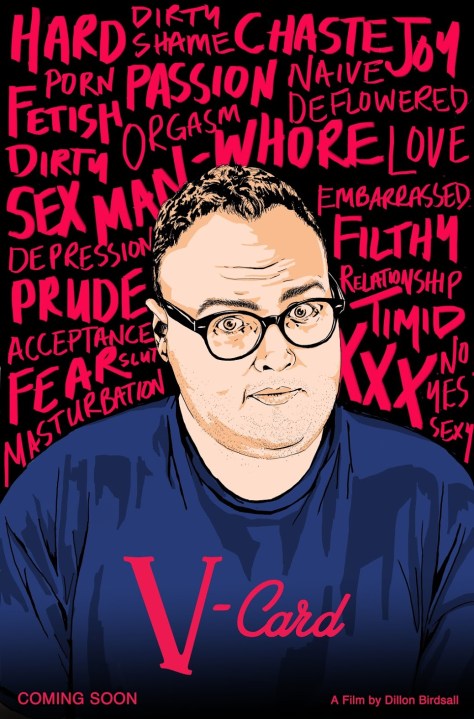
Technology has brought the entire world closer. Social media such as Instagram, Snapchat, and Facebook have given a global platform to anyone who desires it. What one gains in exposure, you lose in privacy. The generational difference of opinion on this is vast. Older generations are wary while younger generations don’t even think about an idea as archaic as privacy. It’s certain that different ages and different cultures feel differently about discussing the topic of sex. V-Card the Film is a perfect example of how society’s discussion of the subject has changed. The film’s editor Luiz Henrique Schiel Gigolotti understood that he needed to be as precise as a surgeon to navigate the subject matter of which could both attract or offend differing viewers. The duplicity was challenging for Luiz as he wanted the artist’s message to ring true while still representing the humor and real social stigma associated with the main character Dillon’s situation. The proper editing can completely change the audience’s decision to respect or feel pity for the protagonist.

IMG_3334

V-Card is the story of Dillon, a twenty-three year old virgin. Dillon has been trying but things haven’t worked out as planned. Depending on your cultural and religious background you might be offended or intrigued by his story. Luiz’s job as an editor is to help the filmmakers find that middle ground that interests everyone without turning them away. Dillon is a likeable, early 20’s New Yorker with a job, friends, & the things that most of us desire. Dillon is the film’s proxy for all of us to examine how we feel about virginity. The question put to the audience is whether we make our own decision about when we lose it or if we feel pressured by society to make it occur within a certain time frame in order to feel “normal.” The documentary examines Dillon’s life and feelings as well as those of random interviewees (and some scheduled ones) from many different cultural, racial, sexual, and social backgrounds. The star and writer of V-Card is Dillon Birdsall. When Dillon approached Luizto be the film’s editor, he was eager to accept. Gigolotti recalls, “When Dillon asked me to edit V-Card, I didn’t think twice about jumping into this project. The challenges of editing a feature documentary are something that I really get excited about, even more so with a film like this that so openly discusses a subject that many people are still uncomfortable talking about on a personal level.”

Editing is sometimes thankless. When it is done poorly, the audience is aware of it and a film seems cluttered and cumbersome. When editing is highly professional, you become lost in the story and don’t notice the skillful editing. An editor’s job is not for those who require constant praise. Still, editors are just as much a part of the creative process as the cinematographer, director, and others involved in filmmaking due to the fact that they have the ability to enhance the emotional impact the audience feels towards the action on screen. In a film like V-Card the emotions are varied and the different people involved in the discussion are very numerous. Once the actual filming has taken place, it’s Luiz’s job to connect the audience with Dillon and his interviewees, even when they sometimes only appear for seconds. Jamaal Green is the director (nominated at the Martha’s Vineyard African American Film Festival in 2014 for Chronicles of a Profiler) of V-Card the Film and the person who most closely works with Luiz on the tone set by the film. Jamal praises Gigolotti’s work stating, “Luiz is a vital asset to any film. He has become my go to person for editing and ‘After Effects.’ I can think of three specific projects we worked on in which his abilities took the films to a higher level. A good editor can present what you have and make it work, but a great editor will make what you have filmed look even better. That’s what Luiz has done with V-Card. He is an amazing artist and a pleasure to work with.”

In terms of his involvement in V-Card, there were some obvious challenges and other, less expected ones for Gigolotti. He explains, “Editing V-Card was a huge challenge in my career. When we talk about virginity or sexuality, there is always some concern to not offend the person we are talking to. In this specific case, I needed to make sure that the edit and the graphics are not offensive to the audience.” Far from offensive, thanks in large part to Luiz’s editing, V-Card achieves a heartfelt tone. Rather than leading the viewer to any judgment of Dillon, we are warmly invited to question our own experiences and how we perceive others who may have had radically different entrees into the world of human sexuality. The subject matter of the film could have taken several different and more highly salacious slants but Gigolotti worked with Dillon and Jamaal to place the topic in a nicely gift wrapped present with a colorful bow on top. That colorful bow was realized in the formatting of animation sequences. Luiz’s skill at combining real life footage and animation is a primary reason that he was asked to edit V-Card the Film. Dillon Birdsall, writer and star of V-Card the Film comments, “The main reason I hired Luiz for the film is because he is a fantastic editor, especially when it comes to after FX and animations. When we first seriously considered the idea of intermingling animation to the film, it was Luiz’s ideas and expertise that enabled us to successfully achieve the results we wanted. We needed a light heartedness that wasn’t gimmicky and also wouldn’t take you too far away from the storyline.  He has been a vital part of the documentary and brings a ton of great ideas and enthusiasm to the project. I’ve known him for a little over two years now and I’ve become a huge fan of his work. I feel very lucky to have worked with him and I definitely hope to do so again.”

IMG_3335

In addition to another documentary currently in production (Luiz admits to being smitten with this approach to telling a story), advertisements, and other films; Gigolotti has most recently been editing for Martha Stewart’s Living. The diversity and amount of work he finds in New York these days reaffirms his decision to move from Brazil to work in the US as an editor. He recognizes, “There are so many great artists, directors, and all around professionals in the industry here in the US. It seems like I am challenged everyday by people who only want the best. That’s what I always have wanted to be a part of, a community committed to always bringing their best.”