Over the years Canadian actor Cory Dagg has brought his unparalleled talent to a pretty astonishing list of film and television productions. Becoming known for his roles on hit television shows like “The Andromeda Strain,” “Top Cops” and “Street Legal,” as well as films such as Primetime Emmy nominee Brad Turner’s “The Inspectors,” Michael Kennedy’s action-packed crime film “Hostile Force” and “Bond of Silence” acting alongside Kim Raver from “24” and “Grey’s Anatomy,” Dagg’s proven that he has a unique gift for playing authoritative roles just as easily as he plays the underdog.
With a character list spanning the likes of government officials, sly detectives and frustrated public defenders, Dagg’s way of communicating with his eyes is something that has made each and every character he’s taken on to date unforgettable. His role as Detective Peters in the series premiere of Columbia Tristar’s thriller series “The Net” is one that not only helped carve out his reputation for portraying multi-layered characters in the crime genre, but also set up the basis for the show.
While out for a run early one morning, freelance computer programmer Angela Bennett (played by Brooke Langton) is arrested by federal agents only to find out once in the interrogation room that her identity has been erased and replaced with that of a wanted felon. Dagg’s character Detective Peters comes down hard on Bennett who is both baffled and afraid as Peters threatens her with a lengthy jail sentence for crimes she didn’t commit.
“Whenever I get a new role, I get to know that character as if they were going to be my new best friend. I try to think of every aspect of them – how they feel, how they would respond in certain situations, what they would say,” explains Dagg.
“With Peters being a cop, I knew I could handle that since I ‘ve done a lot of cops and military roles. But Peters is a bit of a dirty cop, so I had to dig deep to bring that out in him. Really, it comes down to immersing myself in the character, finding something – anything – I might have in common with him, and playing on that.”
Another of Dagg’s authoritative style characters that has left an indelible mark in the minds of viewers is that of General Michaelson on the seven Primetime Emmy Award nominated series “The Andromeda Strain,” which was adapted from Michael Crichton’s 1969 novel and produced by four-time Oscar nominee Ridley Scott. The four-part series follows a group of highly trained scientists as they work to find the source of what killed the inhabitants of a small town and a way to stop it, and the military team tasked with keeping the disaster under wraps as a matter of national security.
Acting alongside Benjamin Bratt (“Miss Congeniality,” “Despicable Me 2”) who plays Dr. Jeremy Stone and Golden Globe Award winner Ricky Schroder (“Get Him to the Greek,” “NYPD Blue”) who plays Major Bill Keane MD, Cory Dagg gave a brilliant performance as General Michaelson, the military leader who is charged with quarantining the affected area from the mysterious virus, and keeping the rest of the population safe.
Interestingly enough, Dagg originally auditioned for a smaller role on the series however, after director Mikael Salomon (“Hard Rain”) saw Dagg’s performance, he was given a much meatier role and his character went on to be featured in three of the series’ four episodes.
“The director said later he was surprised I didn’t have military experience, that’s how convincing he thought I was,” recalls Dagg. “It’s the dramatic roles I love the most, when the stakes are really high I’m able to separate myself from other actors and usually get the role.”
As an actor Cory Dagg effortlessly stands out in a crowd thanks to his magnetic presence both on and off camera, his rare versatility, and his ability to breathe life into the most complex characters, all of this and more have been crucial factors in the impressive career he has created for himself over the past 30 years, and we can’t wait to see what he takes on next!
When one finds their life’s passion it’s easy to see, a person simply comes alive when they’re doing what they are destined to do, the tricky part for many is figuring out how to turn that passion into a career and take decisive action to make it happen. Anyone who’s had the chance to watch UK actor Darren Higham perform would be hard pressed to think that Higham is driven by anything other than passion. His dedication and love for his craft oozes from his heart, magically bringing to life each and every character he portrays.
After honing his skills in the theatre starring in a plethora of productions at some of England’s most prestigious venues including the Redditch Palace Theatre, the Capitol Theatre in Manchester, and the Bolton Little Theatre in Bolton, Higham went on to land his first on screen role a little over a decade ago in the BAFTA and Royal Television Society Award winning drama “Clocking Off” created by Primetime Emmy Award winner Paul Abbott (“Shameless,” “State of Play”).
A high-profile production for any actor’s first television role, Higham lit up the screen as an aggravating police officer in the “Clocking Off” episode “KT’s Story” with ease. His believability as a police officer landed him a critical role as Police Constable in the BBC’s Edgar Allen Poe Award winning crime drama “Dalziel and Pascoe” the very same year.
Since then, Higham has gone on to amass an impressive repertoire of work that include playing critical roles in Daniel Percival’s (“Walking the Dead,” “Strike Back”) BAFTA Award winning film “Dirty War,” Brett Foraker’s comedy film “Buying Porn” and the 2010 western “Desperados.”
While Higham has proven his capacity to play everything from intense and layered roles in heavy hitting dramas to quirky characters in countless comedies, he admits that there’s a special breed of comedy that excites him the most.
“I’m comfortable in pretty much everything but I guess if I really had to choose one, I’d say comedy, more comedy drama than slapstick comedy though!”
While Higham has proven his knack for taking on comedic roles in multiple productions over the years, the one that he has become best known for is from his recurring roles on the “The Armando Iannucci Shows” created by Oscar nominee Armando Iannucci. A popular sketch comedy series, “The Armando Iannucci Shows” proved to the world that Higham is one actor whose improv skills have the power to tickle anyone’s funny bone.
To find out more about UK actor Darren Higham’s work and his upcoming roles, make sure to check out our interview below!
Hey Darren thanks for joining us! Can you tell us where are you from, and when and how you into acting?
DH: I’m from Wigan, which is a town in the northwest of England. I absolutely loved western films when I was a kid, they were an escape. I used to watch them with my Granddad. I was from a working class Northern family though and acting just wasn’t what people did. I did lots of different jobs after I left school and trained as a chef too. Then I spent a year in Hong Kong doing a few different things but I had the chance to do a few bits of work in the Hong Kong film industry, they liked my look! And once I’d had that taste, there was no going back. When I got back to the UK, I was offered a place at college and then a place at Manchester Metropolitan University where I completed my acting degree. This was a fantastic opportunity. Manchester Met is one of the best acting schools in the UK and has a brilliant reputation for theatre work.
You recently wrapped production on the upcoming film “The Quiet House,” can you tell us a little bit about the film and the character you play?
DH: It’s a futuristic film set in a world where pets are pretty much banned as they are thought to spread disease. The state looks to control this ban by way of daily scans on buildings. A drug has been developed that, when injected into the pet, means it can’t be picked up by the scanners and inevitably, a black market has developed around this. The film is pretty dark and mysterious. It has lots of underlying themes running through it such as state control, individual choice, quality of life etc. My character is pretty much a recluse, he lives alone with his cat. On the face of it, he is an upright citizen, employed in a government job, obeying all the rules – but he’s not really like that at all. His initial focus is on keeping his cat safe but then he finds himself in a much darker situation, there’s a bit of a twist to the story that I don’t think people will expect.
How is this character different from those you’ve played in the past?
DH: He’s a bit darker in the sense that you never really know where you are with him. I’ve played tough guys before but they’ve tended to be bad in a more obvious way. This guy is really chilling, you don’t really know where his loyalties lie.
You also just shot the films “Somnus” and “Modern Life is Rubbish,” can you tell us about those?
DH: “Somnus” blends sci-fi with horror. It’s about a cargo ship that is on its final mission working the monotonous Earth-Mars route. The ship malfunctions and the crew has to make a change of course to Somnus, a remote asteroid colony. It soon becomes clear to the crew though that Somnus has a dark past, which could affect all of mankind. It’s a really intriguing story and cleverly mixes sci-fi with horror. I play a medical droid who effectively is the wise old man of the ship, he’s a robot, sort of in the vein of Siri I guess. I haven’t really done any sci-fi before so this was memorable in that sense. Also, the way the story works means I didn’t have to have very much interaction with the other characters whilst filming which was also a novelty for me.
“Modern Life is Rubbish” is about a couple going through a break-up, which is played out against a backdrop of the songs that defined their relationship. It’s a really touching story, one that lots of people will be able to identify with. It’s a romantic comedy and very British! It was a lot of fun to film. I play a character called Solomon who is a friend of the guy going through the break-up. I play guitar in a band which at one point looked like they might be destined for fame but have ended up playing pub gigs. My band serves as a bit of a warning to the main guy as to what his future could look like if he carries on the same route as he is, so whilst he’s funny, he’s also a bit sad. This was a great project to work on, everyone got on really well and it was a tight crew.
Can you tell us about some of the other film projects you’ve worked on over the course of your career?
DH: I worked on a film called “Desperado.” I played the lead character who was called ‘Jr’, a wannabe cowboy living in a small terraced house in the north of England. The story revolved around this character, it was quite a simple storyline really but all of the other characters were linked to Jr, so his dad, his next door neighbour, his dad’s mate etc. I found the character pretty easy to play as his backstory was really quite similar to my own life, I really identified with his position, being in one place, feeling that you’re slightly trapped almost, but pining to be somewhere else! This was actually one of the most enjoyable shoots I’ve been on, it was a really tight knit cast and crew and we had a lot of fun.
I worked on another film called “Dirty War” which was centered around the aftermath of a bomb exploding in Liverpool Street station, one of the busiest stations in London. I played a fireman. He was important to the story as a large part of the devastation and human impact was seen through his eyes, so the audience was able to really feel what it was like through him. I found this role quite hard as it was such a difficult story – in London we had experienced IRA bombings before but this was being filmed in a post September 11th era so you felt a sense of responsibility to get it right, and to portray as best as you could the sheer horror of such a situation.
How about television projects?
DH: I’ve worked on a fair few TV programs, but the one that really stands out for me is working on the “Armando Iannucci Show,” which was a series of comedy sketches. It was written and directed by Armando and it was a privilege to work with him. I’d long been an admirer. There was a whole ensemble cast working on the shows and I appeared in a fair few of them, I built up a bit of a rapport with Armando, we have a similar sense of humour. This was a really fun project to work on, the cast was brilliant and there was a lot of improv which I love to do.
I worked on a TV programme called “Clocking Off,” which was a really popular show from a few years ago. It was an ongoing drama with recurring story lines and I played a policeman who pops up when one of the other characters gets into a spot of trouble when discovered drinking and driving. It was a serious drama, there wasn’t a lot of humour but it was one of my first TV appearances so I absolutely loved the opportunity, I got to work with some great people and the guy who wrote it (Paul Abbott) is just brilliant.
I also worked on a hugely popular show called “Dalziel and Pascoe.” Funnily enough, I also played a policeman in that too. My character is meant to be acting as security for a judge whose life has been threatened but he lets the judge talk him into letting him take some time out alone, and the judge is subsequently found murdered. This was an interesting role as whilst I was playing a policeman, I was also under suspicion of having played a part in the judge’s death so it was a bit of a dual character. This role gave me the chance to work with an actor called Warren Clark (who had appeared in numerous projects, including the film ‘Clockwork Orange’) who I really admired. He has since passed away so I feel pretty honoured to have had that chance.
You get approached all the time to work on projects with people, what makes you pick one role over another?
DH: I love for each role I do to be different from the last, it keeps me on my toes and means I’m constantly having to adapt. This ensures I never get complacent. Acting is a craft and you have to work at it all the time to ensure you’re at your best. Ultimately though, for me, the story is key. Whilst it’s a privilege to work with well-known people, I’m not really concerned as to whether the director/producer/other actors etc are big names – as long as the story grabs me, that is the hook for me.
Do you feel that you get cast to play a certain type of character more than others?
DH: Because of the way I naturally look, and my physique, I do tend to find that I get cast either in the lawman/peace maker role, so things like policemen, military men, firemen or, on the other end of the spectrum, in the hardman role, so gangsters, ‘tough guys’ and the like! I don’t mind really – it gives me an opportunity to surprise people when they see what else I can do!
Out of everything you’ve worked on over the course of your career, what project has been your absolute favorite?
DH: I would probably say “Desperados.” This was by no means the biggest project I’ve worked on but it’s my favourite primarily because this was the first film I wrote, directed and starred in myself. I went through the whole filming process from start to finish – from formulating the idea, writing the script, getting finance in place, getting the cast and crew together, filming it, post production, getting it out to the market, going to film festivals and doing Q&A sessions etc. I learnt so much and I am so proud of the finished film. It received a lot of critical and popular praise and it did really well on the film festival circuit, it was shortlisted for both the Salford Film Festival and The End of the Pier International Film Festival and was showcased in the film corner at the Cannes Film Festival.
What has been your most challenging role?
DH: Probably Jr in “Desperados,” because of the fact that not only was I acting, I was also directing the film, my first. It was without a doubt challenging and stressful – you want to give the performance your all and you want to focus on the acting but, at the same time, you also have to be thinking about the direction, where the cameras are, the other actors etc. I found that it was best to let the acting just come naturally, I’d written the script so I knew my character inside out. It worked for me.
What separates you from other actors? What do you feel your strongest qualities are?
DH: I honestly think I have a natural talent for acting, I find it easy to fall into character. I love film and I love people watching, I find it easy to imagine myself in different positions so I think I can identify with characters quite instinctively. I also trained at one of the best acting universities in the UK, I am classically trained and I cut my acting teeth on numerous theatre productions so I am comfortable in my abilities as an actor and I know I can adapt my skills to suit any particular project. On a more general level, I’m also focused, determined, resilient and can laugh at myself– the latter two are both particularly good for an actor!
What projects do you have coming up?
DH: I have a lead in an upcoming film called “Hector & Myself” which I am very excited about. I am also working on another film of my own, called “One Hit Wonder” which I hope to start filming next year. I also have a couple of other projects in the pipeline but I can’t really say anything about those at the moment. It’s a pretty busy time for me which is great.
What do you hope to achieve in your career as an actor?
DH: Really my main goal is to continue having the opportunity to play interesting roles in a wide variety of projects. Acting is a profession where you never stop learning, it’s a continual process and I love that about it. It is often hard, but it is never boring.
Why is acting your passion and chosen profession?
DH: I love the creativity and that every day is different. Acting can have its ups and downs, it makes you dig deep but at the end of the day, you know you’ve given something that people are going to enjoy watching and it’s a great feeling. I also love the fact that researching different roles provides an opportunity to learn more about all sorts of different issues and topics, you learn a lot that way too. It’s not just a job where you go through the same old motions each and every day.
As a population we are bombarded with an influx of content and information on a daily basis, so much so that it becomes challenging to sift through the over saturated media and find stories that really matter. Regardless of whether someone wants to spread a message about an upcoming event, groundbreaking discovery, or just wants to make a YouTube video with the possibility of going viral, knowing how to produce the message in a way that will reach the most diverse audience and actually have an impact is the most fundamental building block; and, digital content producer Ishita Srivastava knows exactly how to do that.
Some of the projects she has spearheaded and produced digital content for include the “Deport the Statue” campaign that reached over 20 million people in 2013, and the “Be That Guy” campaign, which aired on the Jumbotron at the NASCAR Miami Speedway Championship in 2013 as well as every other NASCAR race across the nation over the course of 2013 and 2014.
What is even more impressive than the reach and effectiveness of the digital content Srivastava has produced to date is the fact that she uses her brilliant skill to create work that spreads awareness and mobilizes people to take a stand against injustice. The issues she focuses on in her work, such as immigration reform, violence against women and racial injustice, notoriously elicit a wide spectrum of opinions. Naturally, you are probably wondering how Srivastava has managed to create content that diverse audiences with clashing beliefs can connect with when it comes to polarizing human rights issues; and the answer is– humour!
As the Producer and Deputy Director of the U.S. branch of Breakthrough, a global human rights organization that she has worked with for the last six years, Srivastava has continually used humour and storytelling as a tool to magically transform issues like gender equality, immigration and race into topics we can come together and see as “human” issues that affect us all.
For the first video of the “Be That Guy” campaign, Srivastava was charged with the hefty task of creating content that would inspire audiences at NASCAR races across the U.S. (an event that notoriously draws a large group of beer drinking race fans, most of whom are men) to stand up against sexual harassment and violence towards women when they see it happening.
Instead of creating a PSA that vilified men (which would immediately turn off a vast majority of the audience), Srivastava created an animated short film that portrayed the sexual harasser in the video as someone we all probably know or have met in our personal lives. The video in no way tried to make us hate him, instead it made us feel a bit sorry for his ignorance, and called on audiences step up and intervene, letting him know “hands are for beer and high fives, to imply, “hey man, that’s not right.”
Over the years, Srivastava, who has directed and produced countless films including the powerful documentaries “Desigirls,” “Inside- Out: Expressions of Gender and Sexuality,” “Checkpoint Nation” and “Mansimran,” has proven herself to be a master storyteller. So, it’s not surprising that when she was asked to transform the initial NASCAR-fan targeted “Be That Guy” video into a video that would effectively spread the message to audiences at a Green Bay Packers’ tailgate party, she was up to the challenge. Set in an animated version of the Packers’ beloved Lambeau field, the video portrays a crude fan in the stands shaking a hot dog as he makes lewd sexual innuendos at the stadium waitress.
The overall message of these videos is that if an action promotes violence or sexual harassment against women, regardless of how small an act it is, then it is up to us to take a stand and let others know that it’s unacceptable.
About creating the “Be That Guy” campaign and producing videos that would make an impression on these audiences, Srivastava explains, “they were great challenge because they were totally outside of my comfort zone in every possible way.”
While using humour appears to be a seemingly simple approach that helps those with opposing views see eye to eye over issues that under normal circumstances are known to cause arguments, there are few other digital content producers, and even fewer human rights activists, who have been as effective as Srivastava in transforming the way we see many of these polarizing topics.
One of Ishita Srivastava’s most recent projects for Breakthrough is THE G WORD, a global storytelling platform that is transforming our perception of gender norms by inviting people to submit their personal stories and experiences with the subject. After launching in December, the platform has received hundreds of powerful story submissions from people of all ages all over the world, many of them are available on The G Word website: http://us.breakthrough.tv/thegword/
In an interview with Sue Ding for Docubase, Srivastava explained, “We invited people, not just women but everybody, to share their story with the invitation that we all have a gender story. They range from everyday experiences of norms to really dramatic stories of discrimination and violence.”
THE G WORD brings together a collection of stories that span a wide range of subtopics such as consent, masculinity, dating violence, the women’s movement, greek life and many others, all of which are connected through the issue of gender. Besides giving people all over the world a platform to share their stories, THE G WORD has made it apparent that many issues that we might not think of as being gender related, actually are. The Chore Challenge, one of the many story categories Srivastava created for The G Word, asks audiences to contemplate what household chores they have taken on and whether they are rooted in gender roles. Simple examples such as young girls being taught to do the laundry, whereas their brothers are tasked with such things as fixing things around the house or mowing the lawn show how gender norms have been woven into the fabric of each and every one of our lives; and that these issues connects us all, whether we realize it or not.
“THE G WORD has been a dream project for me—it is characterized by all the things that I love, the things that get me to work in the morning, Some of the stories we get can be hard to read, but they’re honest and nuanced, and work so well to inspire empathy and make complex and intersectional issues relatable.”
THE G WORD platform and the impressive collection of ‘videos for change’ that Srivastava has produced to date have not only been astonishingly effective in spreading messages about globally relevant issues, but her unique and thoughtful approach to digital content has made it possible for her work to break through the cultural and perceptual barriers that separate us, in turn providing us with a common ground where we can stand together.
Cinematographer Ross Radcliffe on location of “The Last Alaskans” shot by Dave Clawson
After multiple life-threatening sports-related injuries suddenly derailed him from a future as a professional athlete, college student Ross Radcliffe turned to his interest entirely to his other love, cinematography. Born and raised on Vancouver Island in Canada, Radcliffe became motivated by the idea of seeking out remote corners of the world and capturing them on film. Turning the hours he would have spent training into hours submerged in film making, the revolutionary cinematographer quickly became recognized as among the top of the field.
When asked what it was about cinematography that captured his interest, Radcliffe answered without hesitation. “To be a cinematographer is to be a visual storyteller,” he said. “I get to craft images that effectively move the audience through a story, with all the twists and turns of emotions along the way.” And that he does.
Radcliffe began by shooting and editing his own projects, which quickly secured him a position with Susie Films, a full service, pitch to post production company. At Susie Films, Radcliffe’s love for the industry flourished, and before long, his insurmountable talents were recognized by major reality TV networks. National Geographic quickly hired him as a freelance cinematographer, followed quickly thereafter by both Animal Planet and the Discovery Channel.
With work pouring in, Radcliffe admits that his physical stamina and limitless capabilities are invaluable to networks filming shows revolving around high paced, action packed adventure. “I think a big responsibility of mine, due to the type of projects I shoot, is to stay on top of my physical conditioning,” says Radcliffe. He continues, “when I film a subject, I want to make sure their are no barriers between the story and the audience, so I have to be a pro at following along, no matter the conditions or situations might be. In my field, a good cinematographer blends into the situation to let it play out as naturally as possible.”
It is because of this physical endurance and artistically trained eye that audiences have the incredible adventure-based reality shows we see today. For example, Radcliffe worked as the Director of Photography on The Travel Channel’s Jackson Wild. The series revolves around the EJ Jackson, a 4-time world champion and adventure author and founder of Jackson Kayak, and his brave and fearless family. During this production, Radcliffe followed the family to Germany, Austria, South Africa, England and Zambia, where he faced what he calls a “crazy challenge” of keeping up with them physically. Radcliffe recalls of the experience, “I was able to capture mountain biking through Europe and waterfall jumping in Africa but, for the record, running around Africa with a 40 lb camera on your shoulder isn’t easy!”
Trekking through the freezing temperatures of an Alaskan winter was no easy task, either, though through his beautifully captured images used in National Geographic’s Dr. Oakley: Yukon Vet, Radcliffe made it look graceful and effortless. As the Director of Photography, the tactful cinematographer followed Dr. Oakley day and night and captured irreplaceable footage of the veterinarian as she helped a weak cow deliver an over sized calf. Radcliffe recalls the experience fondly, adding “while this project was extremely demanding physically and sometimes entailed stepping in stinky animal droppings or running from an angry muskox, I was honored to be part of such a small, hand selected team.”
No longer a stranger to Alaska by any means, Radcliffe was hired next for his technological brilliance and insurmountable endurance by The Animal Planet and Discovery Channel to shoot The Last Alaskans. Ranked second in the network’s most watched shows, the program is internationally acclaimed for its genre-busting take on the people and families who reside in the Alaskan Wildlife Refuge, located just above the arctic circle. Radcliffe’s contribution to the series gained recognition in The New York Times and The Washington Post, hooking viewers with depictions of unimaginably challenging living conditions, matched only in magnitude by the stunning beauty of the terrain.
To the great advantage of audiences worldwide, Radcliffe’s deep desire to put himself into other people’s shoes through the magic of cinematography will never fade. He admits, “being a cinematographer is the only job I have ever had that doesn’t feel like work. Every day that I wake up on location, I truly cannot believe how lucky I am. I’m honored and humbled to be instrumental in telling stories about people and places that would have gone otherwise unnoticed.” With his rare and refined compounded talents in both technology and athleticism, Radcliffe is sure to bring us uniquely captivating and alluring images for years to come.
Born in the UK and raised in Milan, Italy, 23-year-old Axel Swan is one fashion model whose pouty lips and bad boy style exudes the kind of sex appeal that transcends cultural boundaries. Being brought up in what is arguably the high fashion capital of the world, it’s not surprising that Axel was scouted by a plethora of agents who hoped to represent him in his teens; but at that time he had other things on his mind– like art, music and roaming the streets of Italy on his moped. The now sought after model admits that he just needed to grow up a little before he was ready to give the fashion world a try; but once he did, there was no turning back.
Currently signed to Two Management in the states and Uniko Models in Barcelona, Axel’s edgy rocker look has led major fashion companies around the world to consistently book him to be the face of their campaigns. Besides his outward appearance, which is undeniably a challenge to peel your eyes away from, what makes Axel so special in front of the camera is the fact that there is a sweet air of innocence to his personality that radiates from his photos and creates a beautiful dichotomy. To put it simply, Axel Swan is one mesmerizing model.
Some of his most recognizable campaigns and editorials to date include shooting for Junya Watanabe & Loewe’s collaborative collection, Barbara Sanchez-Kane’s “Catch as a Catch Can” collection, Urban Tribe’s “Sub Urban” collection, Hells Bells, Cult Shoes, Cotton Club and others. Axel also recently shot a campaign for Coca-Cola, which will be released later this year.
Axel was not only featured in leading men’s magazine GQ (Italy) as one of the main models in the campaign for the Junya & Loewe collection, but he was also featured in the collection’s fashion video, which was shot by Andrea Olivo and went viral in 2013. The video garnered Axel, the other models and the company a lot of attention when it was included on The Fashionisto, GQ Italia’s website and many other high profile outlets.
In addition to helping put many brands on the map in the eyes of fashion consumers, Axel has also taken his place in front of the camera shooting editorials for purely artistic purposes, like the 10-shot solo editorial he did for Papercut Magazine’s “Shiele Reloaded” spread. The photo collection, which was inspired by the work of iconic Austrian expressionist Egon Schiele, reflects Axel’s astonishing versatility and capacity for bringing intense emotions and characters to life.
To find out more about Axel Swan make sure to check out our interview below!
Can you tell us a little bit about yourself?
AS: My name is Axel Swan Maldini, I’m 23. I was born in a small town close to Manchester in the UK in July 1992. My mother was modelling in Milan at the time and my dad started working in a bank while he was promoting at one of Milan’s biggest nightclubs, and so they moved back to Italy when I was just 2 years old. I attended Italian schools, and I recently got my bachelors degree in fine arts at the Academy of Fine Arts of Brera.
I’ve always been really into music and skateboarding. I picked up the bass guitar at the age of 15 back when I was a punk, probably one of the few ones in Milano, Italy. All I was doing was putting soap in my hair and sewing patches of the bands I liked on my jeans and putting together some great distorted tunes with my friends. When I realised music wasn’t just about screaming and distortion I decided to attend a music school where I studied bass guitar for more than five years. In 2011 I started a band called ØJNE. We toured Europe a few times and released three vinyls.
About modeling.. I remember I was scouted by a tall young ginger haired man, on a warm day of the Italian Autumn, during my punk times. I was sitting in a corner next to a shopping mall having a beer and listening to my favourite noise, and the young lad come close to me and he smiles asking me if I could please open for a fashion show that I would have been perfect for, and that he would bring me to Elite afterwards so they could represent me.
The only thing I could do at the time was tell him to get lost… I refused his offer and wouldn’t take his business card. I just probably needed some time to figure things out and maybe grow up. Yeah I was a punk, but I was only 15. I got into modelling few years later at the age of 21.
How did you get into the industry?
AS: I remember meeting my ex-booker at a bar and we exchanged numbers. And then I received her call a couple of months later while I was driving my moped. She said a client really wanted to meet me so I accepted, and became a part of the agency.
What do you enjoy about working in the industry?
AS: Growing up I was always really shy and introverted, and I thought the industry was the right place to force myself to show my personality to others, as well as meet many talented individuals. I managed to improve my personality and kicked away most of my shyness!
Also I’m very fascinated by what happens behind the camera, and it’s really interesting to try and understand how another person sees you and what role they give you to interpret. Being the “object” of a creative process can only improve my skill as a graphic designer, as well as train my eyes and develop further awareness in my artistic choices.
On top of that clothes are always really, really nice. Also it’s a great opportunity to understand something more about fashion design, fabrics textures and all that comes with it!
What agencies are you with?
AS: TWO management – Los Angeles Uniko – Barcelona
What are some of your favorite brands and why do you love them?
AS: I don’t have any favourite brands and I don’t love any one in particular. I used to be really into Rick Owens (I still am, except for the fact that billions of people started to dress with copies of the real clothes without really seeming to understand why) and all the high end brands related to it… I still think the atmosphere they recreated, it’s something unique and has taken a lot from a few different cultures and background and they put them together with a dark “goth” attitude.
On top of that there’s alway a meticulous attention to the details of the fabrics and textures. Recently I re-discovered the Scandinavian touch to fashion, which is always extremely clean and minimalistic.
How has working as a model affected your style?
AS: I don’t think working as a model has affected the way I dress. Obviously at times you need to dress accordingly to fit the client you’re going to meet, but I always do it with my own touch and taste.
I’ve always been extremely sure that in a way what you wear expresses yourself and in some ways some of your personality. I’d say music has affected my style more, as well as my mood and my growth.
I rarely wear clothes that I bought a year before or more, because being still quite young, I feel they don’t represent me anymore or they represent non-updated version of myself; and they could also remind me of periods of my life that can be either good or bad, but still in the past.
Who are some of your go-to style inspirations?
AS: Love to mix and match. It could be a punk, a skater, another model, anyone could make me think of something new and different to put on.
Do you ever feel like you are two separate people, one when you’re in front of the camera, and a different one when you’re not working?
AS: Not really. Though I have to say that I mostly get picked to be the badass boy with tattoos and in “real life” I’m definitely not the one to be tough and cocky. I think one of the most interesting parts of being a model is learning to interpret the role they give you during a shoot or a movie and try your best to feel that way in front of the camera.
Can you list some of your clients, as well as the campaigns you have shot for them?
AS: I shot a multi-platform campaign for GQ Italy x Junya Watanabe x Loewe where the editorial shots were featured in the magazine, as well as GQ’s online platform and I also shot a video for them, which was featured on Highsnobiety and The Fashionisto.
I’ve shot campaigns for Rebel Root that were featured on billboards and in the papers in Barcelona, Spain, Cult Shoes and Evin Beachwear in Italy, as well as Catherinelle Bags and the campaign for Urban Tribe’s Sub Urban Collection.
AS: I’ve done a bit of everything from walking the runway and shooting high fashion editorials to commercial work and bathing suit ads, but so far I’ve done editorials more than anything else.
What is your favorite job you’ve done as a model?
AS: I’ve really enjoyed doing them all to be honest. The one I liked most was probably shooting for Fucking Young, it was fun messing around with a painted face and some Lucha Libre pieces.
Axel Swan shot by Szilveszter Mako
What would you say your standout characteristics/physical features are in the modeling world?
AS: I’m really skinny and long, got a bunch of tattoos but mostly concentrated on my left arm and my legs. Got some quite high cheekbones but not so edgy of a face. I can look a bit more commercial when I have a bit of a beard.
Who have been some of your favorite photographers to work with and why?
AS: Szilveszter Mako. I shot with him for Fucking Young! andLui Magazine. I’m really into his surreal approach to photography– the atmosphere he manages to reproduce in his pictures definitely recalls his background and where he comes from. He has a really cold touch and the geometries in his pictures as well as the framing is something unusual. He definitely has a great eye.
Andrea Olivo . I shot with him for GQ. His style reminded me a bit of Terry Richardson, the shots were really simple and the atmosphere was more than laid back. The focus was just on the attitude of the models.
What would you say your strongest qualities as a model are?
AS: I think being myself has always worked pretty well. Apart from the way I look, which is very contradicting compared to who I am (people always expect me to be the badass junkie but I’m very sweet and easy going), I think having loads of passions and interests helps me get along with pretty much everyone in the industry and there’s always a lot to share about something. I’m very professional, I always do the best I can do, and I’m easy to work with.
Can you list some of the people you’ve worked with that our readers might know?
AS: Andrea Olivo, Catrinel Marlon, Francesco Chiappetta, Krizia Robustella, Szileszter Mako, Juny Watanabe x Loewe, Federico Garibaldi, Evin Beachwer, and Settimio Benedusi to name a few.
As a model, what are your plans for the future?
AS: Work as much as I can and discover as many markets as possible.
What do you hope to achieve in your career as a model?
AS: A couple of those big billboards wouldn’t hurt, must be a weird feeling seeing yourself printed that big! I would probably crash my moped If I saw myself that big while i was riding around town. Apart from that, I’d love to work with designers I’ve always admired and get to know who’s behind the “big name.”
What is it about modeling that you love?
AS: Modeling is a great way to get to know great and talented creative people and gives you the possibility to see places and travel more.
“Hot l Baltimore” directed by Che Walker and produced by Rochelle Rossman at Stella Adler in Los Angeles.
Cast: Mona Lisa Abdallah, Liselotte Alfons, Anastasia Burenina, Christina Blum, Ana Roza Cimperman, Robert Oliver Gislason, Christian Hoha, Ninni Holm, Edward Macgregor, Tatiana Olaya, Johann Schulte-Hillen, Kayla Strada, Nuno Sousa and Abel Vivas.
Los Angeles, CA- Director Che Walker’s production of Lanford Wilson’s 1973 play “Hot l Baltimore,” which had a successful run on the Gilbert Stage at the iconic Stella Adler Theatre in Los Angeles, brought together a mishmash of colorful characters who all have one thing in common– they are all on the verge of homelessness as the seedy Hotel Baltimore that they call home is slated for demolition.
Set in the lobby of the dilapidated hotel, “Hot l Baltimore,” which pulls its title from the neon marquee with the burnt out ‘e’ that sits above the dying building, follows the trials and tribulations of the soon to be evicted characters as they live out their final days at the hotel.
The cast of the show gives audiences a brilliant slice of life peek into the lives of these characters, which range from naive hopefuls and over-the-top eccentrics, to cynical prostitutes who’ve seen too much sorrow to ever fully recover and the hotel’s less than chipper staff that seem to go out of their way to make all of the ‘guests’ feel like they’re the scum of the earth.
Mona Lisa Abdallah first takes the stage as the hotel’s daytime desk clerk Mrs. Oxenham, and boy does this actress bring her easily flustered, germaphobic and overly conservative character to life with distinct style. From her fidgety, nail biting mannerisms to her unrelenting nosey-ness and constant eavesdropping, Mona Lisa makes Mrs. Oxenham into a character we all love to hate.
The interactions between Oxenham and Paul (played by Robert Oliver Gislason), a former tenant who returns to the hotel (after being sent away to a work farm for two years due to a drug conviction) in search of his grandfather, serves as the perfect example of the disconnect between the two societal classes portrayed by the story’s hotel staff and their ‘customers.’ Instead of being willing to help, Oxenham brushes off Paul’s requests and treats him as if he his less than human, further solidifying the idea that these down-on-their-luck characters are really just worthless individuals undeserving of respect.
While the play is definitely tragic in the way it portrays the less than glamorous lives of the majority of its characters, it is not devoid of comic relief. The way Mona Lisa’s character uses a tissue to pick up the old rotary phone, and takes several minutes to lick the adhesive on an envelope just to mail a letter, definitely brings a bit of quirky humor to the show.
On top of taking on the pivotal role of Mrs. Oxenham, Mona Lisa was also cast to take on the role of Dopey, a new character written into the production by director Che Walker. Mona Lisa reveals her wide range as an actress through her portrayal of these two very different characters within the same production, something she accomplishes with astonishing ease.
Mona Lisa Abdallah as Dopey in “Hot l Baltimore”
As Dopey, one of the hotel’s resident hookers, Mona Lisa gives an engaging monologue about the struggles of being a prostitute in the lower rungs of society, where the girls continually spend their money to look glamorous in the eyes of their revolving door of Johns, have little left over for themselves and still battle the unceasing yearning for the familiar touch of true love– a sad cycle few are able to escape.
The young and lovably naive prostitute known as The Girl, played by Kayla Strada, gives us a little insight into how some of the older prostitutes started out their lives in the ‘business,’ probably holding onto a glimmer of hope that they would some day escape the murky underworld that’s sadly trapped them.
And then there is Jackie, played by Tatiana Olaya, a rebellious young thing who’s travelling with her little brother trying to gather enough money to start an organic farm back in Utah. After using all of her money to purchase the land for the farm (which she has yet to see), she goes about trying to convince Mr. Katz, the hotel manager played by Ninni Holm, to cosign a loan so she can get the start-up money she needs for the farm. But when that doesn’t work out, she decides to steal jewels from Morse’s room; however, she is caught and gets herself kicked out of the hotel. Even sadder than the fact that Jackie has no chance of really making a go of it with the farm, is that she leaves her brother Jamie, who’s not-all-there mentally, behind.
Through Millie, played by Johanna Schulte-Hillen, a retired waitress with a pension for reminiscing over the past, audiences are privy to a character who represents a different kind of ‘failed’ existence– one where the person doesn’t even reason that their life is in shambles. The character, who always seems to be telling ghost stories (that she clearly believes) in her somewhat soothing southern drawl, has a sweet, but melancholy quality about her– as if she had a beautiful future ahead of her at one point, but somehow took a turn for the worse.
The drama that ensues as the conflicting personalities of the characters clash, and the tragic, sometimes hard to swallow, display of their personal turmoil, kept viewers engaged throughout the run of the show. From the soon to be destroyed building, where hot water is simply not a thing and a working elevator is a memory long past, to the decaying youth of the play’s struggling band of prostitutes, “Hot L Baltimore” is imbued with themes of human struggle and cultural decay, and the actors involved do a marvelous job of breathing life into this 1973 play in the modern age.
Actor and stuntman Umar Khan on horseback in California
As an audience, when we get wrapped up in a fast paced action packed film it’s easy to forget that the actor on screen is rarely the one performing their character’s crazy stunts. A production goes to incredible lengths to cheat the shots and make an actor’s stunt double look just like their character so that when they hit the screen jumping off buildings, engaging in intricate battles and all the other physically challenging feats that make stunt men so heroic and necessary, that we as viewers remain on the edge of our seat, never noticing the role change. Although it is a rarity in the industry, there are some actors who actually do their own stunts and Umar Khan is among the best of them.
Khan is known for his work as both an actor and a stuntman in a plethora of titles including the films “Close Range” and “Deliver Us From Evil,” and the popular TV series “Bones,” “Rush Hour,” “Person of Interest” and “Scorpion.” Last year he also worked as a stuntman on the series “The Brink,” and “NCIS: Los Angeles,” as well as the recently released film “Whiskey Tango Foxtrot” starring Tina Fey and “Captain America: Civil War,” which is slated for its initial release on May 6.
Khan’s expertise in martial arts and various forms of combat have led him to become a sought after action designer in the industry with major productions hiring him to choreograph fights scenes for their projects. After working as the action designer on the 2014 TV series “The Hunger Games: Mockingjay – District Voices,” Khan formed Stunt Fighting Concept – Umar Khan Stunt Team. With his team Stunt Fighting Concept Khan has developed pre-visualized fight scenes for several films that are set to begin production including “Killing The Seeds,” “The Master’s Legacy” and the “The Man From Kathmandu.” He is now along with his team set to make a pre-visualized fight scene for the American remake of “The Raid.”
Prior to moving stateside several years ago, Khan established himself as a sought after stuntman and actor back home in Sweden where he both directed and starred in the film “Veracious Perception,” in addition to being featured in countless magazines and commercials.
To find out more about this incredibly talented performer make sure to check out our interview, as well as the video of Umar in action below.
I’ve read from some of your past interviews that you knew as early as age 7 that you wanted to become one of the few actors who also performs their own stunts– with that idea in mind, how did you initially approach your career?
UK: I started off like any kid by mimicking the fight scenes from the different action movies I saw. Later on, I developed an interest in fight choreography so I started choreographing my own fight scenes with my friends. During my years in middle school I used to borrow the school’s video camera to shoot my own “fight movies.” I remember that I was already a perfectionist at that age, I used to handpick my co-stars (based on their height, look and skills), do location scouting, direct, choreograph and act in the films I made. All of this would account for how I got more and more into the creative side of it.
For the physical aspect I tried to learn new moves and new styles all the time, trying to perfect each move and develop a new move out of it and so forth, watching martial arts movies and later on YouTube clips and comparing myself to the best in each discipline, that way I had a goal of where I wanted to reach skill wise. I think if you are truly meant to do something, there will be an urge that will draw you there no matter what obstacles you face along the way.
As a stuntman what are some of your special skills in the industry?
UK: My background is in martial arts, so I would say my primary skills as a stunt performer is screen fighting along with fight design, however I do a lot of different areas of stunts today.
How long have you been practicing martial arts?
UK: I have trained in martial arts since I was 7 years old.
Umar Khan as a teenager
You recently wrapped production on the upcoming films “Captain America: Civil War” and “Whiskey Tango Foxtrot” starring Tina Fey, can you tell us about the stunts you did in these films?
In “Whiskey Tango Foxtrot” I was initially set to do stunts only but I replaced the original actor who was cast for the role as “Wild-Eyed Man”, the director said that he was impressed with my performance while I was rehearsing the scene as a stand in for the actor so he cast me for the role instead. The character I was playing was possessed and was running in a crowd towards the lion cage screaming and eventually throwing a hand grenade inside the lion’s cage. We actually had a real lion on set, so it was pretty amazing to see such a magnificent animal so up-close.
In “Captain America: Civil War” I was playing Hero Mercenary and my main scene was fighting Scarlett Johansson’s character Black Widow, it was a great fight scene, one of the best in the movie, so you guys should definitely check it out!
What technical challenges did you face on these films when it came to mapping out how your stunts would play out on camera?
UK: The fight we did for “Captain America: Civil War” was a demanding one because of the extensity of the fight combined with the lack of time rehearsing it. Unfortunately, there wasn’t any time to rehearse the scene, which happens sometimes. We rehearsed the fight on set a few times right before we shot it and it all went really great actually. It all comes down to how well trained you are in screen fighting and how fast you can learn and adapt to a new choreography. Fortunately, that’s something I have always kept in mind since the day I started doing this, you never know when/if the director wants something different once he sees it in front of him, so I always keep in mind to prepare myself for any changes or the possibility of learning a new choreography at the last minute.
You have also worked as an action designer on several projects over the years– for our readers who aren’t sure what that entails can you briefly explain what you do as an action designer on a project?
UK: An action designer is basically a person or a team who is/are hired to design the action scenes on a production. In many cases, the stunt coordinator designs and choreographs the stunt sequence to suit the script and the director’s vision.
What projects have you worked on as an action designer and what were some of the different approaches that you took on each project?
UK: I designed a fight sequence back in 2014 on the TV mini-series “The Hunger Games: Mockingjay – District Voices.” While designing the fight scene for the series an idea I had many years ago of creating my own stunt team came back and so a couple of months later I formed my own team, Stunt Fighting Concept – Umar Khan Stunt Team. We have been fortunate enough after creating our first action design pre-viz (sponsored by Under Armor Germany) to get a lot of calls from producers requesting to make a pre-viz for their upcoming projects. We created two pre-vizes for Joyto Films for their upcoming projects “Killing The Seeds” and “The Master’s Legacy” and successfully locked the position on both as the Stunt Unit, and I’m set to Second Unit Direct/Stunt Coordinate on both projects.
We made another Pre-viz for a project called “The Man From Kathmandu” which my team and I will action design and coordinate on, I will Second Unit Direct and star in that film. We also recently made a pre-viz for Screen Gems that we’ll soon know if we secured the position of creating the action. And currently we’re rehearsing for our upcoming pre-viz for the American remake of “The Raid.”
I start preparing an action design for a certain project by reading the script a couple of times to get familiarized with the storyline and the characters involved in it, then I ask the producers or the director what his/her vision is and what they’re looking to do with the scene and then I’ll start working my way from there creating an action design that fits the script.
From safety to how things appear on camera, what are some of the most important aspects that you need to consider when designing fight sequences on a production?
UK: The general idea of my fight designs is to make it look as authentic as possible but also visually attractive for the audience, along with the unique camera technology that we possess (the only one on the market), the cameraman can approach the performers much closer in order to get the hands on feeling on the actual fight and give the audience almost a third person POV, video game kind of feel to it.
With this system in use comes a lot of other responsibilities to keep in mind. Not only safety for the performers but also safety for the camera man who is now one more “performer” in the mix and automatically becomes a safety priority. The fight sequences I design are meant to look very authentic due to the actual physical contact me and my teammates are inflicting upon each other, it’s not something I recommend; my team consists of guys that have fought professionally or are highly trained in various areas of the stunt business and are used to the physical contact as myself. We train the same way real fighters do, with sparring sessions combined with our choreography training to have the best of both worlds and adapt fast.
The second thing is the environment and the props. Basically we use props that look authentic and can simulate the real thing, just like in any of the props on set, we utilize them when we need but as little as possible since one of the main features of the camera technology we use is to capture the action scenes in “one shot.” We are limited when it comes to cuts between scenes so it requires a lot more from the performers to stay in shape, being well rehearsed and being sharp to prevent unaccommodated injuries to themselves or their fellow partners.
What is this new unique camera technology that your team uses?
UK: It’s basically something that we refer to as a “Semi-drone.” We believe that our concept will revolutionize how filmmakers capture movie fights and overall action scenes in the future. The reason being is that our system freely captures the fights and action in a video game style look by utilizing the DP as a part of the movement within the scene along with the performers and having a second camera operator moving the camera through a monitor for a more up-close and detailed view of the action, this way it won’t leave a single part of the move out for the audience to feel, you get the best of both worlds, the sense of POV along with the interactive part of 3D which makes it feel like you are a part of the action. It’s a pretty advanced technology that we are happy to bring to the big screen soon.
Can you tell us about your work on the 2015 film “Close Range”?
UK: I got a call from the director of the movie, Isaac Florentine, when I was in Texas and he told me that he had a part for me on his new movie. So I flew back to L.A and we started working on it. Working with Isaac was great, we had been in talks of working together for about 5 years when I was still in Sweden, so when the opportunity arose we made it happen. I was playing a Mexican drug cartel assassin called “Sesma”.
Umar Khan (left) and director Isaac Florentine (right) on set of “Close Range”
How does your character Sesma fit into the film?
UK: Sesma is the Mexican drug cartel boss’ right hand in the movie, he is an emotionless cold-blooded killer. Playing the character that doesn’t have a lot of lines is quite demanding but also a lot fun since instead of vocally using your thoughts you have to transcend them through your facial expressions and body language.
Do you feel that you get cast to play a certain type of character more than others?
UK: Not really, I have played a wide range of characters from different ethnicities and backgrounds.
Can you tell us about your favorite role to date as well as your most challenging role an actor?
UK: I would say until this date it’s probably a project I directed back in Sweden, “Veracious Perception.” I was depicting the role of Robert Martinez, a corrupt cop with multiple personalities, so I had to bring out so many different emotions while still maintaining character. It was very challenging but something I really grew from and enjoyed doing.
They are all very different, what made you choose to participate in these projects?
UK: My main goal when coming to America and Hollywood was to work on projects that were on the mainstream level, such as popular TV shows and big budget movies. It has been great working on big name productions doing acting and stunts but at the moment I’m also looking for challenging parts for the acting aspect and great action scripts for the action design.
You get approached all the time to work on projects with people, what makes you pick one role over another?
UK: If the role has a challenging side to it, it’ll be more intriguing to me. I prioritize the parts when I’m pushed out of my comfort zone to find a “new” me through the character I’m playing. I believe as an actor if you are not pushing yourself to take on the most demanding parts you’re not really testing your limits of what you are capable of delivering from deep inside you.
Have you been in any commercials or music videos?
UK: I recently did a commercial for EAS Sports Nutrition as one of the featured athletes, before that I did a commercial for Red Apple’s Ale, performing as the Latino boxer. I did a commercial for Dick’s Sporting Goods representing Under Armor jogging apparel, and last year I did a photoshoot for Harley Davidson and Carnivore Fitness (Australian athletic apparel) who are also now my sponsors.
I was in a bunch of music videos back in Sweden, such as, Fjarde Varlden’s “Ingenting,” Unlima’s “N’ Say Love,” Emerson’s “Back Off” and Cee Rock’s “The Fury.” Anderson Iz Nice and I did a couple of commercials like Idol 2005 and ICS for Sony Ericson, and I’ve also been featured in many magazines such as Fighter Magazine, Fitness Magazine, twice in M3 Digital World, the cover of Friskispressen, as well as Kamera & Bild.
What projects do you have coming up?
UK: At the moment me and my team are rehearsing for a previsualization for the upcoming American remake of the martial arts film, “The Raid.” I’m also in preproduction with another project that is set to be shot here in the U.S. and Nepal later this year, an action thriller called, “The Man From Kathmandu.” The film, which I’m both action directing and starring in, is being produced by Clear Mirror Pictures.
Last year, I was requested to choreograph/direct two pre-vizes for Tom Delmar, a renowned British action director making his directorial debut. We shot the pre-vizes with our technology and he was really impressed by them, so he put me in charge as the Second Unit Director and Stunt Coordinator on his upcoming features, “Killing The Seeds” and “The Masters Legacy.” It will be my debut as a Second Unit Director/Stunt Coordinator on a feature film so I’m super excited about that and deeply honored to have been given such a high position.
What are your plans for the future?
UK: My plans for the future are to develop more innovative Action Design for major shows and carry on what I started when I was in middle school, borrowing the school’s camera and bringing my friends to different locations to shoot my own projects, this time I’ll do it with my stunt team and with big budget projects. I also have plans to star and direct in my own projects in the future.
With an already established reputation synonymous with success, director Diego Arredondo embarks on his next project for the big screen, the feature film “Sonambulo.”
Set in Mexico City in 1941, “Sonambulo” follows Dr. Minvielle, a Parisian medical expert who travels to Mexico in an attempt to cure a growing number of inhabitants from a rural mining town suffering from chronic insomnia. However, Minvielle’s use of electroshock therapy and strange machinery unleash a mysterious chain of events within the town that threaten everyone’s lives including his own.
The filmmakers are hoping to land Cesar Award winner Vincent Cassel (“Black Swan,” “Child 44,” “Ocean’s Thirteen”) as Dr. Minvielle, multi-award winning actor Daniel Gimenez- Cacho (“Get the Gringo”) as Dr. Krauss, and Ana de la Reguera (“Cowboys and Aliens”).
“Sonambulo” was co-written by WGA writer Brian Horiuchi (“Brass Monkey,” “America So Beautiful,” “Parts Per Billion,” “Circle of Eight”), and is slated to begin filming in San Sebastian Del Oest, Jalisco, Mexico later this year.
Horiuchi says, “In working on ‘Sonambulo’ I was constantly delighted by Diego’s ability to find the truth of the story, to search the depths of the characters and allow the plot to develop naturally… Due to Diego’s contributions ‘Sonambulo’ has just been selected to participate in Strategic Partners, one of the world’s preeminent co-production/co-financing markets.”
LA-based post-production company Punch Media has already signed on to handle the film’s equity and post-production processing.
“In working on ‘Sonambulo’ I was constantly delighted by Diego’s ability to find the truth of the story, to search the depths of the characters and allow the plot to develop naturally… Due to Diego’s contributions ‘Sonambulo’ has just been selected to participate in Strategic Partners, one of the world’s preeminent co-production/co-financing markets.”
Diego Arredondo is one of Mexico’s most talented directors in the industry today. International audiences and festival judges began recognizing Arredondo’s prowess as a director even during the early stages of his career, something that is proven by the success of his films “Heel” (2004) and “Tequila Chamuco” (2005).
Created for the Straight 8 Film Festival in London, both films were awarded among the best films of the competition leading them to screen at the prestigious Cannes Film Festival.
Additionally, “Tequila Chamuco” screened at London’s Soho Shorts Festival and won the Best Short Award at the Silent Light, Cork Super 8 Fringe Festival in Ireland; and “Heel” took home the Straight 8 Film Festival’s Best Short Award. The films also aired during the BBC’s “4 Minute Wonders” special about the Straight 8 Film Festival.
Aside from the brilliantly crafted stories they portray, the laborious planning process and unique requirements that these films had to adhere to in order to qualify for the festival reveal Arredondo’s astonishing versatility and unparalleled vision as a filmmaker.
Established in 1999, the Straight 8 Film Festival requires all films to be shot and edited in-camera on a single Super 8mm film cartridge that the festival registers and sends to applicants once they have applied. This means that there are no second chances and no room for post-production editing; in fact, Arredondo didn’t even get to see his films until they premiered at Cannes. An assuredly nerve racking experience, which was only made less so because he knew his films had been awarded as the best out of hundreds of submissions.
Some of Arredondo’s other films to date include “Luchitas,” “Pancho Pozole,” “For the Wings of Angels,” “Hector y Tatis” and “Goyo.” He’s also had great success as a commercial director for globally recognized brands including Phillip Morris, Diageo, Tequila el Jimador, Tequila Corralejo, Mini Cooper, Dos Equis Entertainment, J&B, Corona and Heineken.
Another early accomplishment that testifies to Arredondo’s talent came in 2007 when he was chosen to participate in Berlinale Talents, a summit of master classes and lectures with the world’s most renowned filmmakers. The summit, which occurs annually during the Berlinale Film Festival in Berlin, invites five of the top young filmmakers from every country to attend.
While he was in Berlin, Arredondo also participated in the global documentary film project “Why Democracy”” where ten hour-long documentaries and 17 short films were broadcast in the world’s largest ever factual media event.
Arredondo’s film “Maria y Osmey,” which he wrote, directed and produced, was one of those films and as such, the film was broadcast in over 180 countries by over 48 broadcasters including the BBC, SVT Sweden, PBS USA, AL Arabiya Dubai and others.
To shed a little more light on the caliber of films included in “Why Democracy”” the film “Taxi to the Dark Side,” which showed alongside Arredondo’s film, went on to win an Academy Award for Best Documentary in the US in 2008.
Diego Arredondo has a creative vision unlike any other, but what is even more astonishing is the fact that his genius extends beyond film. Whilst living in London several years ago Arredondo solidified his reputation as a sought after music video director.
His debut in the format, the 2008 music video for the band Trickbaby’s hit single “Slipping Through Your Fingers,” which featured members of the Great Britain synchronized swimming team and was shot primarily underwater using Super16mm film, reached astonishing international acclaim and went on to be featured on MTV across London and Asia. Mexico-based production company Contenido Neto currently represents Arredondo as a music video director, and he is represented for commercials by Camaleon Films.
In addition to having created a dazzling repertoire of work over the past decade, Arredondo has attended some of the most competitive film schools in the world including the New York Film Academy, Central Saint Martins College of Art and Design London where he received his B.A. in Film and Video, and the London Film School where he received his Master’s Degree in Filmmaking.
Corona beer and Sony are also sponsoring one of Arredondo’s other upcoming films “Cloverlawn 3D,” a horror film based around events that take place at an eerie old house in Guadalajara, Mexico.
Since Tom Stevens’ introduction into acting for film and television six years ago, his career has featured many milestones and highlights, and has reached a boiling point level of immense success. That’s not much of a surprise to anyone who has ever seen him act. He commands the screen in every scene he’s in, which has resoundingly resulted in his placement among the best actors in the business.
Pitting himself analogous to some of the greatest talents in cinematic history, Stevens has the ability to carry his performance in his eyes. Whether they offer sympathy, invoke charm, or bring out a raw intensity, they always draw in the audience. It’s this impressive characteristic— along with his natural instincts— that have allowed him to play so many diverse roles throughout film and television. Some well-known titles he’s acted in include the TV series “Fringe,” “Wayward Pines” and “Cedar Cove.”
But perhaps Stevens’ most fun, most heart-pumping role to date is almost certainly “12 Rounds 2,” where he starred opposite the WWE’s Randy Orton. A powerhouse of adrenaline, the film was directed by Roel Reiné, produced by WWE and Michael J. Luisi, and co-starred Brian Markinson. Released on DVD and Blu-ray, “12 Rounds” was a hit for action fans who crave action-packed sensibilities the genre brings, and for Orton fans who yearned for a new dynamic platform to see their hero perform.
The film follows Nick Malloy (Orton), a paramedic taking care of a patient with a cellphone stitched inside his chest. Before the paramedic can offer much help, he receives a call that his wife has been kidnapped. The only way he can get her back is to play a 12-round game run by an unknown, evil mastermind. Stevens’ character joins the chase early on in the rounds. He plays Tommy, a wealthy, drug abusing son to a big-time politician.
Playing Tommy wasn’t going to be easy to pull off. He had to be played by someone that could work well within the script, but also improvising when the time called for it. Most importantly, he had to be someone that was willing to perform the dangerous stunts director Roel Reiné envisioned.
Stevens didn’t shy away from any of these challenges. He recalled telling Reiné, “I’ll jump off the roof on fire if you want me to. I like the idea of falling off of something and doing my own stunt work.” That’s a Tom Cruise level of commitment; the making of true star, indeed.
Two of Tommy’s most dangerous stunts took place during a pivotal scene during round 10. The character’s father is being buried alive beneath tons of sugar by non-stop conveyor belts above him. Stevens was required to act below a hanging 3,000-pound bulldozer’s bucket, and later within circles of fire. On the experience, he said, “You’re not unprotected. I had my shirt off and you feel the flames.”
All these action-based stunts make perfect sense for a film so heavily connected to wrestling. Orton was new to film acting at the time of production, and this meant Stevens was able to give out some pointers to his co-star. Sometimes it was just in calming his nerves, or helping his acting achieve a more polished, authentic look. By the end of the shoot, Stevens found himself becoming friends with one of his once heroes.
Speaking on being a lead in a feature film, Stevens said, “It’s something about being a leading man in the film. People look up to you to perform. You show any points of spite, anger or sadness, people start going, ‘Is Tommy okay?’ Everybody’s connected on set. You’re in this together. It’s powerful to be that guy stronger than you are sometimes. It’s a persona, a mental challenge. That’s what being a leading man is all about. It’s about everybody else on set.”
With his role in “12 Rounds 2” under his belt, and many other roles such as those in “Battlestar Galactica: Blood & Chrome,” “Diary of a Wimpy Kid: Dog Days,” “Wayward Pines” and “Cedar Cove,” Stevens has established himself as one of Hollywood’s most sought-after, go-to acting talents.
“I expect Tom to be doing high end work in film and TV for years and years to come,” said Stevens’ manager, Robert Stein, who discovered and helped launch the careers of other superstar talents such as Heath Ledger, Mark Ruffalo and Jason Clarke.
Coming next for Stevens is his role in “The Game of Love,” where he co-stars with Heather Locklear. The to-be-released comedy drama movie is headed to TV this spring.
Director and cinematographer Michelle Castro shot by Alejandro Ibarra
Audiences around the world will recognize Michelle Castro from the plethora of directorial accomplishments he’s made to date, which span the likes of music videos for renowned artists, award-winning narrative films and commercials.
Castro’s reputation as a highly skilled director became increasingly well-known throughout the Latin American entertainment industry after he directed the music video for Mexican pop star Gloria Trevi’s hit song ‘El Favor De La Soledad.” Trevi, who is often referred to as the “Mexican Madonna,” is also the subject of the biopic “Gloria,” which was released in February 2015.
Michelle Castro’s strength as a director has undoubtedly earned him international acclaim over the years, but his work as a cinematographer is another area of his genius that deserves notice.
As his film “When Negatives Collide,” which he both wrote and directed, was making waves as an international hit at festivals last year including being chosen as an Official Selection of the 2015 Cannes Court Metrage du Festival de Cannes, Castro was busy immersing himself as the cinematographer of several new film projects.
One such project, “The Destroyer,” a documentary film directed by Rupert Luis Sanchez (“Moktane”), follows MMA fighter Sean Loaffler as he prepares for a fight that could make or break the future of his career.
After spending 16 years as a strong competitor in the sport, Loaffler finally got his chance to make it big in 2012 when he was scheduled to fight in the UFC against Buddy Roberts; however, after suffering a massive ankle injury and being deemed unfit to fight, it was back to the drawing board for Loaffler. The film follows Loaffler after the accident up through his fight comeback, which if he wins, will give him another shot at the UFC.
Director Rupert Sanchez explains, “Michelle and I have been working together for years so when I started developing the idea for ‘The Destroyer’ he was a part of the process from day one. We both decided that being a documentary, in order for the film to stand out visually, it needed to feel cinematic. He suggested to film at an extremely shallow depth of field and with a free flowing camera; it proved to be the most important decision for the over all look and feel of the film. His undeniable eye for the human moments and complete understanding of my intention for the film is felt in the cinematography.”
Castro’s creative vision for the shots within the film coupled with his expert versatility behind the camera was a huge asset to “The Destroyer,” as he was able to get up close and capture the action of the fight scenes and the deeply emotional struggle Loaffler experiences in this very real story.
“We shot this with DSLRs because of the mobility that they provide. Also when [Sean] was either training or fighting you are very close to the action and you really need to be able to move away if they are throwing punches at each other,” says Castro.
“The Destroyer,” which is currently in postproduction, will begin making its rounds on the festival circuit later this year.
For Michelle Castro the last few years have been incredibly busy, in fact, since 2013 he has lent his ingenious creative skill as a cinematographer to more than 15 films. From his most recent foray into the documentary film format with “The Destroyer” to dramatic narratives like Álvaro Ortega’s “Waltz” and Anish Dedhia’s “Chypre,” and the experimental mystery feature “Los Títeres de Belial,” Castro has revealed his remarkable ability to capture the visual story of each film, bringing each tale to life in a totally different way.
The film “Chypre,” which stars Svetla Georgieva (“Kantora Mitrani,” “A Punishment to Some, To Some a Gift”) and Christoff Lombard (“Waiting for the Miracle,” “Deguello”) takes audiences inside the cold relationship of one couple and examines how a young wife, who is sadly ignored by her husband, begins to desire a woman she encounters on the train. Castro sets the tone of the film with his visual approach in a way that, combined with the actor’s expressions and body language, allows the story to come across without relying heavily on dialogue.
The film, which had its world premier at the New York Indian Film Festival, earned the Best Film Award at the 2014 Los Angeles Thriller Film Festival, in addition to being chosen as an Official Selection of the India International Film Festival of Tampa Bay, the Third Eye Asian Film Festival, the Rainier Independent Film Festival and many more.
Castro admits, “‘Chypre’ is one of the projects that I hold close to my heart… From train stations to mock up trains this was an exciting film to shoot. Anish Dedhia, the director, is a good friend and did an amazing job writing the script. Another reason that I’m grateful for this project is because I got to work with Svetla Georgieva, which marked our third collaboration. I consider her to be one of the best actresses I’ve ever worked with.”
Prior to working as the cinematographer on “Chypre,” Castro directed actress Svetla Georgieva in his dramatic mystery film “Succubus,” which earned the Honorable Mention Award at the Los Angeles Movie Awards in 2014, as well as a nomination for Best Short Film at the Studio City Film Festival.
As for what’s on the horizon, Michelle Castro, who recently wrapped production as the cinematographer on the films “Charlie,” “Sleep,” “The Four Horseman,” “O1” and “The Delicious,” is slated to work as the cinematographer on three new film projects as well as direct an upcoming feature, with more information to be disclosed at a later date.
International Entertainment, and the Talents that Leave us Buzzing….


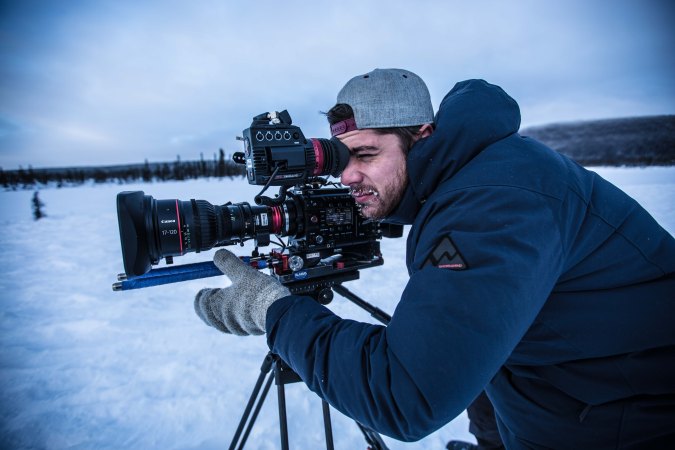
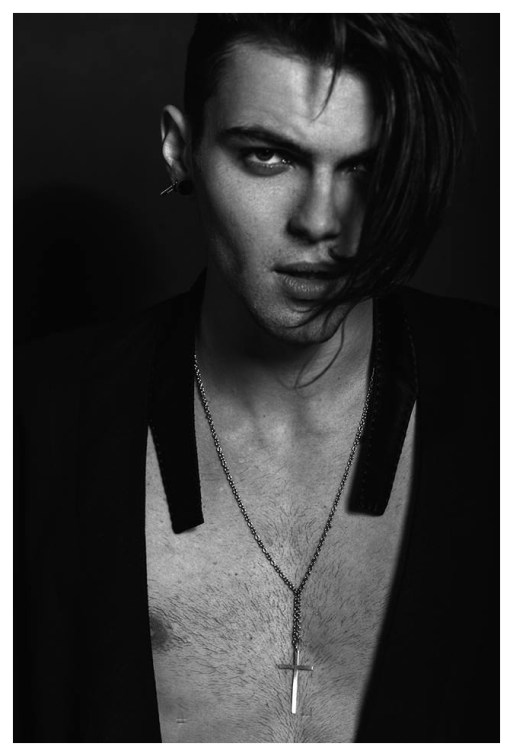

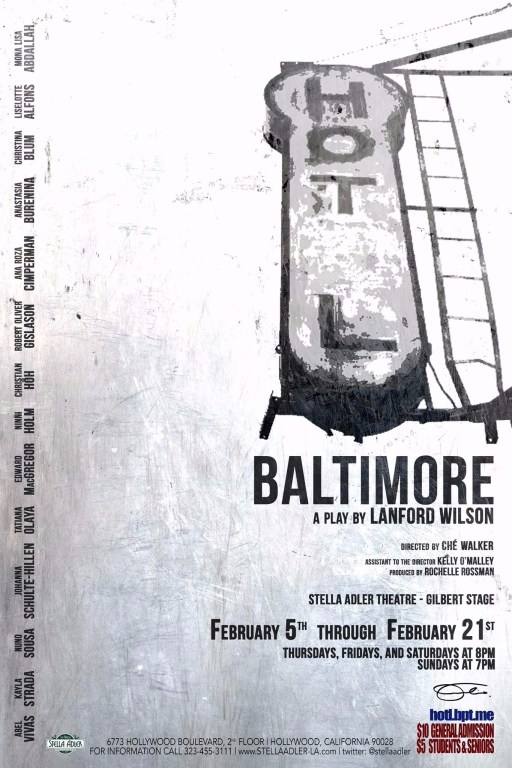


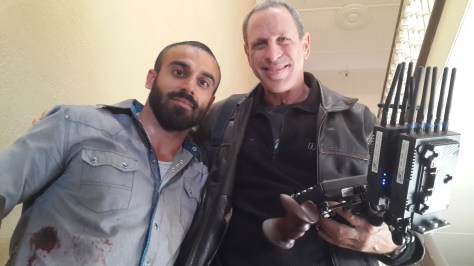


 internationalfilmreview