Actor Profile: Ukraine’s Jane Kapriss!

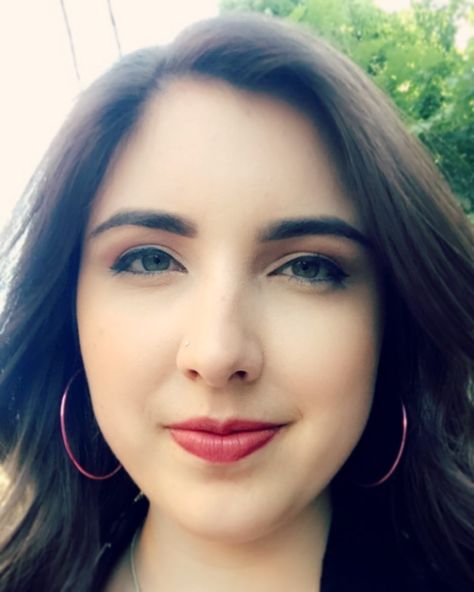
Jane Kapriss
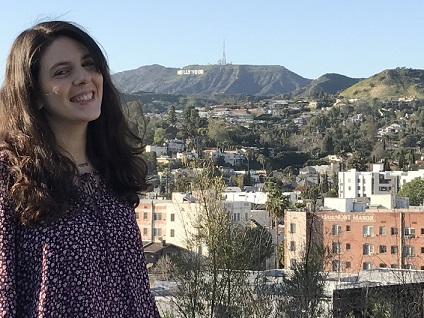
Actress Jane Kapriss shot by Chia Messina

Award-winning actress Jane Kapriss is known for her performances in an impressive range of films such as the romcom  “Mac Daddy & the Lovers,” which took home the Golden Reel Award from the Nevada International Film Festival, the film’s sequel “Mac Daddy’s Vegas Adventure,” Geraldine Winters’ (“Clownstrophobia,” “Clownstrophobia 2”) thriller film “Psycho-Path: Mania” with multi-award winning actor Keith Collins (“Gravedigger,” “Awake in the Woods”) and many more.

Originally from Kiev, Ukraine Jane knew from a very young age that she would someday embark on a career as an actress.

Jane recalls, “I was interested in acting since I was a little girl. When I was 13, my mom took me to the audition at a modeling agency. They signed me and… later the agency sent me to the World Championships of Performing Arts to compete in the modeling category. I begged them to allow me to compete as an actress as well. Thankfully, they did. And as a result I won bronze medal for acting. After that acting has always been my priority.”

It’s not at all surprising that the Veni Vidi Vici modeling agency signed Jane on the spot, she is absolutely gorgeous, but it’s her talent as a performer that has ultimately put her on the map.
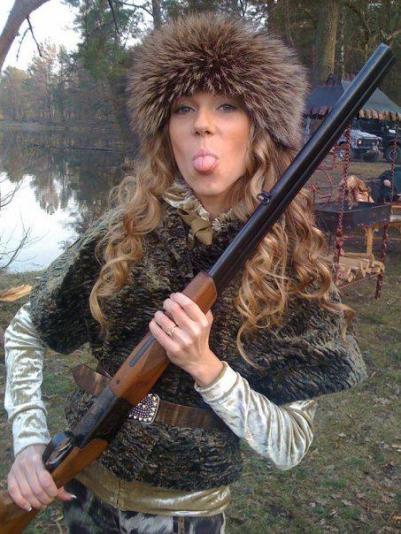
Jane Kapriss
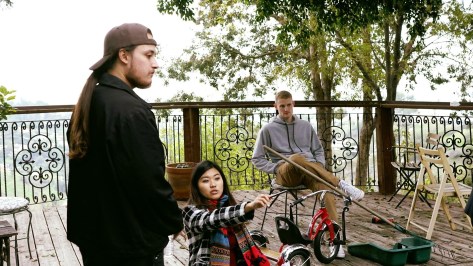
Jane Kapriss on set of “Hand For Luck”

Early on in her career Jane landed a lead role in the popular Ukrainian feature film “Hand for Luck” aka “Ruka na Schaste,” where she starred alongside some of Russia’s most recognizable actors, such as Nina Antonova (“Polar Fight,” “Iron Ivan”), Golden Eagle and People’s Artist of the Republic Award winner Armen Dzhigarkhanyan (“Assassin of the Tsar,” “The Edge”) and MTV Movie Award Russia nominee Oskar Kuchera (“20 Cigarettes,” “Law of Corruption”).

A criminal action comedy, “Hand for Luck” follows Grinya (Kuchera), a shy loser who loses his hand after being run over by a car; but as luck would have it, the hospital has a fresh hand on deck to replace it– the only problem is that it came from a gangster who died in an explosion that same day, and once it’s on Grinya’s body, it tries to control the show pulling him into the life of it’s former owner.  To make matters more complex, the hand comes equipped with a ring engraved with the last 4 digits of wire transfer password that every criminal in the city wants to get their hands on. Unable to remove the ring, Grinya becomes a prime target, but with the hand of a gangster leading the way he becomes the hardest loser any criminal has ever tried to catch.

Jane gave a knock-out performance in the film as Anastasiya, the niece of feared mafia boss Krestnyy (Dzhigarkhanyan), and the original owner of the ring. Bringing the comedy into the world of cut-throat gangsters, Jane’s character Anastasiya is a teenager who just wants to make-out with her boyfriend and pass midterms, but even when the criminal dealings of her uncle overflows into her normal teen life Anastasiya remains rather oblivious to it all.
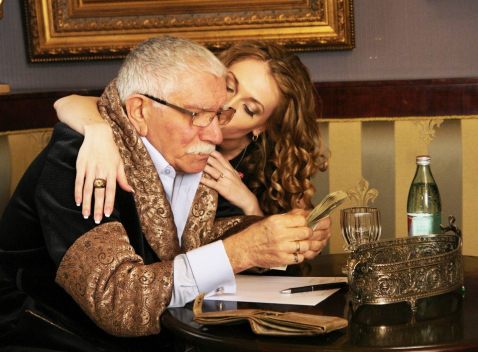
Jane Kapriss
Still of Armen Dzhigarkhanyan and Jane Kapriss in “Hand for Luck”

Jane explains, “I loved this character. She was one of my favorites. It was very funny how oblivious she was to the crime world cause she grew up in. My favorite scene to act in was the scene where she enters their living room where the shy loser in on his knees at gunpoint about to get killed. There are gangsters with guns everywhere. And she disregards all that because she has to walk through the living room to pick up the pizza delivery.”

Jane’s portrayal of Anastasiya definitely lightens the mood in the film, while also driving home the idea that even a crime boss who kills people on a daily basis still has room in his heart for family and struggles through everyday problems such as making sure his niece doesn’t run off with her boyfriend.

Produced by Zebra Productions (“Dare to Dream”), “Hand for Luck” garnered an overwhelmingly positive reception in the Ukraine upon its theatrical release in 2008, which also helped to boost Jane’s celebrity status at home.

Producer German Arkhipov, head of Zebra Productions, says .“As soon as I read the script, I knew that Jane was the perfect fit for the role of Anastasiya. And I offered her the part right away. Jane is a magnificent actress, a true professional who can make the audience laugh and cry. It is a rare gift. As a producer, I have to be sure that my project has the best actors attached to provide further success of the show. Having Jane on board means that half of my work is done.”

After carving out a strong reputation for herself as a dynamic actress in Ukraine, Jane moved to the U.S. where her onscreen career has continued to flourish. Up next for the sought after actress is an upcoming TV sitcom directed by Lana Lekarinou (“The Sparkle”) and produced by Antonia Roman (“Altruism,” “Hollywood Tale”). While we cannot disclose too much, we can say that the sitcom is co-production between That`s So Funny Entertainment and LVP Films, INC., and Jane will take on the lead role of Kitsa.

“I just want to act as much as possible. It’s never enough for me. It might be a cliche to say, but when I’m acting, I feel that I’m alive. So I just want to have a chance to keep doing that,” explains Jane.

COMPOSER CREATES BEAUTIFUL MADNESS: SAI SRIRAM MADDURY

Anyone who has been driving around town at night with their friends when that “perfect” song comes on the stereo…the own which causes everyone in the car to go wild (it’s a universally shared experience) has a deep understanding of the ability of music to take any experience into the stratosphere. This is the same concept filmmakers apply to the score of their film, regardless of the genre. They may not want head banging of chair dancing but said filmmakers definitely want to use music’s power over the human psyche and body to deepen the impact of what they are exhibiting on the screen. Michael Helms, director & screenwriter of the film “Madness” did not originally want a score for his film about a military officer returning home and dealing with the psychological aftermath and trauma of what he’d seen and done. He felt that the solemnity that a lack of music communicates would be more disturbing to the audience than anything a composer could muster; that is…until he heard examples of composer Sai Sriram Maddury’s work.

“Madness” is about feeling out of place and the isolation and personal disruption to one’s psyche even when surroundings do not support this sense. In the story, a Military officer returns home while a radical militant group’s merciless killings continues to haunt him and his memory. On leave from a deployment Cliff (the main character), visits home to experience normal life with his pregnant wife Liz. During this time, his battle experiences monopolize his thoughts. Unable to integrate into “normal” life, Cliff discusses this with Liz and returns back to the army front.

Helms wanted to communicate Cliff’s inability to find a comfortable place in his life and his mind. He explained to Sai that the score for the film should be as minimal as possible in order to not disturb this isolated environment. While the two did not share a vocational language, the discussions were in no way cumbersome. Maddury describes, “Michael was very good in describing what he wanted. It’s always something of a challenge to understand what a director wants but I did not have that problem with Michael as he is very good in articulating want he needs from the film and story point of view. Music is a part of the storytelling process. When a filmmaker like Michael speaks to me in terms that discuss emotion and the mood that he wants to create, we become collaborators. For example, when he needed the score to underplay a particular scene in which a character reveals his past, Michael explained the reasons why the score needed to underplay and why that particular scene was so important for the film. This way I knew the exact point and reason why Michael wanted the score to underplay and this made it easy for me to find a way to create music that presents his vision. As a composer I prefer directors to explain what exactly they need in terms of story rather than in musical terms. If a director tends to use more musical language, I might take it in a traditional musical terminology but it might be not exactly what the director was referring to. This doesn’t happen when we discuss in terms of characters, story, importance of the scenes and use of words like underplay, overplay, busy, not too busy, intense, light etc.”

In line with the early vision of Helm’s, Sai matched his composition to the film with very simple drones to create ambiguity and uncomfortability. You can’t keep a true creative personality from receiving and interpreting emotion; after multiple viewings of the film, the composer began to recognize a glaring omission in his work. Maddury wanted to justify the story of the character and his past because this concept is the core of the film. When memories of past events and individuals disturb Cliff, his past becomes as important as the character itself.  Sai presented the idea of using Arabic chants and a rhythmic motif that represented these past. experiences. Michael conceded that he loved that idea and felt that it amplified the overall intensity of the film. The use of voice rather than instrumentation was a calculated decision by the composer. The idea to use Arabic chants rather than an instrument like Duduk or Persian Dulcimer was in order to prevent the score from sounding too ethnic. The film focuses on the main character’s state of mind and thoughts rather than scenes that display the war in the Middle East, this caused Sai to feel that the use of ethnic scales and instruments were not justified. Maddury’s reasoning for using chants is directly applicable to the storyline. It was his contention that the character might have heard these chants coming from the terror groups in the army front and these continue to haunt Cliff. In a style that he has become recognized for, Sai blended Western instrumentation with these chants for a score that it is not completely immersed in one singular culture.

Maddury is full embracing of the technological advancements that are afforded to a composer these days. While he is well versed in the last software and MIDI, sometimes old school is what works best. He wanted a rhythmic motif representative of a heartbeat. After exhausting countless samples (and blends of these), he began experimenting with a more analog approach. He reveals, “After trying numerous samples, I did not get the right tone I was looking for. I tried experimenting and recording the sounds of a wooden desk, empty wooden shelfs, etc. After trying almost every wooden furniture I could get my hands on, I ended up using the sound of the rear side of the upright piano. It has a great hollowness and created the perfect “heartbeat” like tone I wanted. It’s such a fine instrument, it seems somewhat wrong to use it in this manner but there are no rules when it comes to making the appropriate music for a film. When I played it for Michael, he immediately wanted me to use it in the score and that’s how it ended up as a main motif for the haunting memories of the character.”

Just as a filmmaker has a process that produces an emotional creation, so does Sai. Preceding a viewing of the film but following discussions with the director, he writes thematic suites. These suites represent the ideas and emotional interpretations based on the script. Once these have been played for the director and he has provided feedback, they are then tailored to the film during the spotting session. This is when the structure of the score, where more and less emphasis is needed, cues, etc. happens. Following this, Maddury actually starts writing to the picture. The process is multi layered and Sai openly states that a director who understands exactly what he wants and is confident about it makes them a composer’s best friend.

06 Sai Sriram Maddury Pic

“Madness” was officially selected and screened at the Full Bloom Film Festival 2016 Queen City Cinephiles.

RACHEL ZHOU DIRECTS A MULTINATIONAL NAIL BITER IN LOS ANGELES KIDNAPPING

China not only possesses an acclaimed and burgeoning film industry but also a huge number of movie goers and cinema fans who greatly contribute to a film’s international box office. There’s a good reason that you see many Chinese names in the credits of Hollywood films these days as well as an increasing number of the country’s talent appearing alongside Hollywood marquee names. The relationship between these film industries has been mutually beneficial artistically and financially. A key ingredient in this scenario is the ability of at least some of the professionals to communicate in both languages (sometimes multiple languages) whether in front of the camera or behind it. Rachel Zhou is a Chinese director well versed in American film. She has found herself working on numerous productions due to her talent and her command of both languages. Communication is key for a director when speaking with the actors, cinematographers, and other members of the film crew. It’s even more so when the same vision must be communicated clearly to a cast and crew who do not share the same native tongue. The China-US production Los Angeles Kidnapping enlisted her as a director due to their need of cross cultural assuredness in both the storyline and the performance of the off camera crew.

The occurrence of US/China film productions is becoming increasingly more prevalent. Directors who are both talented and at ease in communicating in both languages (Rachel speaks four languages) make them even more attractive these days. Zhou believes that the communication involved in a film production transcends even the spoken. Her goal is to have her team work together culturally and spiritually. Directing more than the film, she feels that it is her job to create a positivity, a sense of calm and confidence that permeates the very air of the working environment to sync the minds of all involved. Even though she possesses more than the appropriate verbal skills needed for all on her team, it’s Rachel contention that once she creates this “vibe” on set, everyone understands and anticipates the needs of the work.

Los Angeles Kidnapping is a Chinese story taking place in the US but the theme is universal. Through the experiences of Delger (played by Siyu Lu) the audience is asked the question, to what ends will one spend their life fixated on revenge. Motivated by avenging his brother’s death, Delger follows clues about the murder to Los Angles. As a graduate of the police academy, he both understands the law and is willing to work outside it as a result of his anger. Working undercover as an Uber driver in LA, he continues his investigation. When a friend of a friend is kidnapped by mobsters, Delger is enlisted to aid in the rescue. The experience and a surprising plot twist at the end of the story cause this protagonist to question whether a life solely focused on vengeance is one he is willing to live.

While the list of Zhou’s directing credits is extensive, her work on action films was not, prior to Los Angeles Kidnapping. She fully embraced the idea of the different approach required for the genre. Taking great care to design and discuss the film’s many action sequences with stunt coordinators for entertaining action designers, Rachel’s cast underwent extensive training for them film. While storylines of a more emotional nature are centered around the actors, action films present the action as a character in themselves. This includes crew members and professionals who specialize in the genre such as stunt coordinators, drone operators, traffic controllers etc. The film also gave Rachel a chance to use one of her favorite tools as she describes, “I’m into Steadicam shots a lot. When I direct an action/crime/drama, especially actions scenes, I prefer to go with Steadicam shots. Steadicam is a novel way to shoot a scene as it isolates the movement of the camera operator from the camera. Stabilizing mechanisms counter the movements of the camera operator to eliminate the inevitable imperfections present in handheld shooting. These work in an extremely powerful way since the Steadicam shots, compared to handheld shots, give a stronger sense of subjectivity with steady movements. The audience finds it easy to become engaged in the setup.”

IMG_1546

Los Angeles Kidnapping garnered a plethora of awards at such prestigious events as the London Independent Film Awards (2017), Miami Independent Film Festival (2017), Hollywood International Cine Fest (2017), Los Angeles Film Awards, and received an astounding 1.94 Million views on Iqiyi.com (China’s version of Netflix) which announced Zhou as an action director. Los Angeles Kidnapping’s producer Cleo Zou has an acclaimed career in China as a producer, working with the country’s most respected and successful stars like Jackie Chan. Cleo declares, “With Rachel on the set, I never had to worry about the shoot because she is such a highly-productive artist. She`s talented, smart, hardworking and humorous. She always knows what she wants and how to get it. We all love working with her. She possesses that ease of working with professionals from both cultures which enables everyone involved to relax and enjoy the process, which is when artists are able to deliver their very best.” It’s this tone that Rachel always strives for, in both big and little ways. She reveals, “Everyone works very hard on a film set. I feel it’s important for us to not only support each other but to lift the spirits of one another. I think there is always time to make it fun. When we were shooting a conversation scene in an alley for Los Angeles Kidnapping, the art department was asked to make wanted posters to place on the walls. Because those posters are never in focus, they made ones that said “Wanted, Giraffe” & “Wanted Dinosaur”, etc. It was a tight shoot that day but the funny posters made all of us laugh. It’s not only the little things that the audience appreciates but also the little things the professionals making the film like.”

LA MEETS CHINA IN DIRECTOR RACHEL ZHOU’S LOS ANGELES KIDNAPPING

China not only possesses an acclaimed and burgeoning film industry but also a huge number of movie goers and cinema fans who greatly contribute to a film’s international box office. There’s a good reason that you see many Chinese names in the credits of Hollywood films these days as well as an increasing number of the country’s talent appearing alongside Hollywood marquee names. The relationship between these film industries has been mutually beneficial artistically and financially. A key ingredient in this scenario is the ability of at least some of the professionals to communicate in both languages (sometimes multiple languages) whether in front of the camera or behind it. Rachel Zhou is a Chinese director well versed in American film. She has found herself working on numerous productions due to her talent and her command of both languages. Communication is key for a director when speaking with the actors, cinematographers, and other members of the film crew. It’s even more so when the same vision must be communicated clearly to a cast and crew who do not share the same native tongue. The China-US production Los Angeles Kidnapping enlisted her as a director due to their need of cross cultural assuredness in both the storyline and the performance of the off camera crew.

The occurrence of US/China film productions is becoming increasingly more prevalent. Directors who are both talented and at ease in communicating in both languages (Rachel speaks four languages) make them even more attractive these days. Zhou believes that the communication involved in a film production transcends even the spoken. Her goal is to have her team work together culturally and spiritually. Directing more than the film, she feels that it is her job to create a positivity, a sense of calm and confidence that permeates the very air of the working environment to sync the minds of all involved. Even though she possesses more than the appropriate verbal skills needed for all on her team, it’s Rachel contention that once she creates this “vibe” on set, everyone understands and anticipates the needs of the work.

Los Angeles Kidnapping is a Chinese story taking place in the US but the theme is universal. Through the experiences of Delger (played by Siyu Lu) the audience is asked the question, to what ends will one spend their life fixated on revenge. Motivated by avenging his brother’s death, Delger follows clues about the murder to Los Angles. As a graduate of the police academy, he both understands the law and is willing to work outside it as a result of his anger. Working undercover as an Uber driver in LA, he continues his investigation. When a friend of a friend is kidnapped by mobsters, Delger is enlisted to aid in the rescue. The experience and a surprising plot twist at the end of the story cause this protagonist to question whether a life solely focused on vengeance is one he is willing to live.

While the list of Zhou’s directing credits is extensive, her work on action films was not, prior to Los Angeles Kidnapping. She fully embraced the idea of the different approach required for the genre. Taking great care to design and discuss the film’s many action sequences with stunt coordinators for entertaining action designers, Rachel’s cast underwent extensive training for them film. While storylines of a more emotional nature are centered around the actors, action films present the action as a character in themselves. This includes crew members and professionals who specialize in the genre such as stunt coordinators, drone operators, traffic controllers etc. The film also gave Rachel a chance to use one of her favorite tools as she describes, “I’m into Steadicam shots a lot. When I direct an action/crime/drama, especially actions scenes, I prefer to go with Steadicam shots. Steadicam is a novel way to shoot a scene as it isolates the movement of the camera operator from the camera. Stabilizing mechanisms counter the movements of the camera operator to eliminate the inevitable imperfections present in handheld shooting. These work in an extremely powerful way since the Steadicam shots, compared to handheld shots, give a stronger sense of subjectivity with steady movements. The audience finds it easy to become engaged in the setup.”

IMG_1546

Los Angeles Kidnapping garnered a plethora of awards at such prestigious events as the London Independent Film Awards (2017), Miami Independent Film Festival (2017), Hollywood International Cine Fest (2017), Los Angeles Film Awards, and received an astounding 1.94 Million views on Iqiyi.com (China’s version of Netflix) which announced Zhou as an action director. Los Angeles Kidnapping’s producer Cleo Zou has an acclaimed career in China as a producer, working with the country’s most respected and successful stars like Jackie Chan. Cleo declares, “With Rachel on the set, I never had to worry about the shoot because she is such a highly-productive artist. She`s talented, smart, hardworking and humorous. She always knows what she wants and how to get it. We all love working with her. She possesses that ease of working with professionals from both cultures which enables everyone involved to relax and enjoy the process, which is when artists are able to deliver their very best.” It’s this tone that Rachel always strives for, in both big and little ways. She reveals, “Everyone works very hard on a film set. I feel it’s important for us to not only support each other but to lift the spirits of one another. I think there is always time to make it fun. When we were shooting a conversation scene in an alley for Los Angeles Kidnapping, the art department was asked to make wanted posters to place on the walls. Because those posters are never in focus, they made ones that said “Wanted, Giraffe” & “Wanted Dinosaur”, etc. It was a tight shoot that day but the funny posters made all of us laugh. It’s not only the little things that the audience appreciates but also the little things the professionals making the film like.”

Production Designer Mercedes Hachuel: The Dynamics are in the Details

Venezuelan-Spanish production designer Mercedes Hachuel’s lyrical sense of aesthetics, keen professionalism and zesty, enthusiastic creativity allows her to successfully take on just about any type of film job. Equally at home designing for commercials, music videos, motion pictures and television, Hachuel’s dedication and drive have earned her both a strong reputation and fast-growing resume of noteworthy credits.

For Hachuel, a lifelong romance with storytelling and art provided the ideal background for her choice of career. “I was born in Caracas, Venezuela and as a child I’d read books and draw the worlds that I imagined the characters living in.” Hachuel said. “My favorites were Harry Potter and Lord of the Rings, so you can imagine that when the films were released I just felt in love with those worlds and wanted to create something like that myself. I loved ideas, I loved creativity so I studied social communication with a major in film in the Andres Bello Catholic University, the best in the country. Meantime I worked in a small advertising agency where we produced all our commercials in-house, and I realized I had to do something related to film That’s when I moved to Los Angeles to study production at UCLA.”

Arriving in Hollywood, she wasted no time. “I met Leslie Dilley, the art director of the first Star Wars and production designer of Aliens, Deep Impact  and many other amazing films.” Hachuel said. “He became my mentor and explained to me that everything I had done up to that point was actually production design. He taught me the secrets and the real magic behind the work. Everything I heard and did made me love production design even more and that’s when I realized it was my passion—what I wanted to do for the rest of my life, to create magic worlds and make fantasies reality. I think that was the best decision I ever made.”

Her industry peers certainly agree. Whether she’s assigned to a dark comedy like He Matado a Mi Marido (“I Killed My Husband”), the bittersweet family dramedy of The Astronaut, an intense thriller like The Cards or famed dancer-singer Brian Puspos’ atmospheric music video Murder She Wrote , Hachuel leaves her own distinctive imprint even as she ensures a seamless production.

“Mercedes is passionate, talented and reliable—characteristics that make her a great asset for any project,” Murder She Wrote producer Gonzalo Wagner said. “She has a great ability to adapt herself to new situations and solve last minute problems. You can rely on her and know that you don’t have to worry because she’s ready for anything.”

Production Design is a necessarily collaborative discipline and Hachuel excels at bringing a team together; her professional background—advertising, set decoration and art department experience—provides a rich cumulative basis which produces invariably superlative results.

“As production designer, I realized how important it is for the audience to be able to immerse themselves in the story, “ Hachuel said. “If we do not achieve that, it doesn’t work. It’s really important to have design and sets that support the narrative and backstory of the film. And to capture that—to set the tone—the art department, camera department, lighting, all have to work together, because only the right mix of set decoration, color, shadows and highlights not only tells the story, they also add depth to it.”

Elie Sfeir
Hachuel, with second assistant director Gavin McFarland, prepares to build another world (photo by Elie Sfeir)

“Mercedes is always attentive and passionate about her work,” Guillermo Polo, director of photography on The Astronaut, said. “She is always ready to change something in order to make the shot perfect, and is always ready for the next shot, which is really great for my department. That attention to detail is what makes her work unique.”

“I really do believe in details,” Hachuel said. “You have to be looking out for them all the time, to add or take them out and you design and build while always thinking about those little elements, because they are what will make what you are creating unique and believable. You can’t create another world if you do not pay attention to what should really be there, and those little details are what make all the difference in the end.”

Even for a short form music video project, Hachuel reliably gives her best, creative all.

“On Murder She Wrote, the director and I discussed every small detail so we could get a shared vision of the artistic concept,” she said. “It was the story of a man that lost everything he cared about and murdered his lover. We played with the idea of having all the sets suspended in a black hole that was infinite, timeless and dead, but it had to look classy at the same time. So, I had to be really careful with the color, since I needed to work with that stark contrast. Finally, I choose a color palette of gold, red and white—these represented the value and purity of love but also, at the same time, the blood and passion of those violent emotions. Experimenting with those colors, I composed and selected each set piece and everyone liked the results.

For Hachuel, every production design assignment is an artistic challenge, and she takes a great measure of satisfaction in crafting the most complimentary and ideal presentations a story requires

“I love projects where I have to create different props and build things,” Hachuel said. “I always do a great deal of research before I actually begin, to give myself enough information to be able to create a believable world. That’s my ultimate goal—to let the audience feel that the world I created could really exist.”

Canadian Actor Donald Heng Faces the Supernatural in SyFy’s ‘Ghost Wars’

Canadian actor Donald Heng followed a downright unorthodox route to break into the business, but it’s definitely working for him. The Vancouver-born Heng’s recurring role as Deputy Larry Foon on the new SyFy network fantasy/horror television series Ghost Wars encapsulates the Heng story, an offbeat, pan-professional mash-up of career choices that has placed him alongside some high profile stars.

“Quite frankly, I never felt I was attracted to acting for necessarily the right reasons,” Heng said. “I grew up admiring the police I saw portrayed in films and I wanted to be a police officer. I studied criminology in university. In the end, I figured being an actor would provide the positive aspects of being a cop without having to deal with the public pressure and boring administrative work.”

Born in Vancouver B.C., Heng had flirted with acting as a teenager, but after graduating high school and studying for a Bachelor of Arts Degree for Political Science and History at Simon Fraser University, he decided to obtain representation and study the craft in earnest.

“Despite that initial ambivalence, I fell in love with acting for all the right reasons. I acquired an agent and jumped in headfirst,” Heng said. “I studied acting with Jeb Beach for the next 5 years. And also worked with Matthew Harrison, Robin Nielsen and most recently, Andrew McElroy.”
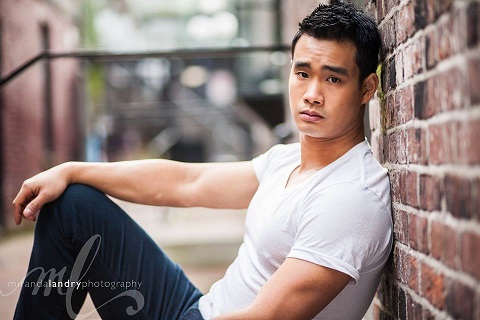
Donald Heng 2

“Initially I just wanted to be on TV,” Heng said. “I can pinpoint the exact moment I decided I wanted to be an actor and that I was in it for the long run. My second class ever with Jeb Beach coincided with a deeply depressing moment in my life and Jeb helped me channel that energy into something I was able to illustrate through acting. I realized that I could take all the bad things I’d experienced in life and turn these into something good. Meryl Streep articulated it best as she remembered Carrie Fisher, ‘take your broken heart, and make it into art.’”

Heng swiftly parlayed that emotional breakthrough into a successful television career, with a small but memorable role in Disney’s T.V movie Girl Vs. Monster, a string of appearances on such series as Supernatural, Ransom, Arrow and, most recently, the elegantly terrifying Ghost Wars.

“This was a project that checked so many boxes on my list,” Heng said. “First off, I got to play a police officer which has always been a dream of mine. Secondly, I deeply respect the actors on this series. It was a wonderful experience to work with Vincent D’Onofrio [Full Metal Jacket, Netflix’s Daredevil], Meatloaf and Avan Jogia. I had some challenging experiences working on this as my character goes through some traumatic events in the series premiere. But it was a challenge that I welcomed and deeply appreciate the opportunity to have experienced it.”

His co-stars agree. “Donald was an absolute pleasure to work with,” Ghost Wars lead Avan Jogia said. “It’s so nice to act alongside someone who understands what each individual character brings to a scene and then, ultimately, the entire piece.”

Heng is also fully invested in his new role. “I am very excited about Ghost Wars,” Heng said. The horror/fantasy has experienced revitalization in recent years and demand for quality stories in the genre is at an all-time high. New shows have to meet that demand by integrating a very human story into the horror and develop a show that can stand on its own and be mainstream without just catering to a niche market. Remove the ‘creepy factor,’ and there’s still a very human story beneath it. By attaching that human component, it becomes easier to think about the character’s relationships and also about what might be at stake because of that ghostly entity.”

Heng stands at the cusp, savoring a rich, loaded professional moment in a fast moving career that has already come far and is poised to reach full bloom

“I just want to make good movies and TV,” Heng said. “And I want to do it for the same reasons that I fell in love with acting—I want to continue to push that goal of consolidating all the bad that is in my life and make it into something beautiful.”

Donald Heng will next appear as a guest star on episode 2 of the 4th season of The Flash airing on the CW, Tues., Oct.17th.

Stay Tuned for Britain’s Francesca De Luca in ‘Midnight Daughter’ and ‘Espresso’

Francesca-_044
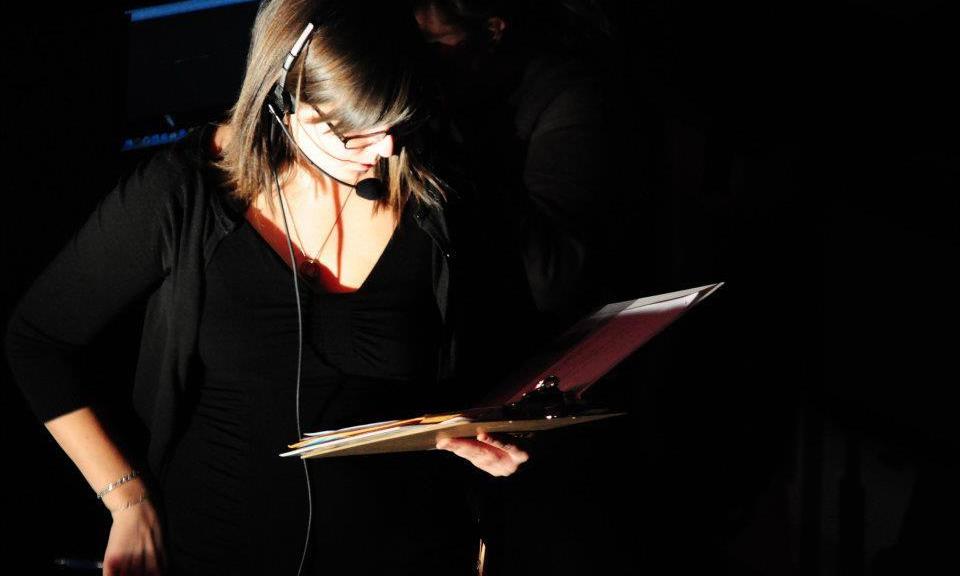
Francesca De Luca

When actress Francesca De Luca stands before a camera, every fiber of her being comes to life. Her soul awakens when she transforms into an unfamiliar character, adopting all of the dynamic elements that makes them who they are. She is driven by the unique challenge of taking a character’s description from a script and bringing them to life. It is a journey unlike any other and a privilege to call it a job. For De Luca, her work is about transporting her viewers into a different world. It’s about allowing them to escape from real life, or to explore elements of their being in ways they might not have otherwise done. She finds that films can be therapeutic, offering relief from our everyday lives. They enlighten and entertain us in such a way that molds our thoughts, our passions, and our dreams in the same way that acting has molded her.

“I love to make an audience feel something, whether it’s through comedy or drama, and the emotion or truth of a character. I love making people laugh, feel and think, and I love to sink my teeth into a script where the character has depth, contrasts, and experiences an emotional journey,” told De Luca.

Every time that De Luca sets her sights on a script, there is no doubt that she will make it a success. She has had a profound impact on every film she has ever worked on, and she is a known asset in the industry. Her performance as Margot Fonteyn in the film, Jeremiah Tower: The Last Magnificent, gained broad recognition when it featured at the Tribeca Film Festival just this past year, and again when it was selected for the Hamptons Film Festival and Key West Film Festival. The film’s success, however, did not stop there. It earned widespread critical acclaim when it was released in theatres across Canada and the United States, receiving immeasurable praise from prestigious publications like the New York Times. Later on this year, viewers carried it to number one in the ITunes Documentary category and were the reason that it featured in the top ten slots of the Independent Movie category.

Another of her major successes was working on the film Passports which won the 1st Place Audience Award at the California Women’s Film Festival, as well as the Award of Merit at The Accolade Global Film Competition. The film also went on to receive official selections at the aforementioned festivals, as well as Atlanta Shorts Fest, Laughlin International Film Festival and Film Invasion LA.

This sort of success is not unheard of for talent as unparalleled as De Luca’s and it only motivates her to expand her reach in the industry. Her drive is unprecedented and for this reason, filmmakers are drawn to her when looking to cast an actor that will carry their script or storyline to greatness. Fortunately for cinematographers all over the world, she is attracted to well-written scripts and eager to do their characters justice. When producers like Annie C. Wright, who worked with De Luca on her digital series, Down & Out, get to experience working with De Luca, they are often astounded by the depths of her talent.

“Francesca is not only talented in her craft, she’s professional, driven, and willing to put in the work required to succeed in this industry. She is a joy to have on set and I hope to be able to work with her again in future productions,” said Wright.

Jeremy Pion Berlin, who directed Passports, was intrigued by her exceptional on-screen presence and her improvisation skills. He knew that he had to work with her and his experience working with her pushed him to want to work with her again for his upcoming film, Midnight Daughter. When Berlin approached her about starring in his first feature length film, the British-Italian actress was thrilled. For Midnight Daughter, De Luca will be playing the lead role, Shawna. The psychological thriller is to be set in an old-age facility where Shawna works. De Luca, who loves playing dark, dramatic roles, is ecstatic about the depth of Shawna’s character and the opportunity to keep her audience on their toes for the duration of the emotional roller coaster that the film will depict.

In addition to Midnight Daughter, De Luca will also be starring in the romantic comedy Espresso. She is very excited to be diving further into the comedic genre once again. Her versatility as an actress allows her to transform herself into characters living through all kinds of experiences. She is not typecast and she does not limit herself to any specific range of characters. She seizes the challenge of becoming whomever a script needs her to be. If her history of excelling in every role she has accepted is any indication, she once will be perfect for the part in Espresso.

“I love the challenge of playing different roles and brining parts of myself to a character. It is my passion and I am lucky to get to do what I love over and over again. I can’t wait to see how both projects turn out,” concluded De Luca.

CREATING A STATE OF THE ART LOOK FOR FLATLINERS

At the end of this month (September 29th in the US) the Cross Creek Pictures/Columbia Pictures distributed drama/horror/sci-fi film Flatliners will open worldwide. Why does Hollywood choose to remake such a film (the original Oscar nominated production was released in 1990)? There are numerous reasons but one of the most prominent is that the ability to tell the story has become better, at least in certain genres; that’s code for technology. There’s no denying that there have always been great artists and professionals creating films but technological advances make the unbelievable more believable. As someone who works in this field as a VFX Coordinator, Jacquelyn Racine is always working with the latest developments. The soon to be released remake of the 1990’s film Flatliners (starring Ellen Page, Diego Luna, and star of the original 90’s film Kiefer Sutherland) has a remarkable look thanks to the work of Racine and her team at Spin VFX. Movie audiences have become savvy in regards to VFX, leaving the professionals who create them with the task of creating exceptional visuals that are somewhat grounded in reality. This is especially challenging within the story of Flatliners with its otherworldly settings. The mediator at the heart of this is Jacquelyn Racine.

Spin VFX is a large-scale visual effects studio in Toronto. One of the top three companies which most L.A. based networks outsource their work to, it has over 100 employees working on up to/over 20 projects at a time. As a VFX Coordinator at Spin VFX, Jacquelyn oversaw three groups of artists, assessing strengths and assigning work according to deadlines. Perhaps more than any other professional around her, the human aspect was paramount. The director’s vision needed to be communicated clearly and manifested by those whose individual skill set best met the need. The very nature of the art being created for the film necessitated a two-way street in communication with Jacquelyn as the roundabout.

The look of the film is not the only difference from the original. The new production has a markedly more supernatural turn on the idea of the afterlife that was investigated in the 90’s story. Technological advancements in cinema have made this a much more viable course. When each of the characters in the film go into their ‘flatline’, they enter an alternate universe with magical components. These paranormal experiences follow them back to reality and haunt them in everyday life. The students push themselves so close to the limits of human life that they almost kill themselves to chase a high of the unusual alternate reality. The 2017 film uses the idea of the original as more of a starting point. The work of Spin VFX empowered the filmmakers to take the idea much further than before. It is meant to be a separate film even though it’s a remake. The characters are different and it takes place in modern day, meaning that the same initial aspects remain the same but the overall look can change and has given the story a different bent.

While the flatline experiences were hinted at in the 90’s film, VFX allows them to be deeply explored and displayed in this new version. In this rendition of Flatliners, the visual effects play an integral role, essentially becoming another character within the film as they help direct the plot. A deliberate vagueness makes it hard to differentiate between reality and the ‘flatline’ in a number of scenes. The result of this is that the audience becomes somewhat disoriented in a similar way to the characters in the film. Jacquelyn worked with her team and the filmmakers to develop a look for each of the characters’ ‘flatline’ world based on their history. Some are meant to be ethereal and beautiful while others are enhanced versions of reality. The VFX in the film adds a visual spectacle to a unique story that would otherwise be quite sad.

The work of Racine and her team at Spin VFX is not as simple as just sitting down at a monitor and using software and…Voila, everything looks amazing! From the very beginning, the producers and directors of a film like Flatliners understand the visual needs of their story are great. Racine and Spin VFX were heavily involved in the previsualization meetings that took place before shooting. This included creating mock-ups of some of the more complicated sequences. They created a blocking for the actors and production team members to use on set for complex camera movement scenes (often involving the use of a techno dolly). Bringing a simplified video example on set can help the director understand and perhaps alter the way they choose to shoot a given scene. Jacquelyn was in charge of overseeing all the work being brought on set and ensuring it was completed on time and on schedule. She explains, “The animation team at Spin VFX, with my management and the VFX Supervisor’s direction, created previsualization videos to give guidance to the team on set. It included a bird’s eye view and camera view of the set, actors, and equipment on location. We used software called ‘Maya’ to create a fully computer generated version of what they were seeing in real life. It demonstrated where the camera would need to be placed to perform the required camera movement. It also included each set piece placed to scale (based on location measurements), so it was a realistic depiction of the production. The video was played for the director and DP to determine whether their vision could be achieved in the space or not. We discovered that the actors would need to be relocated since the camera would interact with them. This was something we wanted to avoid, so we rearranged the placement of the elements in the video and demonstrated the new version to the director. This ensured that when they got on set to shoot the sequence it was clear what needed to be done, and no time was wasted.”

Headshot_2

Spin VFX’s Wes Sewell professes, “It was my distinct pleasure to work with Jacquelyn on the feature film Flatliners. We worked closely together at Spin VFX with the animation, effects, and tracking departments. With Jacquelyn’s oversight, we developed a previsualization system for the film. Her excellent and precise management of these teams of artists made it possible to deliver the on-set materials within a tight schedule. It’s not only her knowledge and abilities, it’s that I know I can trust her to keep everything moving. It always gives me comfort to know she’s there. Every success is built on the talent of those involved but also on their commitment and reliability; Jacquelyn is a master of all these.”