Category Archives: Music

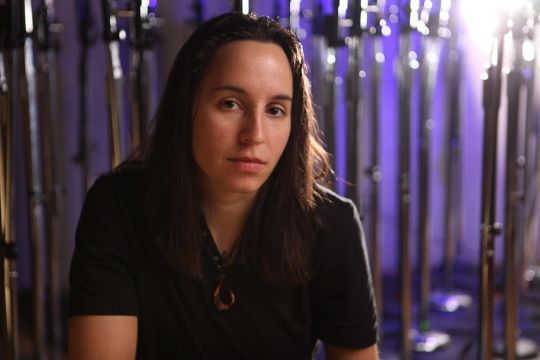
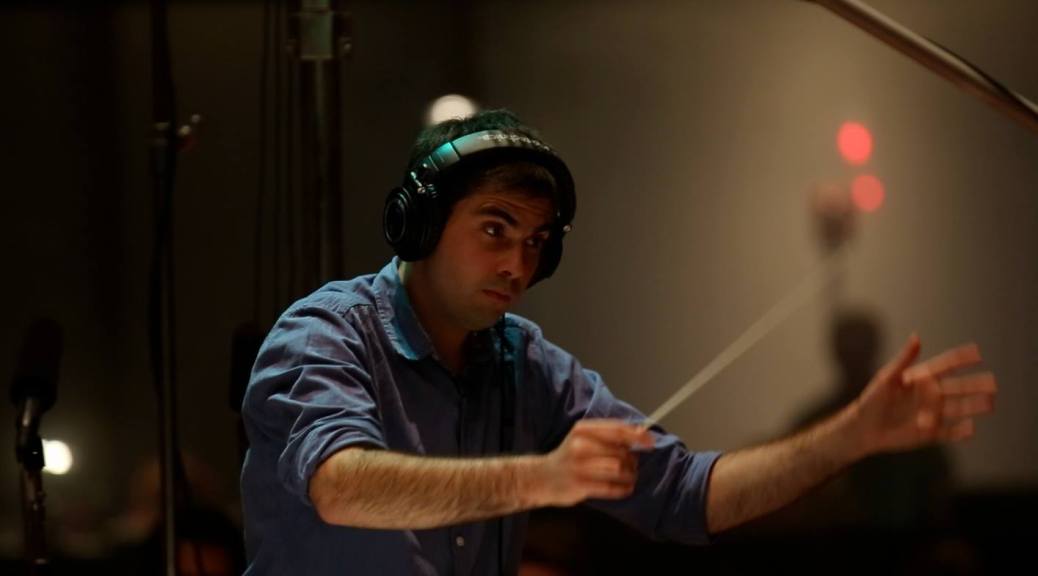
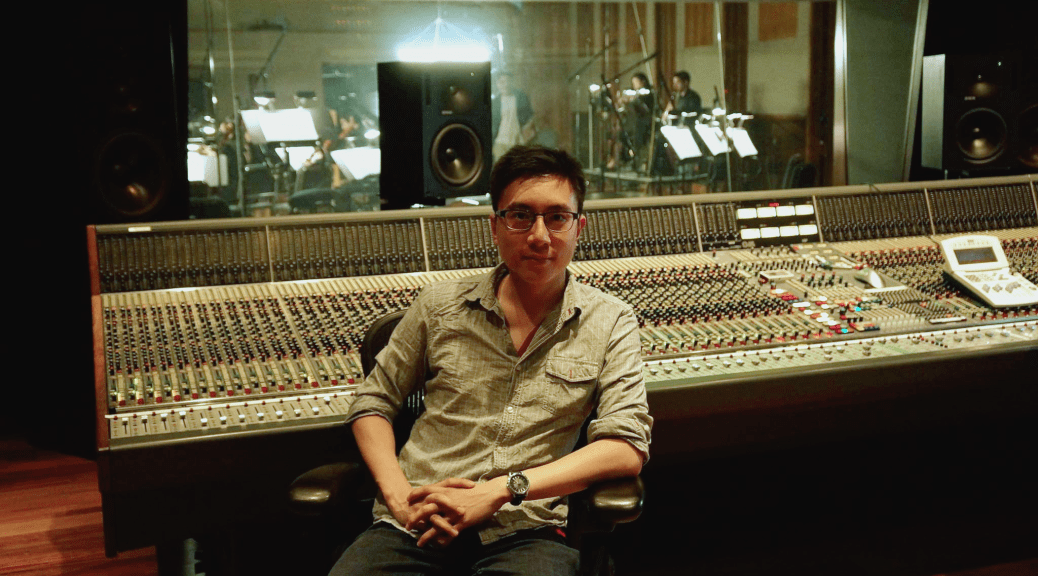
Composer Peter Lam creates comedy through music in ‘(le) Rebound’

Training as a violinist since he was a child, music has always been important to Peter Lam. Now, he has worked on over forty film and television projects, and with each one, he leaves his mark. As a film composer, he creates imaginative sound worlds that help transport audiences to another time and place. There is no limit to what he can do and achieve.

Throughout his career, Lam has shown audiences time and time again why he is such a sought-after composer. Working on award-winning films such as The Ballerina, The Shoemaker, & His Apprentice and Lovebites, Lam’s music has acted almost as an additional character, pivotal to telling the story.  When working on the new film (le) Rebound, Lam’s music perfectly captures the quirky comedy, adding to the humor in several situations.

(le) Rebound was definitely a very attractive project. I am a big fan of Woody Allen movies and I always wanted to write music for witty comedies that carry that sort of poetic European sentiment with them. (le) Rebound turned out to be the perfect opportunity. It has a very clever and imaginative concept, and I felt it could be something really fun to work on,” said Lam.

(le) Rebound tells the story of a heartbroken young woman who follows a hipster fling to France, where she falls headlong into a hedonistic romp. It premiered at the Aspen Film Festival in April of this year. It was praised as a piece of ‘cinematic genius’ by an Aspen Times review. It then went on to the Palm Springs International ShortFest 2017, Clemont-Ferrand, the Achtung Berlin (in competition for the New Berlin Film Award 2017), and the International Cinematographer Guild, winning Emerging Cinematographer 2017.

“It’s a great honor to hear that the film is doing so well, both domestically and abroad. It feels wonderful to know that the film I have scored will be screened at so many prestigious festivals around the world,” said Lam.

The film is yet another project that proved what a versatile international talent Lam is. Adding to the success in dramas and animations, this attempt in scoring for comedy shows he is limitless, and the film’s success across the world could never have been achieved without the composer’s skill. Laura Beckner, the writer and director, could not agree more.

“Discovering Peter was a sigh of relief in the post-production process.  It is a director’s dream to find someone this professional, talented, and collaborative. Peter is intuitive, communicative, flexible and full of ideas. Even though he nailed it with the first few pieces of music he created for us, I have no doubt that he would have tweaked and explored as necessary until we found the perfect composition,” said Beckner. “Peter was able to articulate the mood of the piece as well as filmic references and production ideas all very clearly.  I can tell he has an extensive classical music background; those influences are apparent and the skillset he is working with transcends anything trendy or ‘filmic’ even into something quite unique and sophisticated.  I was impressed that he knew how to enhance the score with more”

After Lam discovered the project, he reached out to Beckner and she was impressed by his previous work and credentials, and quickly invited him on board. They had to work remotely, as Beckner was based in Berlin. This did not cause any problems. The director had total trust in Lam, and approved everything he did immediately.

“It was a very enjoyable experience writing music for (le) Rebound. It’s a cleverly crafted comedy and the acting was top notch. It was just a fun process composing quirky gypsy jazz music that subtly played alongside the dialogue. I was very proud of the final project as I felt my music marry perfectly with their respective scenes. It is often said that, scoring-wise, comedy is the most difficult genre to tackle, so I am glad that I nailed it,” said Lam.

And that he did. Music plays an essential role in film, especially comedies, and in (le) Rebound, Lam’s work helped to highlight awkward tensions and comedic moments throughout the film that would have been overlooked otherwise. The music also plays against the picture in several instances, addressing the subtext of the story and injecting new meanings to the scene. Due to the setting of the film, Lam worked to create a ‘French-ness’ in the music, which helped to transport the audience from their seats straight to France. The music is truly the soul of the film, as the story reflects Claudia’s hedonistic trip to France after a heartbreaking break-up.

“As for most cases for comedy scoring, being attentive to dialogue and timing is essential. Instead of starting with sketching themes or overall musical structures, I tend to focus on specific scenes and familiarize myself with the precise pacing and comedic context of the scene. It is like solving a puzzle – trying to fit the music between the dialogue, action, and silence,” Lam described.

Lam definitely solved the puzzle for the score in (le) Rebound, as he does with every project he takes on. His distinct sound adds to every film and television show he works on, totalling over forty throughout his esteemed career. Despite his vast success, however, he remains humble, and is happy to do what he loves.

“I just want to write expressive music that tells stories. I think film is a very beautiful medium as it transcends time and space by bringing the audience from the cinema into an extended reality. Equally, music plays an important role in shaping the soundscape of the film and is a very powerful device in connecting the viewers to the story emotionally. Unlike theatre plays and concerts which may be one-off events, films are easily accessible to a much wider range of audiences through screenings and streaming. It has always been my goal as a film composer to contribute to unique film projects that can inspire and move audiences,” Lam concluded.

In Pursuit of a Dream: Esteemed Film Composer Michael-Alexander Brandstetter

Michael-Alexander Brandstetter
Austrian Film Composer Michael-Alexander Brandstetter

Composer Michael-Alexander Brandstetter, 24, first discovered his love for film scores as a young boy at home in Eggenburg, Austria. Brandstetter, who recently composed the scores for the films The Path, Gnossienne and The Pamoja Project, began his musical journey by learning to play classical music on the piano, but for him, becoming a classical pianist was never the goal. He set his sights on becoming a film composer from the start and he wasn’t going to let anything stop him from reaching the top.

“I remember that it started when I was around seven or eight years old. I actually developed an interest in film music right from the get go. I guess, since classical music is sort of all around you in Austria, I didn’t take particular interest in it. Film music however was something different… You couldn’t just listen to it on the radio, and it wasn’t performed anywhere, so you had to either go to the movies to listen to it or buy the score album,” recalls Brandstetter.

While his contemporaries at the time were more preoccupied with listening to mainstream bands such as Slipknot and Green Day, because that was the cool thing to do, Brandstetter was busy familiarizing himself with the work of great composers like Hans Zimmer, Danny Elfman, Franz Schubert, Michael Kamen and other pivotal artists who would come to influence his future career as a film composer.

Within months of taking his first piano class he was already moving outside of the box and creating his own compositions, a telling sign of what the future would hold for the then budding 9 year old.

“I started playing my own tunes instead of practicing. I always hated to practice, or even to play what was written on the sheet. To me it felt like it was limiting my creativity. I would much rather take musical phrases out of the composition I was supposed to play, and improvise on it,” explains Brandstetter.

In 2004, only three years after he took his first piano lesson, Brandstetter composed the score for the sci-fi feature film U.V.O  directed by his older brother Wolfgang Brandstetter, who has become known throughout Austria for his work as the screenwriter behind the films Medcrimes – Nebenwirkung Mord, Tod in den Bergen, Wer hat Angst vorm schwarzen Mann?, Die geerbte Familie and others. In 2006, at the age of 14, Brandstetter composed the score for Wolfgang’s dramatic feature film Winter. To compose such elaborate scores for two lengthy feature films at such a young age definitely put Brandstetter in the spotlight, earning him rightful recognition as a musical prodigy in Austria.

“My parents bought me a casio keyboard and a mini disc player and I put together my musical tracks and recorded them either all together or separately… The whole thing ended up being a true art project, and it worked. I still wear a Casio digital watch today to remind me of that time when I started, with nothing more than one keyboard,” admits Brandstetter.

At the age of 14 Brandstetter discovered renowned composer Hans Zimmer’s company Remote Control Productions (RCP), which is based in Southern California and has been responsible for some of the most epic scores of our time, including those for the Pirates of the Caribbean movies, Iron Man, Gladiator, Mission: Impossible 2, The Last Samurai, Transformers, Kingdom of Heaven, The Da Vinci Code, Inception, Sherlock Holmes and more. Floored by the powerful work of the company, Brandstetter’s sights were set on becoming a part of RCP from that point on.

With steadfast dedication to making his dream of becoming a film composer a reality, he laid a strong foundation for himself by studying audio engineering and musicology in college in Austria, and then moving stateside where he attended USC’s screen scoring program, which is regarded as the number one school in the world for film scoring. While at USC Brandstetter was awarded the annual mentorship program with composer James Newton Howard, as well as the the Betty Rose Collaboration Award, which is determined by faculty and student votes.

Earning quite a bit of attention for his ingenious talent, his time at USC was beyond fruitful; and shortly after graduation he was tapped by Adam Michael Schiff to join Bleeding Fingers Music, a joint venture between RCP and Extreme Music as an additional music composer and junior music producer.

A defining moment in his career, being asked to join a world renowned company such as RCP was proof that Brandstetter’s hard work paid off– he had made it to the top.

“It is where I’ve always wanted to be, and I think this is what makes my story unique, that I had a goal, I made a plan, and sticked to it as much as possible and simply tried to circumvent any and all obstacles,” says Brandstetter about joining RCP.

Within a year, Brandstetter has written, arranged and orchestrated several original musical compositions for projects such as Starz Global’s Insomnia, Sony’s Snatch and Discovery Channel’s Alaskan Bush People.

As a film composer Brandstetter’s unique compositions have been integral to driving the emotions and stories of a great many films in recent years. In 2015 he composed the score for Abhijit Gajwani’s (Wabi Sabi, Mangata, Tapori) dramatic film Gnossienne, which revolves around Jeremy, a man who disconnects from the outside world after the loss of his wife.

With the difficult emotions dealt with in the story, and the fact that most of the film centers on a dialogue between Jeremy and his maid, who tries to help him move past his grief, the music for Gnossienne had to be delicate, emotive and give space for the conversation for the two main characters to unfold– something Brandstetter nailed perfectly.

He explains, “I really tweaked all the instruments I used in the score. Reversed piano sounds, distorted strings, ambient long and ominous pads, every sound was essentially custom made… I then brought in a solo violinist and recorded her on top of the rest of the music, which really brought it to life.”

Starring Manuela Osmont (Bite Me), Paula Bellamy-Franklin (I Got the Hook Up) and Matthew Michael Collins (Thin Lines) Gnossienne had an altogether positive reception on the film festival circuit taking home the Honorable Mention Award at the International Film Awards Berlin and the Certificate of Excellence Award at the Dada Saheb Phalke Film Festival, as well as screening at the prestigious Cannes Film Festival Court Metrage and many more.

About working with Brandstetter on the film, director Abhijit Gajwani explains, “Before composing, he sat down and talked the tone of the story… Michael’s ability to understand the story, the characters and their conflicts sets him apart from other composers. His music feels pure and true to them… I was trying to do the impossible with this film and Michael actually pushed me further and helped me make a better film.”

The Pamoja Project
Film Poster for the “The Pamoja Project”

Brandstetter also recently composed the score for The Pamoja Project, a touching documentary from director Audrey Emerson that follows three Tanzanian women trying to uplift their community and create a change when it comes to dealing with global poverty. The word “pamoja” means “together” in Swahili, and much of the film is about how when we unite and work towards a common goal, we can overcome difficult obstacles and achieve what once seemed to be impossible.

As the composer of The Pamoja Project Brandstetter did a brilliant job of helping to set the pace of the film with his original score. His strategic use of certain musical devices were essential to both heightening the inspirational energy and driving the deeply emotional aspects within the film’s key scenes.

“I first set out to create a ‘Pamoja Theme,’ something that incorporates the essential thought that great things can only happen together. Once I had that, I created three different, but closely related soundscapes for the three women the documentary follows,” explains Brandstetter.

Released in 2016, The Pamoja Project has been praised for it’s uplifting story and has been viewed by international audiences as an Official Selection of the Chicago International Social Change Film Festival, Sunscreen Film Festival West, Rhode Island International Film Festival, Yonkers Film Festival, Massachusetts Independent Film Festival and more.

Director Audrey Emerson explains, “Michael stood out from the beginning as the obvious choice as a composer. He was not just talented, but kind, hard-working and dedicated… I felt that Michael really cared about the story and his score reflected that.”

Over the last few years Michael-Alexander Brandstetter also composed the scores for a long list of other films including Eric Baird’s (Injection) sci-fi film Time to Leave, Tiffany Danielle Brooks’ Sharing Day, the animated film Disappearance, the 2016 drama The Path starring Raleigh Cain from the series Longmire, and many more.

While Brandstetter has clearly become a highly sought after film composer in recent years, his genius compositions are definitely strong enough to stand alone– in fact, come September 16 some of his original compositions are set to be performed during the highly anticipated “Welcome Home: Walter Arlen in Concert” at the Vienna Konzerthaus, where the Vienna Symphony and the Vienna Philharmonic also perform, in Vienna, Austria.

The “Welcome Home: Walter Arlen in Concert” is a pivotal event that will welcome home composer Walter Arlen, a 96-year-old exiled artist and Holocaust survivor, whose music will be performed in Austria for the first time.

Michael-Alexander Brandstetter
Michael-Alexander Brandstetter (left) & Walter Arlen (right) at the LA Opera

Brandstetter, who organized the concert with the help of his father, a minister in the Austrian government, explains, “I met Walter at the Residence of the Austrian Consulate General when I was studying at USC… He told me that his last wish would be that his only orchestral work, ‘The Song of Songs’ would be performed in Vienna.”

Thanks to Brandstetter’s diligent efforts, Alren’s “The Song of Songs” will be performed for the first time in Vienna by musicians from  the world renowned Wiener Symphoniker orchestra, and the concert will also feature Franz Schubert’s Symphony No.5, as well as Brandstetter’s original composition “Righteous Among The Nations.”

“This piece is especially important to him since it is based on the Jewish poem ‘The Song of Songs’… He started to work on it to prove himself, and that he and his culture are not ‘inferior,’ to put it mildly, as the Nazis suggested. Working on this piece gave him strength in difficult times. So, it is an emotional homecoming,” explains Brandstetter about Arlen’s piece.

From playing a key role in Hans Zimmer’s company RCP and composing powerful film scores that touch audiences on an emotional level and effortlessly drive the visual story as it unfolds on the screen, to having his original compositions performed by one of the most notable orchestras in the world, composer Michael-Alexander Brandstetter has made more of an impact as an international composer than most will in an entire lifetime.

Brandstetter is also currently working as a composer for Extreme Music from his hometown, Vienna, where his skills in musical composition, arranging, orchestration and music editing are undoubtedly being put to good use. With an impressive library that boasts music from artists and composers such as Quincy Jones, Hans Zimmer, George Martin, Snoop Dogg, Xzibit, and Junkie XL, Extreme Music is the production arm of Sony/ATV Music Publishing, which creates and licenses music for television, film, advertising and online media.


Young Ambition Leads to International Success for Duarte ‘Duda’ Figueira

Duarte 'Duda' Figueira
Music Producer/A&R Specialist Duarte ‘Duda’ Figueira

Whether it’s being in the right place at the right time, unceasing ambition and unwillingness to slow down after hearing a dreaded ‘no,’ or a combination of the two, some people discover their dreams and go to work paving the way for them to come true much earlier than most of the population.

Like the inspirational and semi-autobiographical story Cameron Crowe brought to life in the Oscar Award winning film Almost Famous, which follows a talented teenage journalist who joins the band Stillwater on tour in the 70s and covers the journey for Rolling Stone, music industry aficionado Duarte ‘Duda’ Figueira experienced a similar rise to success back home in Portugal at the ripe age of 16.

Today Duda, as he is known affectionately throughout the industry, is known for his impressive achievements as a music producer/A& R specialist and major force behind some of Portugal’s best known artists such as reggae/dance hall singer Richie Campbell, the rapper Regula and producer Lhast, to name a few.

Duda, who is now 26, took a leap of faith in his early teens and reached out to Lisbon’s leading reggae promoter at the time, Fernando Cabral, with an e-mail pitch that would come to change his life forever. Duda knew the market for reggae music in Portugal was huge, but he felt that the information about reggae events was not reaching the country’s fans as effectively as it should– so he offered himself up as a flyer boy. He was immediately given a one-time job postering the cities with flyers about an upcoming concert featuring the bands No Joke Sound, Stepacide, and the one and only Gregory Isaacs who sadly passed away in 2010.

“My mom drove me there. I got a chance to meet [Cabral] and the rest of the partners, and I was given a bunch of flyers and posters, and a guarantee of having a free ticket for the show. And that was great!,” recalls Duda.

The following week what began as a one-time job turned into much more when, fuelled by a rare level of confidence for someone his age, Duda decided to pop over to Cabral’s office to thank him for the ticket, have a chat about music, and ultimately offer his services on the public relations side of the business. There he was introduced to the members of the band No Joke Sound, who were on site recording a live set.

“As an aspiring Selector and MC, bumping into them was kind of a ‘star-struck’ moment,” admits Duda. “The moment I walked in Fernando said to them ‘this is the kid that sent the email!.’ They were surprised.”

The band members’ understandable surprise at seeing a kid so young walk nonchalantly into the country’s leading music promotion agency with big ideas of how they could better reach their target audience quickly faded once Duda began to speak about the music industry and what fans were looking for, but not necessarily getting. Duda exchanged contacts with No Joke Sound member Bernardo “Ben” Miranda, who subsequently invited him to come along the following week to the No Mercy Soundclash, Portugal’s first ever reggae soundclash event.

“I met Ben’s cousin, Gonçalo Leitão, also known as ‘Krpan.’ After the event, we went to Ben’s house, and inside of his kitchen, Ben looked at both of us and said: ‘You and you! You are going to have a sound system together.’ And the rest is history… From that week until today, Ben has been my ultimate mentor. He was the one who pushed me to have a career in music,” Duda recalls fondly.

Fyah Box Sound
Krpan (left), Duda and Lhast (right) of Fyah Box Sound

At only 17 Duda, along with Ben’s cousin Krpan, created Fyah Box Sound, a reggae/dancehall sound system, which is a style of music collective that originated in Jamaica and includes a DJ,  MC and engineer. Duda geniously developed the “Triple Threat” concept for Fyah Box, a series of weekly videos that include everything from artists freestyling to debut song releases. Upon inception the concept helped make Fyah Box a huge success in Portugal, and it has since become a leading source of music for reggae and dancehall fans across the world.

Building Fyah Box Sound up from the ground floor, Duda created a recognizable name for the collective by bringing in world-renowned artists such as Anthony B, Ikaya, Richie Campbell, Regula, Short Size, Blasph, Dillaz, Xeg, JLZ, Kristoman, DJ Nelassassin and several others to collaborate. What started as a reggae/dance hall collective quickly turned into a cross-cultural music platform thanks to Duda’s decision to open the collective to other styles of music such as  R&B, rap, and hip hop.

Now, a decade later, Duda has definitely carved out a prominent position in Portugal’s music scene as a highly sought after music producer/A& R specialist. Considering the extent of what he does for the artists and projects he oversees, which includes everything from working as a booking agent, manager, fashion advisor and lead A&R man, Duda’s music producer/A& R specialist title is the only one that fits, as he coordinates literally everything that goes into both the planning of a production and the artist’s overall career.

A year after starting Fyah Box Sound, Duda began working as the A& R specialist for Portuguese artist Richie Campbell, who started the band Stepacide and was also a member of No Joke Sound prior to going solo. With Duda coordinating everything from planning releases, coordinating events, deciding on singles and album art, and crafting his image and musical approach, Campbell has been met with incredible international success as a solo artist.

Richie Campbell’s manager Bernardo “Ben” Miranda explains, “Duarte is someone we know we can always count on for both the creative and strategic process as well as the execution. Over the past 9 years that we’ve worked together it was a joy to see him grow into the person and the professional he is today. His ambition, creativity, commitment, loyalty and organization make him one of the most desirable professionals in the Portuguese music industry.”

Duarte 'Duda' Figueira
Duarte ‘Duda’ Figueira (left) and Richie Campbell (right) in Berlin

As Campbell’s music producer and A&R specialist, Duda has played a major role in the production and release of each of the artist’s albums since 2010, including “My Path,” “Focused,” and “In the 876,” as well as Campbell’s 2010 EP “Richie Campbell” and the album and accompanying DVD “Live at Campo Pequeno.” Fans across Portugal went wild upon the release of Campbell’s 2015 album “In the 876,” which quickly topped charts and became No. 1 on the digital store sales chart within a few hours of its release– something that hadn’t been seen in the country since the release of Beyonce’s 2013 self-titled album.

Over the years Duda has also coordinated a slew of high-profile events featuring Campbell, such as Campo Pequeno 2011 and 2013, Sumol Summer Fest 2012, which pulled in 25,000 people, as well as Sudoeste 2013 and Festival do Crato 2013, which each had more than 50,000 people attend– astronomically large numbers for Portugal!

Duarte ‘Duda’ Figueira

In 2016 Duda was the A&R man on Campbell’s hit song “Do You No Wrong,” which has garnered over 10 million views on YouTube, and earned a Gold and Platinum Award on the Portuguese market. A major hit in Portugal, “Do You No Wrong” was produced by Lhast, who Duda also works with as a music producer and A& R specialist. Duda also coordinated the release of the artist’s 2017 single “Heaven,” as well as the music video, which has garnered more than two million views since being release at the tail end of April.

Campbell says, “What I appreciate the most about working with Duda is his versatility as a career advisor/manager and the way he can balance a deep understand of the current music business while never forgetting that an artist needs to be in touch with his audience. This enables him to provide great input on how an artist should work the business aspect of his career without ever jeopardizing the relationship with his fans.”

In 2014 Duda formed Bridgetown Talent Agency with Bernardo Miranda, Afonso Ferreira and Richie Campbell. Today Bridgetown Talent Agency, which has become one of the most successful booking agencies in Portugal, represents a wide range of artists including Dengaz, Mishlawi, Curt Davis, Plutonio, DJ Dadda and the comedians Luís Franco-Bastos and Pedro Teixeira da Mota.

In 2015 Duda also started DGF Agency, an imprint agency that handles counseling, A&R, management, releases, PR and promotions for its artists. Some of the major artists Duda oversees as a music producer and A& R specialist through DGF include Lhast, Karetus, Krativ and Andre Melo. He is also working as a lead  A&R man at Rebeleon Entertainment where he is handling the release of several upcoming albums, EPs and a few highly anticipated singles for artists such as La Santa Cecilia, Gloria Trevi, Alejandra Guzman, Mon Laferte, and Enjambre.

A well-known name throughout the U.S. music industry, Rebeleon Entertainment partnered with BMI last year to produce the 6th Annual ‘Los Producers’ event in Las Vegas during the Grammy Awards, which included performances from Latin Grammy nominees and music from other trendsetters in the Latin music industry.

After 10 years in the industry Duarte ‘Duda’ Figueira has not only managed to rise to the top of the music industry in Portugal and make his name known across the world, but he continues to bring the same level of fervor and adept skill to every project he takes on.

In the end Duda says, “I would love to look back to my career and feel proud of the work that I have put in, the results of it, and the impression that it had on society. Hopefully someone can feel inspired to create more and take some energy out of my experiences.”


A THOUSAND CRANES: SCORING GENERATIONS OF LOVE WITH EIKO JIN

Eiko Jin-4

Music is the connective tissue of people throughout distance and time. When you hear music you will likely immediately have an image of people and places based on its character. Whether it is a person wearing a white wig conducting a symphony in Vienna in the 1700’s, indigenous tribe members in a drum circle of the 1800’s, or a punk rocker of the past 30 years, the sounds we hear imply a great deal. It tells us about the people but it can also tell us about the state of their heart, as it does in the short film “A Thousand Cranes.” This film about love and reincarnation had some very specific musical requirements which led the filmmakers to composer Eiko Jin. The composer’s lauded work on such productions as “The Last Page”, “My Sweet Prince”, “Humor Me”, have garnered acclaim for her but it was her cultural expertise which sealed the deal for her as the provider of the musical character and accent of this film. Key to the film is the ability of this sonic backdrop to connect the lives of different characters in different periods of time. The two constant threads in “A Thousand Cranes” are enduring love and the compositions of Eiko Jin.

Director Leonard Chan had been searching for a music composer and experiencing great difficulty finding a professional who had the expertise in traditional Chinese instrumentation and culture to give the proper validity to “A Thousand Cranes.” In the same manner that he would cast an actor for a role, he was much more discerning in terms of hiring a composer to create the music for this film because of the different time periods presented in the film. It wasn’t Jin’s work for traditional films which convinced him but rather the music pieces she created for the Silk Road(Dunhuang) International Cultural Expo in 2016. The project focuses on ethnic music pieces which each represented a different city on the silk road. The nucleus of “A Thousand Cranes” is a love story that begins in ancient China. Eiko’s talent, cultural background, and multilingual abilities (she speaks English, Mandarin, and Cantonese) made her the ideal choice for this film. Chan declares, “Eiko Yichen Jin is a great collaborator. Meeting Eiko is a blessing because she aided in the sound effects, dialogue, and music composition for the film. These three categories were a challenge for me because I could not find someone experienced and talented enough to tackle this project. It included the use of playing Chinese instruments such as the guzheng, an instrument with over 2,500 years of history. Finding a music composer who knew how to play such an instrument was not easy. Having already spoken to some other composers, I was so happy and fortunate to have met her. Eiko introduced me to how music can have character and how sound effects create another layer in a film. What captivated me was the diverse and revolutionary way she described music and used sound in her film. What I learned from her added value to my not just my short film but also to my own filmmaking as well.”

The film is a story about enduring love and the ability of reincarnation to sustain it. A Chinese princess falls in love with a common man. Society’s rules forbid them to be together. The young man sacrifices himself protecting the princess but first tells her, “I’ll meet you in the next life and all the coming ones. No matter how my outlook changes, my soul and my heart will not. I will find you.” The second scenario of the couple is in San Francisco finds a wife stricken with Alzheimer’s and losing her memory. Distressed, she states to her husband, “The doctor told me I’ll lose my memory. Aren’t you afraid?” The husband calmly responds, “As long as we are together everything will be okay.” The final part of this series depicts a young boy and girl on a playground. The boy finds paper cranes on the ground and the little girl asks him about them. In both of the prior parts of the story, the cranes are also seen. These artistic presentations of the couple’s timeless connection are the yin to the yang of Eiko’s compositions. The paper cranes bring the couple together just as the music connects the viewer to their timeless story.

The film’s director had provided Jin with reference music to give her an idea of the mood he wanted to create but it was her job to bring an authentic Chinese sound and instrumentation to the actual score of the film. The composer carefully reviewed the film to discern the connective tissue. Even though the film was comprised of three separate stories, she didn’t want it to appear to be three independent stories. Similar to the way Leonard used the paper crane to communicate that all these stories take place between the same two souls, Eiko used the theme melody line to connect them. The composer created a theme similar to a suite with slight variations. Eiko explains her preferences for instrumentation and the ideas it communicates stating, “Usually I will set up different personalities for different instruments. Sometimes even the same instrument will have two different personalities in different pitches/ranges. For example, I always think of harp as an elegant lady. She’s very emotional but also perfect for horror films with a screaming high pitch. Violin/viola are sisters while cello is a mom & bass is a dad. Violin is more positive and vivid. Cello holds the note for harmony, bass plays a not too obvious audible note but it’s the fundamental of the whole story. Piano is usually used for very emotional situations. In this situation, I chose piano as the only instrument for the second story. It’s very sad that this couple who are deeply in love are being separated by disease. Music has the ability to express all the unspoken words, especially when this elderly wife begins to forget her husband. That’s very hopeless and helpless. Without saying anything, I leave all the work to the piano, adjusted and turned the main theme to a piano version.

Eiko Jin-8

Perhaps the most striking and important part of Eiko’s contribution is her expertise in playing and writing for the guzheng. This Chinese style harp which looks like a wooden box with strings is performed with fake nails. Similar in sound to the Japanese koto, its sound is fragile but very powerful and emotional. The guzheng’s cultural character and wide emotional range made it ideal for the film. Jin describes, “It could be powerful with a fast tempo or very light with a glimmering feeling sound with a slower tempo. It’s really good and popular to be used to describe the glimmering lake or water. By pressing on the string it easily gives a bending sound. No matter what kind of words that I use to describe it, each person will have their own feelings about this instrument’s sound. There’s something that speaks to everyone with the guzheng. I know that if someday I write the music for a kung fu film, I’ll definitely use guzheng for a fight scene.” This type of forward and creative thinking is what leads Leonard Chan and numerous other filmmakers to enlist Eiko Jin to augment their stories and propel them to greater heights.

Fiercely Talented Producer Lil’ Lyss On the Hip-Hop Radar

Music Producer Diana D. aka Lil' Lyss
Music Producer Diana D. aka Lil’ Lyss

While there’s no shortage of female vocalists and performers in the mainstream music scene, a major gender gap definitely exists between men and women working behind the scenes in the music industry with women fulfilling far fewer producer and engineering roles than men.

In a 2014 article published by The FADER, Ruth Saxelby wrote that less than 5% of music producers and engineers are women. While the number of women in the male-dominated industry remains unjustifiably small, there definitely are some talented female music producers making their name known in the scene, even if they’ve had to work a little harder to do it.

Diana D., better known as Lil’ Lyss, is one of the fiercely talented female music producers who’s made her way to the forefront of the industry, and she needs to be on your radar. Holding producing credits on several hit tracks for American rapper Ca$his, over the last few years Lil’ Lyss has become one incredibly sought after music producer, especially in the rap and hip-hop scene.

Originally from Bulgaria, Lil’ Lyss was instantly drawn to music during childhood, but it wasn’t until she heard 50 Cent’s “In Da Club” produced by Dr. Dre as a teenager that she realized she wanted to produce music.

She explains, “That opened my eyes for music. It was so simple and so great at the same time, then I thought I could do this too. I downloaded a bunch of programs and started messing with them and with time I taught myself to sound like I sound now.”

It’s been 14 years since the release of “In Da Club,” and Lil’ Lyss, now 27, has definitely utilized that time wisely. She spent those early years mastering the vast plethora of software necessary to be competitive in modern music and teaching herself the ins and outs of producing; and what she’s accomplished since is nothing short of amazing. Her unique beginning, flawless style and musical genius have definitely made her a rarity in the industry; and her drive to produce new and innovative tracks are what’s kept her ahead of the curve at every turn.

In 2013 Lil’ Lyss gained major industry credit when she was tapped by well-known Shady Records producer Rikanatti to come in as a producer on a few tracks for Ca$his’ second studio album The County Hound 2. How she landed that distinguished role as a producer on an album that features guest appearances from rap and hip-hop mainstays such as Crooked I, Obie Trice, Mistah F.A.B., Kuniva (D12), King Los, Boaz and more, is unique in itself– and it definitely proves that her skill is enough to catch the attention of the industry’s best.

She explains, “I am constantly looking for people to work with and that day I saw Rikanatti had tweeted that he was looking for producers to feature on Ca$his’ next album. I contacted him and sent him several examples of my work and he instantly responded with an offer. From the thousands who submitted music to him, I made the cut.”

And that was that. Lil’ Lyss landed her spot as a producer on the tracks “Imma Hustla” featuring Crooked I and Sullee J, and “Imma Hustla [W.C. Remix].” The hit single off The County Hound 2, “Imma Hustla” definitely thrust Lil’ Lyss’s skill as a music producer into the spotlight. Those in the rap game who didn’t know her name before definitely did after.

Undeniably one of the album’s standout tracks, “Imma Hustla [W.C. Remix],” which features Mistah F.A.B., Roccett, Crooked I and Goldie Gold, is hard, heavy and rhythmically energizing, which is due in no small part to the beats and overall musical backdrop that Lil’ Lyss masterfully created. It’s no secret that production is the foundation of any hip-hop song. The beats and tempo are the vehicle that allow the lyrics to flow, and Lil’ Lyss definitely nailed the production on both versions of “Imma Hustla.” It’s impossible not to nod your head to the song as it plays; and the way Lil’ Lyss creatively melds together the elements of gangster rap with energy amplifying cross fades and perfectly timed pauses throughout the track definitely deserves a nod as well. Her talent as a hip-hop producer is evident from the first few bars of the track, and the fact that she holds production credits on an album where four of the other 16 tracks were produced by 15-time Grammy Award winning rap icon Eminem doesn’t hurt her street cred either.

After producing two of the album’s most popular tracks, it’s not surprising that Rikanatti and Ca$his tapped Lil’ Lyss to come back to produce the track “A-Rod” on Ca$his’ 2015 album The County Hound 3.

The lead single off the album, “A-Rod” features New York heavy hitter Emilio Rojas. While it’s on the opposite end of the spectrum tempo-wise compared to the “Imma Hustla” tracks, with “A-Rod” boasting more of a low-key fluid vibe, the track is yet another hit under Lil’ Lyss’s belt as a producer.

“It was an honor and a challenge to work with Ca$his and Rikanatti, their talent is always very inspiring for me and their work ethic made me a better producer,” says Lil’ Lyss. “I created the music for the projects we did together, and Rikanatti adjusted the arrangements and mixed and mastered the whole album.”

While Lil’ Lyss’s reputation for producing epic beats has made her a highly sought after producer for rap and hip-hop artists, her skills are by no means limited to any single genre. Last year she released her first EDM/Trap track “Beast Race.” The dynamic, bass-heavy track generates an energizing, dancey vibe that will make you want to bob your head and get your booty shaking. “Beast Race” gained immediate traction with listeners through the internet with Crazy Pellas, Smash The Club, EDM Nation and other popular music outlets featuring the track on their website.

About what drives her to produce, Lil’ Lyss explains, “I love good music and I want to be a part of it. Especially now in the current state of music, I think the industry needs creativity more than ever. There are millions of people out there that crave the good music but all they get is mumble rap and 3 chord pop songs. I’m here for them!”

From producing hits for rap and hip-hop artists to creating tracks that strike a chord with EDM fans, Lil’ Lyss clearly has a stockpile of tricks up her sleeve, and the more music she produces the more we get to see just how dynamic a producer she really is. As long as we have creative female music producers like Lil’ Lyss who are driven to push the boundaries of the main stream, we can faithfully look forward to the direction rap and hip-hop music is going, while also opening the gates for more women to enter the field, because producing good music is not defined by gender, Lil’ Lyss is proof of that.

Up next for Lil’ Lyss is the upcoming album for The Marine Rapper, which she will be producing later this year. A 10-year US Marine Corps combat veteran, The Marine Rapper is an LA-based hip hop artist who’s created a recognizable name for himself by addressing military, civil and political issues through hip hop and rock music.

The Marine Rapper says, “I would like to work with Diana because she brings a unique production style that has not been introduced to modern music. I think with her worldly travels and various techniques she can bring something new to American music with a collaboration effort.”

Composer Kevin Smithers nominated for best original score for film On the Roof

While Kevin Smithers was studying his undergraduate degree in music, he came to the realization that he enjoyed sitting down and writing down a good sounding solo over a jazz piece than improvising. This realization shaped his future and career; making the transition from a performer to a composer. Throughout the rest of his studying, this passion grew to become a career. Now, Smithers is a successful film and video game composer.

During his career, Smithers has worked on over 20 films and web series, as well as the new PlayStation VR video game World War Toons. However, it was with the award winning film On the Roof that he received his nomination for best original score at the Sitges International Fantastic Film Festival under the Noves Visions SGAE Nueva Autoría section, which he describes as a great honor.

“It’s the way that Kevin understands the music for films: he also puts the story and the characters before his own work. He is very conscious that he’s making music in order to tell a story, for expressing feelings, not only for himself or for people to listen to his music separately,” said Damià Serra Cauchetiez, the director of On the Roof. “Working with Kevin is amazing. He is very hardworking and was very motivated about the story. He always understood what I wanted in every scene, and also he proposed many of the good ideas that they finally ended up in the score.”

On the Roof (also known as En la Azotea) tells the story of Adrián and his friends, who climb to a roof every afternoon to spy a girl who sunbathes naked. However, one afternoon won’t be like the others, as the friends realize that one of them is more interested in a guy showering in a close building. 

“Working on On the Roof was a great experience. Damià and I bonded over some of our favorite scores when we met in Spain and was really excited when he asked me to score his film. He gave me a lot of creative freedom to do something that I thought was interesting and new. In fact, the temp music in the film was radically different to what we ended up doing,” said Smithers.

Smithers wanted to tell part of the story with the music, with a very warm Spanish sounding score for the film as the film takes place during the Spanish summer. However, they didn’t want to go all the way with Spanish flamenco, which is when Smithers came up with the idea of using only an acoustic guitar.

“It’s a very Spanish instrument. I spent time trying to get as many different sounds from the guitar as I could and recording them in various ways. Once I had all these sounds recorded and ready to play with, it’s as if I had a standard ensemble that’s normally used to score a film” he described. “But we altered the sounds to have that cinematic feel as well. Even though it’s a very personal and introspective story for the character, it feels big and daunting from his perspective. By modifying the guitar recordings and doing a lot of guitar passes, we managed to get an intimate Spanish sound that could also grow into a full wall of sound needed for some moments.”

On the Roof has premiered at many film festivals, including Cannes, Berlinale, Sitges, Seminici, Vancouver International Film Festival, Seattle International Film Festival, and more. It has won awards at several of those festivals, including a nomination for best director and Miguel Casanova Rodriguez won for best screenplay at the Sitges International Fantastic Film Festival.

“The most pleasurable thing to me when writing music for film or games is when you’re done with a scene and the music just sits perfectly over it and really adds something to the project that wasn’t there before. This way of telling a story through music is a very specific way of writing, which I deeply enjoy,” Smithers concluded.


STEPPING AWAY FROM THE ROCK WORLD TO STEP INTO THE FILM WORLD: KIERAN KIELY

There are people in the world who are destined to succeed. No matter what circumstances they are involved with, their inherent ability surfaces. For those who are fond of the adage, “lightning never strikes twice” they mistakenly forget about the lightning rod. Kieran Kiely is a musical lightning rod. While many musicians struggle for their entire lives to get “one shot” (to quote Eminem), Kieran has credits which include multiple globally popular artists. While spending his youth touring the world and recording with these artists, he now makes his home in Los Angeles; it’s a long way from the other side of the Atlantic where Kiely grew up and started his journey in music. Now he is a long way from the huge concert stage as he finds himself on a different musical journey. Although he has had experience for many years as a composer, Kieran is now focused on creating music in the seminal location of film…Hollywood. Kiely is proving that he is a source of authentic and imaginative music, regardless of the presentation or format of said music.

The first phase of Kieran’s musical life reads like a movie itself. Until recently, he spent his entire life recording and touring with the artist that are household names. Dave Stewart (of the Eurythmics), Stevie Nicks, Sinead O’Connor, Shane McGowan, The Corrs, and many others have enlisted Kiely to be a part of creating the music that their fans adore. While Kieran is respected among the elite of the rock world as a consummate musician, it is often his mastery and authenticity of the traditional Irish sound for which he is known. It is this same characteristic that led filmmaker Tommy Reid to hire Kiely to compose the music for his film Danny Greene: The Rise and Fall of the Irishman. This film is a documentary about Irish mobster Danny Greene, famed in the late 60’s as a key member of the mob war which led to the dissolution of the Cleveland, Ohio mafia. The film includes interviews with Greene’s family as well as government officials and Cleveland Police Enforcement. Reid wanted to go to primary sources to communicate the story directly from those involved and he wanted the music to be just as authentic. Reid declares, “A good film score not only compliments a story but also helps it rise to greater dramatic heights, and Kieran’s expertise as a composer did exactly that. You’d be hard pressed to find an Irish musician/composer who has experienced as much success as Kieran. He occupies a space among the top percentage of his peers.” Kieran admits, “Tommy didn’t want a Hollywood version of Irish music but he wasn’t looking for traditional scoring either. It was very collaborative. Tommy had a long standing relationship with Composer Greg Morgenstein on his Films and Greg collaborated with me along with Adrien Van Vessel. Tommy provided a locked picture, so we could get to work. Very early on it became immediately obvious from Tommy’s feedback, that what I was doing was going to work. We had a spotting session to decide where the music was needed but the only other real direction I was given was to make the music authentic.”

Kiely approached the film in a very nontraditional way as a composer. With a locked picture available, he was able to watch the entire film to gain a sense of the emotional qualities that his composition would aid. Although he was unfamiliar with the Danny Greene story, Reid’s film gave Kiely all of the information and inspiration he needed. He recalls, “Having watched the Film, I immediately felt like the music needed to be tough. I chose a dark tone on the Accordion for the main source of pad type chords, with a driving detuned Bodhran (Irish Frame Drum) for a pulsing rhythm and Ethnic Irish Flutes for melodic elements. These three instruments made up the main palate of the score. Once I had laid down these initial ideas, I would add more instruments where needed. When I wanted it really big, I would Orchestrate it. Referring back to Tommy’s note about the music being authentic, and having used some fake Orchestral samples on some of the cues…I decided it needed to be performed by real players, so I Orchestrated the parts and we recorded them with live musicians.” The music which Kiely composed and orchestrated for Danny Greene: The Rise and Fall of the Irishman emphasizes the intensity and emotion of this tale, yet it also stands as a work of art in itself; a flavor of the Irish sentiment that Greene and all those who hold a place in their hearts for the culture of Ireland. As the music inspires audiences, it also inspires other artist…in this case leading them to seek out Kiely.

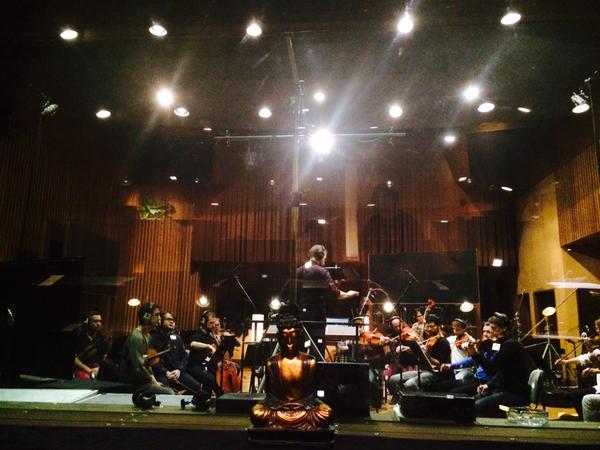
conducting

More recently, Kieran has been working with award-winning composer Tyler Bates, in the role as orchestrator. Bates is known for his work on films such as: 300, Guardians of the Galaxy, Watchmen, and Sucker Punch, to name just a few. Kieran is working on upcoming films Guardians of the Galaxy 2 and Deadpool 2. As a recording and touring musician who has experienced the thrill of performing for massive audiences, Kiely is embracing the thrill of this new avenue for his talents. He notes, “I do enjoy Orchestrating. I have always loved the sound of an Orchestra and getting to do this sort of work is a pure joy. It’s a pretty steep learning curve. You have to be an expert in music notation and really understand the inner workings of an Orchestra, but’s it’s really rewarding when you attend a session and hear your orchestrations being played. I am Orchestrating on NBC’s Timeless TV Show. We work with Emmy nominated Composer Robert Duncan to Orchestrate his music weekly for the show. It’s a pretty fast turnaround, we have about two days to Orchestrate each episode with about 30 minutes of music per show.” In the case of Kieran Kiely it seems to be nature and nurture rather than one or the other. This consummate musician has conquered the world of rock as a sought after sideman and performer; now he has thrown himself into embracing the composition, orchestration, and conducting of large ensembles to create the moods that effect millions (if not billions) of film and television audiences. The one constant throughout his career is his pursuit of his love affair with music, regardless of the way he presents it.

COMPOSER JAMES MCWILLIAM CREATES A DISTURBING & BEAUTIFUL WORLD IN THE PATROL

Being an artist is just like being an iceberg. If that doesn’t make sense to you, it likely means that you have never pursued a career in the Arts. The public witnesses about 5-10 percent of the work that you have done to get to the point in which they are actually aware of you. Anyone who thinks an artist is a slacker trying to avoid “honest work” is completely unaware of the years, even decades, of training accumulated just to be able to perform to best of your abilities. Athletes are the closest to this template and their physical forms give evidence to their toil. You won’t necessarily see a six pack on a painter or a cinematographer. Artists often work together to create works that are designed to move a mass audience. When Director/Writer/Producer Tom Petch wanted a film score for his award-winning film The Patrol, he enlisted James McWilliam as a composer. The result was a highly original and unique score which sounds both mechanical and organic. With sounds that are at times indiscernible and sometimes beautifully organic, McWilliam’s compositions (along with composer Nick Crofts) were created with the intention of being very prominent in the film to give the audience the uncomfortable feeling of being in a war. The Patrol was nominated for the Radiance award at the British Independent Film Festival and won the Jury Prize at the Raindance Film Festival, attesting to the achievement of this goal.

Filmmaker Tom Petch is a veteran. With The Patrol, he wanted the audience to understand what he and other veterans had felt in their experiences as a soldier. The film follows a patrol of soldiers in Afghanistan in 2006 tasked with keeping territory out of the hands of the Taliban and providing support to the Afghan National Army.  Rather than focusing on the war itself the film delves into the internal psyche of the individual men, and as the soldiers become disillusioned with their roles in the war asresources become stretched the authority that was, until that point the only thing holding them together, begins to unravel. The original plan to use music from a number of different artists was scrapped in order to create a highly original audio landscape which would be created by McWilliam. Petch was clear from the first conversations that he required some unorthodox compositions. Rather than a score which causes the viewer to feel for the soldiers, Petch wanted music that placed the audience into a state of similar sensation as these combatants. McWilliam states, “From the outset it was clear that Tom Petch didn’t want a conventional score.  He wanted to avoid the usual ‘trappings’ that came with a war movie set in the middle east such as Arabic wind and vocal parts mixed with emotive strings and orchestra that have become so common place in film & TV.  He wanted a score that reflected the alien like landscape the soldiers found themselves in and, in a musical way, mimicked the sounds of warfare.  It was important to him that the score reflect the emotions felt by the soldiers such as fear, anger, and isolation.  To achieve this, I knew I had to approach the compositional process in an unusual manner and cast off any preconceptions of what a war film should sound like.  An important point that Tom mentioned was that he wanted the score to develop along with the film moving from ‘ugly’ mechanical sounds at the beginning of the film and slowly transitioning into more ‘human’ recognizable sounds with the introduction of melody as the film develops and we come to understand the soldiers and their lives.”  

   The instrumentation for the later part of the film was much easier for McWilliam to envision but the “ugly” sounds required a lot of experimentation. Communication from Petch to McWilliam brought the ideas into focus and create the proper unpleasant audioscape. As a composer, conductor, and orchestrator, McWilliam has worked on films Exorcist Diaries, Crimson Peak (by Guillermo Del Toro, $73MM Worldwide), and Harry Potter and the Goblet of Fire ($892MM Worldwide) and others in locations like Paris, London, and Macedonia. In creating the unusual music for The Patrol he leaned back on his early pop-musician aspirations with a modern twist. In his early days, James studied piano and drums. In his search for interesting yet uncomfortable ‘noises’ for The Patrol he used a bit of rock/experimental influence. The composer reveals, “A lot of our primary sounds came from a £30 guitar I bought which I then unceremoniously scraped, banged and smashed, mixed with lots of effects and then chopped up into useable bits of audio.  Along with sounds that Nick had created, we had our palette and we really felt that we’d made a sound world that couldn’t be for any film other than The Patrol.  Nick and I decided which scenes to work on and we talked about how the score was to develop as Tom had asked, starting with hard, mechanical, distorted sounds inducing unease and tension and then moving towards a softer more human sound with hints of melody entering into the score as we learn more about the individuals involved. Along with my composing partner, Nick Crofts, we created some pretty ugly sounds, alongside some very beautiful ones, and how we introduced these sounds into the film and layered them up to create intensity at key moments was important. For example, the beginning of the film begins with a wildly distorted guitar accompanied by pulsing low synths, this has the deliberate intention of dropping the viewer straight into the hell that is warfare in the Helmand Province.  Later on in the film shortly after one of the main characters dies (Taff) we get a glimmer of something you could call a melody, played on piano.  This point signifies a change in the film and the music. 

As anyone who has worked on a film can tell you, the Director is the person in charge who has the understanding of the tone of a film and will lead others to complement his/her vision. While some members of a production try to interpret a Director’s vision, others feel that their role as an artist is to present their ideas in an emotional way. Tom Petch clearly communicated his opinion of what the score to his film should be like; McWilliam took this advice but channeled in through personal sensibilities. James notes, “I think that as a film composer you are a filmmaker just like everyone else and it is your job to do offer a perspective on what you are seeing based on your knowledge and experiences.  It can be an incredibly difficult job under very stressful conditions and whether it’s composer; orchestrator or programmer you must be able to understand the needs of the director and help deliver a score that is right for the film. The composer is in quite a unique position as they’re often one of the first people outside of the closed circle of director, producer and editor, to see a full edit; this means they are one of the first to react to what they see on screen and this materializes in the form of music.  Given how long everyone else has had to form his or her opinions on the film, what the composer does next can be a crucial moment.  It can be a very difficult position to be in and this is where the real skill of being a film composer comes to the fore.  Will the composer see the film the same way as the director and or producer have been seeing it from the first day they began work on it?  Perhaps the composer has a different take on it that moves the film into an entirely new direction that no one else had thought of, this is the power that music can have on a film.”

The fact that Petch was not only Writer/Director/Producer of The Patrol but also a veteran required unmistakable aim from McWilliam’s score. James was immensely successful in his creation as Petch declares, “James’ score for The Patrol was outstanding. He developed the music for the film having really grasped the story, the film’s idea of isolation, and the brief I gave him for the movie. His score had an ethereal quality which lifted the imagery and definitely contributed to the film winning the UKs leading independent film festival, Raindance. James’ ability to work with a directors’ vision and turn it into his own work, while never baulking at the challenges, and understanding of the collaborative process is essential to successfully scoring a feature film. These qualities led to the great success of his score and thus our film.” The score in The Patrol leads the viewer on a disturbing trip which is used to translate the individual’s perspective and emotional state in a time of war. The film’s music stands by itself as a work of art that, when combined with the film, speaks to the humanity of those found in a circumstance which attempts to separate them from that same humanity. James McWilliam has succeeded as part of a production team in communicating the story of the dissipation of the team on-screen; helping us all to see that war is never pleasant for anyone.

jim-7

Music Writer Nick Fulton’s Manifest Destiny

Nick Fulton has deftly parlayed his personal interest in pop music into a successful career as a professional writer. The New Zealand-born Fulton’s concise, insightful style, impeccable taste and natural affinity for his subject have enabled him to go, in a decade’s time, from startup blogger to internationally recognized voice. His groundbreaking Einstein Music Journal was one of the first web presences in the remote island nation and virtually introduced the music blog format there.

For Fulton, it came together almost by chance. “I started writing after a friend encouraged me to start a blog,” he said. “In 2004 very few people in New Zealand were blogging, so it was pretty exciting to enter that space. It also meant that the people I connected with online were mostly outside my local community. I made friends and connected with other writers in Sydney, Los Angeles and London.

“Around that time I tried to connect with a couple of print publications that were based in Auckland, which is where all the major publications in New Zealand are based,” Fulton said. “But I was living in Wellington and struggled to find my way in. As a result, I started writing more frequently on my blog, which later evolved into Einstein Music Journal (EMJ). I got another writer on board and used Myspace to reach out to bands and music blogs in other countries. Before long we had a steady readership, and when we eventually launched Einstein Music Journal in 2006 we were able to throw a massive party and sell out one of Auckland’s best live music venues.”

“We operated slightly differently to the traditional music media,” Fulton said. “We didn’t always go through conventional channels to secure a story. We quickly gained a reputation for being bold and enthusiastic, and many publicists and record labels responded well to us. On several occasions we managed to secure stories that much bigger publications and other established writers in New Zealand missed out on.”

From this somewhat cheeky Do-It-Yourself start, Fulton, thanks to a reputation which was gaining respect and admiration beyond New Zealand, found respectability being thrust upon him and soon eschewed such pop guerilla tactics.

“My biggest achievement is finding an audience for my writing outside of New Zealand,” Fulton said. “With EMJ, I had regular readers in New York. LA and Australia. More recently I’ve worked with influential writers like Jessica Hopper, Cuepoint’s Jonathan Shecter and co-authored a column with hip hop writer Michael ‘DJ’ Pizzo. Being personally asked by Shecter to contribute to his publication was such an honor, and one that I will never forget. He wrote to me after I self-published an article on Medium, asking if he could republish my story on Cuepoint and if I’d be willing to join him as a writer and editor there.”

This natural momentum has served the writer well, and Fulton’s aim is always true—his 2015 Pitchfork magazine editorial “It’s Time to Put Our Cameras Away” (which called for a cessation of fan cellphone recording at concerts) not only inspired a contrarian clickbait response from venerable NYC weekly the Village Voice, it coincided with the practical use at numerous music and comedy performances of a variety anti-cell phone technology, a practice that is steadily growing.

“I like writing about a potential trend, or an unusual observation,” Fulton said. “My Pitchfork Op-Ed started a healthy debate online and had an overwhelmingly positive response. Pitchfork‘s Facebook and Twitter received a lot of comments, mostly agreeing with me, which was good. The only real dissent was shown by that writer at the Voice, who penned a response telling people to keep doing whatever they wanted. I think he thought I was being too politically correct.”

With a kaleidoscopic range of subjects from world class pop superstars to offbeat independents like Italian noise rockers Father Murphy, offbeat New York hip-hop group Das Racist, New Zealand filmmaker-music video director Simon Ward or a behind the scenes piece of music studio production Fulton’s analytical easy going methodology always holds the reader

“Nick’s a great guy and a great writer,” broadcaster David Klein said. “EMJ was one of the key music blogs in the country, and one that was a real defining authority. We met when he was a guest on a radio show I hosted. It was awesome to have Nick onboard, he always presented interesting new music, and could speak about it with a good understanding of trends, composition, and just the way music appeals to you at an emotional level. I’d trust Nick’s taste, and the quality of his writing is what has made him so successful. And he is always expanding his range –I just read something about music studio production he’d written a few weeks ago, and it was great.”

Now an almost ubiquitous figure in the local music scene, Fulton’s achievements and variety of outlets continue to grow.

“Being viewed by the public as an expert in my field is one the highest honors,” Fulton said. “I’m proud of the times I was invited on to radio shows, to comment publicly about a trend in music or share my thoughts on a popular band. Now my goal is to become a trusted voice outside of New Zealand and Australia. I’d like to immerse myself in the American music scene for a while and soak up as much knowledge as possible. I got a taste of it all when I visited in 2012, but there’s still so much to discover and write about.”

Fulton’s elegant yet hard charging style has taken him far, but the writer is just now really coming into his own, and this success is very easily explained.

“Working with Nick was great,“ editor Katy Hall said. “He’s the kind of writer you hope will stumble into your inbox at some point but rarely does. He’s personable, professional, knows how to stick to a deadline, and most importantly, he always delivered really high-quality work. It was engaging, tailored to the publication’s tone and needed no editing. I don’t want this to sound cheesy or overhyped; it was just the reality of working with a great writer.”


Adrian Puan is first Malaysian songwriter to be signed to U.S. label

Some people are born with talent that they don’t realize right away. With no training, they can master something that someone else has spent their life studying. That is certainly the case with Adrian Puan.

Puan was born in a small town in a state called Melaka and moved to the capital city of Malaysia, Kuala Lumpur when he was 8. Now, he is recognized internationally as a songwriter and composer.

“To be honest, growing up, I never knew that one day I’d be involved in music or anything related to it, simply because I never had the interest in music, much less play it,” he said. “I guess it all started when I began organizing events in the university I studied in.”

Puan used to be an organizer during his studies, which required him to network with local musicians and constantly keep a lookout for upcoming talents to perform in my events.

“That was when I got to know the band Beat The System and we all became best friends. It wasn’t until in 2012 when Gerald, the drummer of Beat The System, asked for my assistance in writing some lyrics for a song the band was working on and he realized that I had the talent in songwriting. Gerald then began to push me to come up with melodies for a chorus, or a bridge, and subsequently a full song.”

The songs that Puan had co-written with the band went on to win multiple awards in the Asian region. “Shine” won Song of the Year, Best Genre Bender, and Best Collaboration at the Asian Voice Independent Music Awards in 2012, and another song titled “Hero” went on to win Song of the Year at the Asian Bite My Music Global Awards in 2013. Puan also won third place for a song that he submitted to the Malaysian Revival Songwriting Competition (MRSC) in 2013.

“That reassured me that I could actually write songs,” he said. “I didn’t have any sort of training. I used to write tons and tons of poems when I was younger and that’s the closest thing I did to songwriting at the time.”

Now, it is evident to everyone that works with Puan that he was meant to be a songwriter.

“Adrian has the ability to compose songs that are very relevant to the listeners now, he writes melodies that are catchy and it resonates with the listeners,” said Amelia Tan, director of Malaysian Revival Songwriting Competition.

“Working with Adrian was a great experience, he surely portrayed a very professional working attitude and took his craft very seriously,” said Mokhtaza Ahmad, head of A&R Warner Music Malaysia.

Songwriting allows Puan to write stories, to express his deepest feelings, and to channel his creative senses in melodically designed tunes that transport him to a place and time of familiarity or to a place that only he can imagine.

“It gives me no greater joy when the songs I create elicit strong emotional responses from those who heard them,” he said. “I always believe that music is an agent of cure to the human soul and I’m just glad that I get to be a part of it.”

However, the craft does not come without its challenges. Every writer experience a creative block every once in a while.

“As I don’t play the piano or guitar or any other music instruments, unlike most songwriters I can’t play some random chords and create melodies based off them. Melodies come to me by inspiration and imagination. It may happen at any time of the day like how ideas would. It comes when I’m sleeping or when I go for a walk outside or sometimes even when I’m taking a shower. There are times when I’d be able to write a few songs in a day, but there are also times when I won’t get a single song-worthy melody for months on end,” he described. “I also face certain challenges while songwriting especially when I can’t find the right words or a right tune to accurately describe what it is I want to convey. In writing lyrics, it’s particularly frustrating when the word you want doesn’t fit into what I’d call ‘a melody pocket’ whereby the sound of a syllable doesn’t pair well with a particular music note.”

He certainly overcomes all obstacles, being the very first Malaysian songwriter to get signed to a U.S. record label.

“My inspiration comes from many places. I’d say the love I have for God, my family and friends is the main inspiration for me to write music. Coming to learn of other people’s life stories and experiences inspire me to write as well. Having gone through much heartache and disappointment in my own life’s journey certainly do inspire me to write music that other people can relate to,” he said. “It’s funny how much less lonely we feel when we realize that we’re not the only ones feeling whatever it is we’re feeling and that somewhere in the world someone’s feeling the exact same thing as we are, and I believe music does that, it tells a story about the human life, its ups and downs, assuring its listeners that they’re not alone.”

Puan is now located in New York City, working with Beat The System on their upcoming album. He is officially a band member, coming a long way from being their “number one fan.” He says the music industry in American has many more possibilities for him as a songwriter.

“Coming from a small town in Malaysia where music is not as widely celebrated as it is here, my goal has always been to further my career in America as I know the people here deeply value the art of music. Back home, the English music market is too small and it’s saturated with delusional musicians who refuse to transcend the already low music standards. Instead of being supportive of one another and building each other up, they’d tear you down just to get ahead in the music scene. On the other hand, the music community that I’ve gotten to know in New York has been nothing but supportive and one can sense their genuine joy and pride whenever a musician they know has achieved something significant,” he said. “The music environment that the U.S. has created is unbelievably conducive and it is no wonder why every musician from any parts of Asia aspires to make music here. From music facilities to opportunities, no other country compares to the U.S. Like people always say, if you want to make it big in the global music scene, you’d have to make it big in America.”

Puan wants to continue to be the best songwriter he can be, and write for a variety of different artists across all genres.

“Despite pop being my absolute favorite music genre, I’ve had melodies recorded that lean toward rock, R&B, and even country music. There are also songs that I’ve written which I believe would be a perfect fit for certain artists that I look forward to working with and my goal is to make that happen,” he concluded.