
Category Archives: Intetnational Films

YOU CAN’T TAKE YOUR EYES OFF ALSION ARAYA IN THE UNSEEN

Faust has been the inspiration for countless films about those who make a pact with the devil to get exactly what they want but end up making a great sacrifice for their gains. There’s always a loophole “gotcha” moment. While this has nothing to do with the theme of the movie The Unseen it might be found in the story of one of the film’s stars Alison Araya. If the actress were to design an ideal situation for herself, it would be The Unseen. While Araya has made numerous appearances in blockbuster films like X-Men Origins: Wolverine and Watchmen (and many others), this was her first major role. Alison’s portrayal of the fearless Moll who is involved in a same sex relationship drew great praise from critics. She even got to act opposite one of her adolescent crushes (Aden Young as Bob Langmore) in one of the film’s most climactic and prominent scenes. Everything was perfect except…wait for the twist…The Unseen is an action/sci-fi/horror story and Araya is one of the most squeamish individuals on the planet. A self-described chicken who can’t make it through the horror film trailers at a movie theater, the actress found herself in a perfect environment save the very premise of the film. With no way out of it and too much to lose by passing on The Unseen, Araya bit the bullet and accepted the role as Moll. Alison and the entire audience benefitted from this decision. The film itself was a resounding hit whose recognitions include: two Canadian Screen Awards nominations, eight Leo Awards nominations, selection of the Molins de Rei Horror Film Festival and Vancouver Film Critics Circle, and wins at the Other Worlds Austion SciFi Film Festival, Molins de Rei Horror Film Festival, and others.Screen Shot 2017-07-03 at 3.31.23 PM

While The Unseen is based on the lore of The Invisible Man, it’s a very different and unique take. Writer/director Geoff Redknap didn’t want to update the already familiar story with new actors and VFX; he wanted to create an entirely different focus. The Unseen dissects the idea of how this fantastic situation would affect the family of the person in this very odd circumstance. The inclusion of an ex-spouse, children, extended family members, etc. is similar to looking at a 3-D picture where your eyes cross and present a totally new subject…one which was previously invisible. The character Moll is the partner of Darlene, ex-wife of Bob who has literally disappeared. She is stepmother to Eva, Bob and Darlene’s daughter and has become fiercely protective of her new family, particularly when it comes to Bob. The actress portraying Moll would need to be both fierce and tender. Redknap stipulates, “Alison stood out during the audition process. She was fierce but what captured our attention was the vulnerability she bought to the role. She could have easily played a mere foil to her step-daughter but instead Alison’s multi-layered performance brought a greater depth to her own and the other actors’ performances. Alison was not afraid to go head to head with Aden Young and they created one of the most climactic scenes in the film. We knew we ‘got it’ when the air felt like it was buzzing with the electricity of the performance Aden and Alison had just given.” Producer Katie Weekly confirms, “It was important to find an actress who could carry the gravitas of Moll. We were looking for a dynamic and strong actress who could also play the vulnerability of the character. Alison bought nuance and passion to the role and really made it her own. A different actress might have played Moll as ‘the bad guy’ but Alison brought such life to the character that her transition from the beginning to end of the movie was much more satisfying.”

Moll could have been presented in a variety of ways; it was this fiercely loyal woman who protects her family and her partner that attracted Alison to the role. Moll is deeply in love with Darlene (played by Camille Sullivan) and has completely bonded with and come to love Darlene’s daughter Eva (played by Julia Sarah Stone) from Darlene’s previous relationship with Bob as her own. Being the woman in Darlene’s life, Moll has a chip on her shoulder when it comes to Bob. A drifter and absent father, Moll has seen firsthand the pain Bob has caused and will stop at nothing to protect the family she calls her own. Moll is stunned when she discovers that Bob is back in town and Eva is missing. Suspicious of Bob and the company he keeps, she pursues the truth and the two. When Moll is finally let in on the family secret, she is able to make peace with the relationship Bob and Darlene will always share and relaxes with her place in Darlene’s life knowing there are no secrets. The story is family drama with a very substantial secret ingredient.
Screen Shot 2017-07-03 at 3.34.53 PM

In one of the film’s most intense scenes, Alison was called upon to do something that has been common place for her in numerous productions, exhibit the signs of seeing something that wasn’t there; which is both literal and figurative when you are in a movie about an invisible man. She recalls her process noting, “I remember struggling with that particular moment in the film, when I had to react to seeing something shocking and new to me. I remember trying to figure it out intellectually and I wasn’t getting anywhere. Then I just closed my eyes and visualized what was in front of me. Immediately my body reacted and I understood on a visceral level what was real for me. I love moments like that because we don’t always have it worked out in advance. Some moments stump me and they challenge me to look deeper into my tool belt or think outside of the box. There is no one path to the truth of the moment, there are infinite paths it’s a matter of knowing which one to follow on any given day.” One thing Araya wasn’t confused about was working with her co-star Aden Young. She admits, “Working with Aden was a career highlight for me! I was a huge fan growing up in Australia; Aden has always been on my radar. I had a huge crush on him after watching “Black Robe” and when I saw his name on the cast list, I could hardly believe it. Aden was so generous and really invited me to get inside the ring with him and go for it…and we did! It was exhilarating and scary and live. It was incredibly fulfilling and I hope to have many more moments on set just like that. I held it together and kept it very professional but there was a younger version of me inside that was going crazy with excitement.”

boudoir shoot 2014 014

The Unseen as a film is contradictory; not in the sense that it doesn’t line up in terms of story or production but rather that this movie about the unseen is made so believable by what is seen. It’s not overuse of VFX or trickery that makes it compelling, it’s the performances of Alison and her cast that pull us into believing this very fantastic situation is as real as any discomfort a non-nuclear family experiences. The filmmakers ask us as the audience to buy into quite a bit and it’s the performances onscreen that make it much easier to be at ease with and suspend our view of reality. What is seen in The Unseen looks very good.

ZHENG HUANG PRODUCES AN AWARD-WINNING FILM FROM THE HEART OF HIS FAMILY

Of all the qualities that make up an artist, the most essential is heart. While knowledge, vision, and technical expertise are beneficial, passion is not to be underestimated when it comes to the tenacious mindset that drives an artist of almost any medium. Producer Zheng Huang’s connection to the location and story of the film “Lost” was deeply embedded in his heart. While he wore a multitude of hats for “Lost” (including writer and director) it was the role of producer which proved most taxing. It was Huang’s excellence as a producer that also led this film to such immense praise and eventually a spot at the world famous Cannes Film Festival. The film is epic, adventurous, and gripping for many reasons. Zheng was driven to create the film as a tribute and connection to his family’s homeland and to expose its beauty to the world. The lush grasslands, the exotic characters, and the endearing portrayal by the cast all appear to originate from the story which this producer was inspired to write, and was the only person capable of manifesting onscreen. “Lost” truly is a piece of Zheng Huang personified for all to see.

psb (1)


“Lost” was Zheng’s first high budget film to produce and he definitely felt the responsibility. Whether it was fear or passion, the fuel that pushed him towards excellence was the appropriate one. After the completion of the script, he flew to China and did location scouting in Inner Mongolia. It was an intensely emotional moment for him. Huang’s grandfather had died on the grasslands of Inner Mongolia and it was this which inspired the story. Zheng wanted to be in the grasslands; to feel them and to expose this feeling to the rest of the world in film. For two years he had seen the terrain, the people, and the story in his mind; a mixture of Chinese and American culture and individuals…and now he was seeing the nebulous form start to solidify in front of his eyes. While the story of “Lost” is not derived from his family, Huang understood that the feeling of the location and people who carry the spirit of both his grandfather’s life and his own. The film tells of an American boy named Michael who has lost his mother in Inner Mongolia. Mr. Wu, a native Mongolian, saved Michael and decides to adopt him. Mr. Wu teaches him Chinese and Mongolia culture. Michael’s real mom (Mary) searches for him for quite some time. Michael knows the truth that Mr. Wu hides this from him and Mary. Michael is angry but struggles with the decision to return to his birth family or not. While many films give a clear and imposed decision about situations like this, “Lost” accurately depicts the conflict that can be a part of real life when considering to whom have we bonded most strongly. Just as importantly, the story and the stunning visuals of this film portray the people and the culture of Inner Mongolia not as “others” but as those who share precisely the same emotions, virtues, and faults as those of any group of people on the planet, meaning that Zheng perfectly achieved the goal of his film. The process of creating this onscreen was earned.

E8162276-2944-4592-A15D-6F80DBF33E92

Every producer knows the challenging points for their project. Successfully and positively utilizing these is a badge of honor as well as an accomplishment for any professional in the field. For “Lost” the can easily be defined as: kids, animals, and nature. Due to the nature of the people in this part of the world, the actors needed to be able to ride horses. This is not exactly a skill that the majority of individuals possess these days. While some actors take quickly and easily to it, it only takes one intimidated thespian to derail the schedule. A dutiful producer, Huang prepared a week of riding lessons in advance to the shoot. A couple of actors were never quite at ease with the situation (or the animals) which necessitated a restructuring of the shot list and even some “cheat” shots.

Zheng admits that this film was his first time working with a child actor. The final performance by this youth in the film is exceptional but the producer concedes that it wasn’t exactly the same as dealing with most actors in his experience. He recalls, “He was great and is a very talented actor. I think it’s wrong to expect a young actor to have the same perspective as an adult. It was actually kind of miserable for part of the shoot, it was hot and he was being asked to do things that were difficult…I can completely understand his state of mind. Having been a young boy myself once I knew that there’s not much that pizza and some toys can’t fix when it comes to attitude. Regardless of the actor I’m working with, I find that if I can put myself in their shoes I can quickly find the proper motivation for them.”

One of the most striking traits of “Lost” is the visual component of the film. The beauty of the Inner Mongolian grasslands is as epic as any classic western from Hollywood’s heyday. A shrewd producer who is always cognizant of a film’s budget, Huang had his location manager contact his best friend (a herdsman named A De) about using his private 8,000-acre meadow. A De was so interested in the film being made that he offered the location up free of charge. As a thank you, Zheng gave him a supporting role in the film. In an effort to keep production value high and cost low, he also hired a crew from nearby Beijing (four hours away from the filming location). Casting locals rounded out this international production and provided the authenticity that Huang had envisioned. Since his early vision, it was these very people that he wanted to be seen in the film.

DT8A1862

“Lost” was much more than a film to Zheng. It was an Odyssey that connected him with the previous generations of his family. Through his talent, he was able to communicate to the rest of the world, via film, what it feels like to feel both afraid and comforted in a part of the world that few Westerners will ever see. It’s by seeing these types of stories that we realize how similar all people are at their core. The literal deluge of awards that “Lost” has received in addition to being an Official Selection of the Cannes Film Festival (2017 American Film Award, Award of Merit at the 2017 Best Shorts Competition, Official Selection of the Hollywood International Moving Pictures Film Festival, Multiple Platinum Awards at the International Independent Film Awards, and numerous others) is an assurance that the beauty of this film has touched many people in many different lands. While producer is only one of the roles which Zheng Huang performed for this film, it is likely the most applicable to his deep investment in it.

psb

RAFAEL THOMASETO BRINGS HIS HOLLYWOOD INSPIRATION FULL CIRCLE

Making a film can be like going on vacation. No, not in the sense that you relax but rather in the fact that you travel for different experiences. You might travel to Paris to walk the Champs- Elysees and attend the Louvre or you might go to Cabo Wabo to drink tequila and kite surf. Filmmakers are people like the rest of us and they are prone to experience making different genres of productions; it allows them to keep things fresh and interesting throughout their career. While producer Rafael Thomaseto has made many thoughtful and heart-wrenching films, he reveled in the making of “Inherent Greed” with its selfish and even maniacal characters. Like a Disneyland thrill ride for both the audience and those involved in making this production, it displayed some of the darker sides of humanity, scaring you while you still enjoy the break from reality.

Film has often been the intersection of humanity for many of us. While we can relate to the characters in many ways, they often seem willing to exceed the barriers that society or reality imposes on itself. For Thomaseto who grew up in Brazil, the lines between safety and danger were always clear. His family’s residence in a gated community allowed him the safety of a “normal” childhood but he was always aware that there were others who were not afforded this benefit. This perspective is a stark contrast to the main characters in “Inherent Greed”, the Duboff brothers. These siblings have been raised in a highly affluent family and been given every opportunity, yet they want more. While they are driven to crime by the thought of increasing wealth, Thomaseto was inspired to commit a small infraction by a film poster and Woody Allen. He explains, “When I was 13, I had an experience that shaped my vision of the cinema. In São Paulo, every Friday my mother would pick up me and my sister from school and we would meet my dad at a mall in the city for lunch and then an afternoon of shopping. I hated spending hours watching them spend money on clothes so I would immerse myself into movies. One particular time I was in line to buy popcorn and had already gotten my tickets to see a romantic comedy, but I noticed the poster for a movie called Match Point. For some reason this image stood out to me. I left the line and went to check the times of the movie and realized it was PG16. I didn’t care. I pretended I was going to the movie I had tickets for and entered a different room. I sat down in the first row and watched Match Point, written and directed by Woody Allen. It’s still my favorite movie and Woody became my favorite director and inspiration.”

“Inherent Greed” is a complex story of two brothers who have been raised with privilege and wealth but return this favor by murdering their own parents in hopes of seizing the family fortune. The main focus of the story concerns whether the two brothers can get away with their crime while avoiding public or legal scrutiny. While the opulence of the family in the movie is displayed via onscreen locations filmed in mansions and a ranch in Topanga Canyon, the independent film sized budget belies the images onscreen. Thomaseto confirms, “Smaller films often have very unique and original ideas and stories, which makes them very interesting. One of the greatest challenges for a producer is that these films don’t come with the financial backing of a big studio. I got hired only a few days before the official picture, and I was at the time working on the postproduction of a commercial for a brand called Clearasil. The budget of the commercial was probably 100 times bigger than what we had for “Inherent Greed.” Organization is a key element to making sure a production happens. Keeping a constant conversation within all the main and key roles on the project, such as executive producer, producer, director, cinematographer is essential. These are creative people; when allowed to use their talents…sometimes the best results have nothing to do with the financial component.” This perspective is part of what fueled Thomaseto’s documentary “Cycles of Existence” which attempts to understand how the homeless community finds happiness even though they have essentially no material possessions. The idea itself is diametrically opposed to the main characters of “Inherent Greed.”

Retribution, Karma, call it what you like…the Duboff brothers get what’s coming to them in a number of ways at the end of the film (yes, you’ll have to watch it yourself for the details). The concept of rewards happens for those behind the camera as well as those on camera. Many of the films Rafael has produced have appeared at the world famous Cannes Film Festival, including “Inherent Greed.” He relates, “Cannes has always been my favorite film festival and I have always been obsessed with the films that come out of there. Having the films I’ve worked on be a part of it gives me more strength and self-esteem to keep fighting in the entertainment industry for great work. Working in film isn’t as glamorous as people think but attending a festival like this is a step up for everyone’s career. It brings more visibility to the work of the film and the talents involved. You can enjoy the benefits of being a filmmaker, which means sitting down at a meeting during the festival and having rose wine surrounded by heads of production of the main film studios in the world. A sense of community and affirmation is the real payoff in this situation.” Louie Torrellas (CEO of Ambitious Media Productions) declares, “Any person who works in the film industry is highly aware of how difficult and overwhelming shooting a project can be. Being the head of a production, gives you even more responsibility and in my point of view, the producer is the boss and the most important role on a movie. Rafael’s work during the production of the film ‘Inherent Greed’ was nothing short of amazing. One of the executive producers on the film recommended him to my company, Ambitious Media (production company for the film). We hired him and he instantly took over the project and made it work. Rafael exhibits a proficiency and tenacity rarely seen in producers these days. I’m continually reminded what a genius move it was to hire him. The positive reactions to this film vet this decision in spades.”

Los Angeles Brazilian Film Festival

From Bollywood to Hollywood: Actress Karishma Bhandari

Karishma Bhandari
Actress Karishma Bhandari shot by John Clark

Born and raised in East London, actress Karishma Bhandari first made her mark in the Bollywood film industry back in 2012 when she landed the starring role of Sita in Southbank Centre Goes Bollywood.

Aside from being a skilled actress with magnetic appeal on screen, Bhandari’s extensive dance training gave her an added edge over the hundreds of other hopefuls vying for the role. Though she was only 19 at the time, Bhandari had already spent several years perfecting her craft at home in London. Her outstanding performance in the film Southbank Centre Goes Bollywood brought her widespread attention and ultimately proved to be the catalyst for the successful career she has today.

Directed by Encounters International Film Festival Award winner Aneil Karia, who also earned  the Grand Jury Prize Award from the Utah Arts Festival for her 2014 film Tag, the comedic adventure film Southbank Centre Goes Bollywood was commissioned for the Alchemy Festival, the UK’s largest festival of South Asian culture. The film followed Bhandari’s character Sita, Sheila played by Gurkiran Kaur (Oxasians, London Kahanis) and Rita played by Roshni Rathore (80’s Vampire Flick, Love Type D), three dance teachers at a local community centre who make it their mission to keep the centre open after a wealthy developer buys the property with the intention of closing it down in order to build a hotel. Chalk full of lively Bollywood dance routines, Southbank Centre Goes Bollywood’s endearing story about three young women battling the odds and fighting for what they believe in was a hit with viewers.

Karishma Bhandari
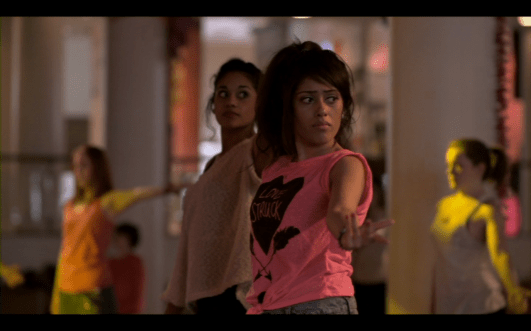
Still of Karishma Bhandari in pink in “Southbank Centre Goes Bollywood”

The first insight into the dynamic talent actress Karishma Bhandari has become known for, Southbank Centre Goes Bollywood proved Bhandari’s ability to portray a character who was the polar opposite of herself– a necessary skill for any true actor, and one that has undoubtedly led her to land leading roles in a wide range of films since.

Director Aneil Karia says, “Karishma’s passion is one thing that makes her stand out from the crowd, as well as her striking look and her warmth. It was a challenging, nuanced role in the film and she delivered a wonderful performance.” 

In 2016 Bhandari’s international reputation got an even bigger boost when she landed a lead role as Geeta in the Bollywood feature film Club Dancer directed by B. Prasad. The film follows Ria played by Nisha Mavani, an Indian girl who moves to the city where she tells her parents she’s landed a respectable job, however she is really a dancer in a club.

When her parents come for a surprise visit and find a man at her house who they assume is her boyfriend, but is actually a criminal who sought refuge from the police the night before, they immediately want them to get married. The man quickly disappears, but Ria finds another man, Amit, who’s identical to him and negotiates a deal with him to pretend to be her boyfriend in exchange for money, which he needs for his sister’s wedding. Bhandari’s character Geeta comes into play as the man’s soon-to-be-wed sister, a key character in the plot who helps further the love story that eventually develops between Ria and Amit, who’s played by Rajbeer Singh (Who’s There?, Ishq Junoon: The Heat is On).

Karishma Bhandari
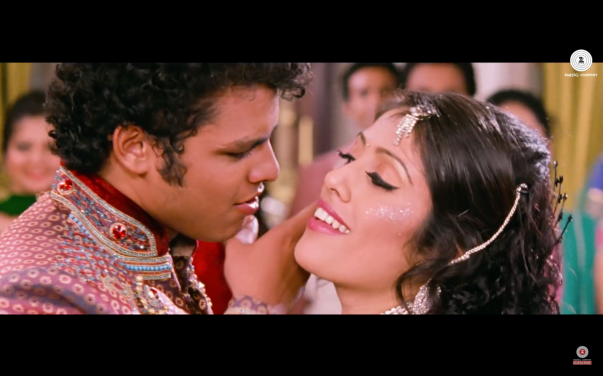
Still of Raja (left) and Karishma Bhandari (right) as Geeta in “Club Dancer”

In the film, which Bhandari traveled to India to shoot for several months, she acts alongside notable Bollywood stars such as Filmfare Award winner Shakti Kapoor (Hungama, Musafir, Raja Babu) and Stardust Award nominee Zarina Wahab (Vishwaroopam, My Name is Khan), as well as actress Judith Shekoni (The Twilight Saga Breaking Dawn Part 2, Ice, Ordinary Lies).

Although she was raised in London, Bhandari’s parents are originally from Punjab, India and she grew up speaking Punjabi– something that created a challenge for the actress as Club Dancer was made in Hindi. However, Bhandari trained diligently, learning a new language and adapting her accent for the role, and she seamlessly delivered her performance as if Hindi was her mother tongue.

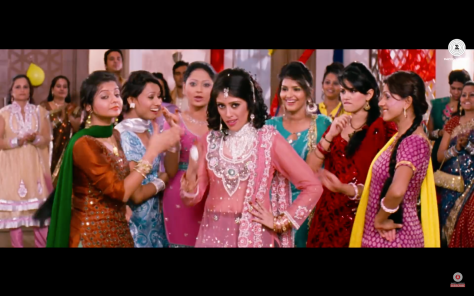
One of the highlights of Bhandari’s performance as Geeta came towards the end of the film when she performed an intricate Bollywood dance routine, one that few other actresses could have pulled off with the same level of grace and style she brings to the screen.

Bhandari admits, “I had already had Bollywood dance training, but to do it on a massive set in front of a lot of people was challenging… We had rehearsals every day for about two weeks and when it came time for the shoot date I had the heaviest outfit to wear. It was a wedding song and I was literally covered in jewels, which made it difficult to dance, but I pushed through and made sure my movements were seen… the song was definitely the most memorable as it was amazing to see how it was edited together.”

Karishma Bhandari
Sill of Karishma Bhandari (center) surrounded by background actors in “Club Dancer”

Some of the other film credits Bhandari has become known for over the years include BAFTA nominee Jon Jones’ (Da Vinci’s Demons, Cold Feet) 2013 drama Lawless with National Television Award winner Suranne Jones (Doctor Foster), the Empire Award nominated comedy The Inbetweeners 2 with Simon Bird (Drunk History: UK, Friday Night Dinner) and James Buckley (Zapped, White Gold), Asko Pati’s (Love Station, Super Micchua) romantic action film Aashiqui: True Love with Ankush Hazra (Romeo Vs Juliet), the 2016 sci-fi drama The Conversations with Daniella Down (The Wedding Party), and more.

Having already made a name for herself in the UK and Bollywood, actress Karishma Bhandari is currently planning to make her move to the states where she will undoubtedly be in hot demand in Hollywood as well. Bhandari is currently in production with the upcoming series The Corner Shop where she plays the lead role of Maleeka, as well as the series Emergency: LA where she plays Nurse Persis Chadra. A supremely talented actress, we have no doubt that we will be seeing a whole lot more of Karishma Bhandari in the future!

TUNA’S INTERNATIONAL COOPERATION

Producer Tuna Erturk’s films and commercial work is widely recognized with awards and their prevalence in the industry. If you don’t know of him that’s likely because you don’t live in Turkey. Fame and recognition does not typically transfer internationally unless you are an actor with a marquee name. This doesn’t bother Tuna as he has always preferred creating behind the scenes. Still…he has been a part of some productions in the US which means it’s likely that you’ll start hearing his name more often, at least if you are in the industry. As the world’s communication becomes more immediate, our interest in different cultures and the stories we share cross international boundaries. Established and creative professionals like Erturk are increasingly becoming sought after to lend their skills and sensibilities to an entertainment thirsting public.

Erturk served as a producer on Dervis Zaim’s Fish which won a Crystal Apricot Award, a SIYAD Award, and was an official selection of the Istanbul International Film Festival. The film is an excellent example of the rich storytelling that is found outside of the US. Fish follows the story of a poor fisherman who, desperate to cure his daughter’s muteness, tries to catch a fabled magic fish. As the film’s producer, Tuna played a huge role in the creation and ultimately ensured their fantastic degrees of critical and commercial success. The film was shot in Golyazi/Bursa, Turkey (a peninsula) where the spectacular views and natural beauty complement the mythical hopes of the main character. Tuna concedes that coordinating a location shoot there was more than worth the effort. Having done only one feature project prior to Fish, Erturk was overwhelmed by Zaim’s insistence that he come aboard the project. He notes, “I was so busy with shooting T.V. commercials at the time. Dervis Zaim came to office one day to meet and asked me to work on Fish. I said that I really wanted to and then he replied to me with this Turkish idiom ‘There is no wedding without the orchestra. You must be there!’ He was stating that I was the orchestra in the wedding. With that kind of confidence, I found a way to make my schedule work and I’m glad I did.” As proof of the positive working relationship and Erturk’s work, Fish won multiple awards at the Malaysia International Film Festival and was nominated for Best Film at Nuremberg Film Festival.

Commercial Shooting 1

Tuna was already in LA amongst the Hollywood industry and experiencing it firsthand when he was hired as producer for the film Uzun bir Gun or “A Long Day.” This film is about a sick father who is accompanied by his son to find the patriarch’s childhood home was filmed in Turkey. Having served as producer in both the US and Turkey, the difference in the two industries was redefined for Erturk. He states, “There is a very close connection between the film industry and school in LA. It’s not just directing or production, technically that is the way it is. Active people working in the sector give lectures on light, sound, visual effects, and many other topics. They share with you all their experiences on set. This makes it possible to educate qualified personnel in every way. There are university graduate set workers and assistants, production assistants, sound assistants in LA. Everyone is very professional and educated in their work. There is great support for students. You can rent the finest cameras, the best equipment, and the most amazing team almost for free. The working rules here are much stricter than in Turkey. For instance, the health and rest time of the team working on the set is very important. In the simplest case, you can call at least 12 hours after the last worker who left the set. I can count many other rules for protecting the workers like this. I think these rules make things work better quality. It was with great pride that I applied my experience here in Hollywood to producing in Turkish films.” “A Long Day” received awards from First Run Film Festival – Wasserman Award, Golden Orange Film Festival, and Tehran International Short Film Festival.

Most recently, Tuna was enlisted as the producer for Noah Tree. Set to be shot in Bursa (Turkey), it tells the story of a man named Omer who goes to his dying father’s childhood village to fulfill his last wish: to bury him under the Noah Tree which his father claims to have planted long ago. But the villagers believe the tree to be the first tree Noah planted after the Great Flood and they will do anything to stop Omer from debasing their sacred tree. The production has already received a Cannes Film Festival Residence invitation.

Choosing to focus on films these days, Erturk has a long history in producing with various formats. Every producer and director gets their start in commercials and Tuna is no exception. He has no disdain for them, in fact…he quite liked the work. What’s not to like when you’re working with international stars like Megan Fox and for massive brands like Coca Cola and Doritos? It does however not come without it’s challenges as he notes, “We shot the Doritos commercial with Megan Fox in Istanbul. When she arrived at the Istanbul International Airport all the paparazzi were waiting there for her. She was very famous in Turkey like the rest of the world. The commercial was about a celebration of new product of Doritos “Fritos Shots”. There was an academy in commercial that brings together the young bright brains. So one of the teachers was Megan Fox. We shot the commercials for 3 days in one studio. The most challenging part of the commercial was Megan’s fame. She was so famous and it was hard keep paparazzi and media attention away.” Erturk adds, “My tasks during these productions were: making budgets, hiring crew, and keep it running smoothly. I was reporting every process to the executive producer Emre Oskay. We were finding solutions together if we had a problem. He was a friend more than a boss. That positive working relationship grew into twenty-three commercials together and film work.” Oskay adds, “In addition to our commercial work together, I have also worked with Tuna on a pair of feature films, both of which he produced. These films, 2014’s Fish and 2013’s Cycle, have each accrued a fantastic degree of commercial success and have drawn the acclaim of audiences and critics. Neither film would have garnered such a significant degree of international acclaim if not for Tuna and his fantastic gifts as a producer. Tuna Erturk stands among the top tiers of Turkey’s film producers.”

IMG_9826

Alon Juwal’s Sci-Fi Film “Visitors” Keeps Viewers on the Edge of Their Seats

"Visitors" Alon Juwal
Film Poster for Alon Juwal’s Film “Visitors”

Last year producer Alon Juwal wrote, directed and produced the riveting dramatic sci-fi film Visitors, which has been gaining traction with audiences and festivals across the U.S. since its release at the tail end of 2016.

Starring Kei’la Ryan (Bad Friends & Family, Kingdom, Night Crawlers) as Kaleigh, Nick Unger (Front Seat Chronicles, Phil of the Future) as her brother Cole, and Tim Juliano as their father, Visitors follows two siblings who return home to their estranged father’s house after a long absence, only to find their home being invaded by a group of uninvited visitors from another world as the night progresses.

As the producer of the film, Juwal’s ability to bring together a talented cast and crew, execute the business side of things, such as raising the necessary funding to actually make the project happen, as well as overseeing all aspects of the production from pre to post were integral to the success Visitors has achieved since its release.

Garnering extensive attention across the country, Visitors earned Juwal the Best Director of a Sci-Fi Short Award at New York City International Film Festival, as well as the Honorable Mention Award from the Boston Sci-Fi Film Festival. Visitors was also nominated for awards at several festivals including the USA Film Festival, Vail Film Festival, Phoenix Comic-Con and Newport Beach Film Festival, and was chosen as an Official Selection at the New Hope Film Festival.

“Working with Alon has been an amazing experience… he doesn’t like to waste time, he knows when he has the shot which makes him a great decisive director. Alon is good at what he does because he knows that preparation is key, and you can see it in the way he put the project together,” explains Tom Edwards, Visitors’ aerial cinematographer and behind the scenes videographer.

“Before principle photography he made the time to meet up with his actors and crew members to make sure everyone was comfortable and on the same page. To have a good friend like Alon who is just as passionate as you are, working together to make stories come to life is a real charm.”

Visitors film Alon Juwal
Egor Povolotskiy (left), Alon Juwal & Nick Unger (right) on set of “Visitors” by Majid Alkhatib

Through the powerful combination of the film’s score, specific angles, lighting and purposeful pacing, Juwal does an impeccable job of building the suspense within the story in a way that keeps viewers on the edge of their seats.

The long shots of the brother and sister running through the trees at night trying to make it to safety, while neither the characters nor the viewers really know what they are running from, the bright lights beaming down from above creating eerie silhouettes in the forest, but still leaving us unsure of where the light is coming from, and sporadic sounds of their father’s dog barking in distress, are a few of the cinematic devices Juwal employs to heighten the tension within the film.

While all of this was tantamount to nailing the thrilling, otherworldly sci-fi elements, what really makes Visitors such a unique film is the burdensome relationships Juwal paints between the siblings and their father. As the producer/director of the film Juwal remarkably captures the palpable feeling of emotional discontent that exists between Kaleigh, Cole and their father, revealing the years of turmoil that persists within the family with a subtlety that allows the audience to draw their own conclusions. Visitors is proof that Juwal’s style is one that shows rather than tells, a mark of a truly talented and thoughtful filmmaker.

"Visitors" Alon Juwa
(left to right) Kei’la Ryan, Nick Unger, Alon Juwal & Braden Pruss on set of “Visitors” by Polina Krasovicka

Like the work of most producer/directors, Juwal’s personal life experiences have had a strong impact on the stories he chooses to bring to life on screen. Originally from Tel Aviv, Israel, Juwal’s parents separated early on in his childhood; and it is clear to see how his first-hand experience growing up with divorced parents gave him the insight necessary to accurately portray the strained relationship that exists between the children and their father in the film Visitors.

“I spent the majority of time with my mother as I was growing up. Even though I saw my father quite often, we were always pretty distant from one another. The first thing they teach you in film school is to write about what you know, so I always tried to channel these experiences to my work,” explains Juwal.

Juwal’s approach to Visitors is uniquely powerful in that the film includes all of the elements necessary for an entertainingly suspenseful sci-fi film, while also portraying a moving emotional story that touches audiences on a deeper level.

“First and foremost, good cinema must be entertaining. Cinema is a way of escaping from reality, so when we go to the movies, we basically want a break from our boring, every-day lives. We want to be entertained,” admits Juwal. “Personally, when I go to the movies I’m looking for more than that. I want to be moved. A good movie can often stay with me for an entire day, even more.”

A beautifully shot film with a heartfelt message, it’s not at all surprising that producer and director Alon Juwal has received such far-reaching acclaim for Visitors, and we can’t wait to see what he comes up with next.


“LIKE COTTON TWINES” EDITOR TING YU CRAFTS AN EMOTIONAL AND AWARD-WINNING TALE

Like Cotton Twines is one of those rare films that breaks your heart and inspires you at the same time. In the form of cinema, it achieves what no other informative vehicle can; it gives the audience an inside view of a very real situation in another culture. A story such as this touches not only the viewer but also those who create it. Ting Yu served as the editor for this production, carefully crafting its presentation with writer/director/producer Leila Djansi. This film’s content directly speaks to both women as it relates to the plight of women in this particular part of the world. Ting also notes that there are facets of the story which resonate with her due to her country of origin. As a lauded and respected member of the film industry, Yu proved her value to the film and the emotional impact it has made. Now available for streaming on Netflix, Like Cotton Twines is receiving a great deal of accolades, as it did in Ghana (the location of the film’s story) where it was nominated for thirteen awards (at the Ghana Movie Awards, the biggest national movie awards in Ghana) and won 6 awards, including the best film editing award for Ting.

The film focuses on the traditional culture in Ghana. Told from the perspective of an American teaching volunteer, it focuses on his attempts to save one of his students, a fourteen-year-old girl, from religious slavery. Djansi contacted Ting based on her reel and declares, “There is a rhythm to Ting’s editing that is on par with some of the greatest editors. Whether it’s on the micro or macro level, she excels with every edit. She combines shots in a way that perfectly conveys the message of the scene and overall tone of the film. It’s inconceivable to think that Like Cotton Twines would have received the attention and praise that it has without Ting’s talent. When I approached Ting it was because I knew that I had to have an editor of exceptional ability to help me realize my vision.” Conflicting opinions are healthy in film and often lead to better art. Yu’s perspective and ideas are what led Leila to bring Ting aboard the film. For the scene in which Allison (the teacher) did not find Tuigi (the student) on the bus, Leila wanted to use a long take from the beginning to the end, because of the production value. At Yu’s urging, she agreed that this take was beautiful but too long. Ting created a cut half the length of the original; one which allowed the audience to still feel the same emotional content but make the story move faster and more entertaining. She found that her personality and opinions were very strong as an editor but she had no problem listening to the director to help achieve her vision of the film. These are the traits that endeared her to Leila Djansi. These two professionals worked at a feverish pace to complete Like Cotton Twines on a very tight schedule. Yu recalls, “We had several cuts before we locked the picture. Each time we made a cut, Leila and I would sit down and watch the whole film together; both of us giving each other notes. Leila is very open-minded. She is always willing to listen to my opinion, especially when we think we need to cut something out of the film. It was an ideal situation. We would challenge each other…in a very positive way. I feel that this is one of the ways you achieve such a good end result; when everyone seeks the very best and refuses to take anything less than that. One of my favorite memories is of Leila’s cooking. She is such a good cook and would cook for me, because we were working such long hours to finish on schedule. I’d be making cuts based on our notes and also guessing what she would be making me for lunch. That’s not the kind of experience and positive work environment I think most editors get. Add to that the fact that Like Cotton Twines won so many awards; I’m a little spoiled by it all.”

Perhaps one of the unseen facets of Ting’s approach and excellence as an editor is because she started out pursuing the path of director. Her history with secondary choices has proven quite fortuitous. When Yu didn’t get accepted into her chosen University as a medicine major, she switched to TV and Film production. She found that she had a lot of natural talent and it excited her. She felt a strong connection to American films, in particular the work of Steven Spielberg. It became apparent to her that an editor has a different means by which to structure and shape the message and tone of a film and she found it more intuitive for her personally.

Ting notes that one of the reasons she was interested in the role of editor of Like Cotton Twines was the story of females in a culture which does not see them as equal to men. Because of these aspects of her own country of origin (Yu is from China) she believed that the commonly held view that men are seen as somehow superior to women gave her great empathy for the characters and storyline of the film. She communicates, “It’s silly to feel this way when I know that everyone is equal but, coming from a society where women are not seen as important as men…it is difficult to shake this idea from your own thoughts. Leila and this film do an amazing job communicating these ideas and I am proud to have been a part of it.”

The attention and accolades which Ting Yu received for her work in Like Cotton Twines led directly to more work. Enjoying a wide variety of productions such as editing an African documentary about wildlife, Kickboxer: Retaliation (once again starring Jean-Claude Van Damme), and a trio of live action films based on comics and toys in China, Ting Yu has become one of those editors who is in demand across the planet. It’s written in the stars that those directors whom she has admired will be watching her work and likely remembering her name for future projects.

13339629_10154814089580828_8216972789816935442_n

ALEXANDRA HARRIS HAS AND DOES NOT HAVE “MISSED CONNECTIONS”

Alexandra Harris - Missed Connections 2

Sometimes when things go wrong it can be very right. Consider Alexandra Harris. By all accounts people who know her consider her to be very positive and upbeat. There’s no implication of a duplicitous nature in regards to Harris but, opposites can play very well in cinema. As an acclaimed actress in a wide variety of productions, she exhibits all of the acting skill of the notable peers in her industry. The filmmakers of Missed Connections wanted to use Alexandra’s inherent goodness to drive a less amiable character in this production. Missed Connections is a Zero Film Festival Award-winner and was screened at esteemed events like the Raindance Film Festival and Cannes Film Festival. The protagonist of the film is Jamie (played by Joseph Cappellazzi), a man who gets ruthlessly dumped by his girlfriend Sophie (played by Harris). The fallout and aftermath leave him incredibly heartbroken and bitter. In an attempt to get back at the world (and to satiate his friends who tell him to start dating) he begins responding to the “Missed Connections” section of the paper, showing up to dates pretending to be the desired person…with less than fantastic results. Through this process, Jamie actually meets a girl he likes, Emma (played by Rebecca Perfect), and then has to come clean about what he’s done. Even more conflict arises when Jamie must decide whether he’s going to keep trying to get back together with Sophie or move on with someone new.

As Sophie, Jamie ex-girlfriend, Harris is cold but not completely unrelatable. Jamie has some maturing to do and the inherent likability which Alexandra possesses makes the audience question whether some of the blame falls upon his shoulders. It’s precisely because of this quality that Rory O’Donnell (casting director on Missed Connections) was adamant that Alexandra would bring depth to the character of Sophie. O’Donnell professes, “I knew she’d be a great fit. Here we were in London, with all these serious Brits and this bright bubbly American (yes, yes, I know she’s Canadian) came bouncing in and just sort of blew us all away. As a casting director, that’s what you hope for. She’s just very, very good, and very easy to work with. It’s quite simple really. She doesn’t make the production about herself and is able to roll with whatever punches may come her way.”

   Sophie has left Jamie bitter and heartbroken but instead of taking responsibility for his part in the failed relationship, he goes about trying to blame other people. Understanding that her portrayal could easily sway the view of Sophie in the eyes of the audience, Harris took care to present her as someone whom the audience could project their own ideas onto. She relates, “I saw Sophie as one of those girls with a five-year plan. The type of girl who knew where she wanted to be and was constantly evaluating herself and those around her to make sure she was on her way to achieving it. There’s nothing wrong with that but I think sometimes it makes people less flexible with the those who are in their lives. Sophie would describe herself as ‘career oriented’ for sure.”

While her performance is magnetic in Missed Connections, there were a few substantial hurdles for ALexandra to overcome in being cast for the film. It seemed highly unlikely that she would be Sophie in this production. Chris Presswell (writer and director of Missed Connections) confirms, When Rory O’Donnell (our casting director) read the script, he thought Alexandra would be great for Jamie’s love interest (Emma), however, I wanted to keep the cast British as it was supposed to be a British comedy. When Alexandra came in for a read through, I knew I wanted her in the film somehow. She’s such a talented actor, and also a genuinely good and decent person; the perfect combination. Rather than Emma, I liked the idea of her for Sophie (Jamie’s ex-girlfriend) because I knew she’d bring some vulnerability and depth to her. While Sophie’s technically the bad guy of the story, it’s boring if the audience flat out hates her; casting Alexandra was the perfect solution to that. It’s pretty hard to hate her. She’s also very fun to have on set and all that positivity was needed when shooting during the British winter as it gets dark at 4pm!”

To hear Harris tell it, the audition wasn’t as much of a cinch as the director implies. It is a testament to her abilities that an early misstep during the audition did not derail Presswell’s desire to use her in the film. It’s often said that bad choices lead to great stories and this aptly applies to Alexandra’s initial choice in the audition. Ever self-effacing, she reveals, “When I was called in, it was for Jamie’s love interest, Emma. Rory had told me it was supposed to be a British dark comedy, so I thought ‘Right, I’ll be British then.’ Keep in mind, I had only been living in the UK for about 6 months and was still under the impression that all British people sounded like Hugh Grant. I’d also never performed with a British accent (I played an American in The Last Man, which Rory had cast me in pretty much as soon as I arrived in the UK). I went in and did THE WORST British accent. It was cringe worthy. Chris was so polite and kept a straight face but I remember Rory just looking horrified. He was nice enough to take me aside and say gently ‘Why don’t you try it with your American accent.’ which I then did. I immediately felt the energy in the room change. Both Chris and Rory relaxed a lot! That experience is something that the two of them still tease me about to this day. The positive result was that I started taking accent work seriously, studying with a teacher and performing as a Brit towards the end of my time living there. I remember being so proud to invite Chris to my performance of ‘The Cherry Orchard’ where I was playing a British Charlotta and afterwards I questioned him and he just looked at me and said “Well, Alex, I’ll give it to you, for a second I thought you were British, but I’ll never forget your Emma”. It’s true what they say, first impressions are real!”

Missed Connections was Alexandra’s first time shooting in London and second time filming in the UK. Her first British film, The Last Man, was shot in the woods outside of London in Essex. Filming in London proper is a much different experience than in Essex, her Canadian homeland, or even Hollywood. The Brits are some of the best actors in the world and Harris took every advantage to soak up the experience of the unique British approach. UK productions are more grass roots and unpolished compared to other film centers, on purpose. The feeling on UK shoots of “we’re all in this together” permeates all levels of production. This lack of hierarchy was something to which Harris was unaccustomed but welcomed. This however does not mean that it was any less challenging. The actress notes, “Chris [Presswell] is soooo British. When I say that, I mean that he doesn’t’t suffer fools and really doesn’t overpraise. When he offers a compliment, it’s genuine and it means a lot. We were on the same page from the beginning so we didn’t’t have to talk about the character too much. I would say ‘I’ve been that girlfriend’ and he would say ‘I’ve dated that girl’ so we knew where to go from there. We knew we didn’t want Sophie to be a bitch but rather someone who was at their ropes end.”

The short days and the brutal London winter temperature were unsuccessful in squelching Alexandra’s well-known positivity. Through her performance and a shrewd stroke of casting, she presented Sophie as an emotionally complex character. What might have originally been a secondary antagonist for this film became a stand-out character which captivated audiences. Mentioning how being different was a prominent facet of her character and her involvement in Missed Connections, Harris recalls, “It became the running joke on set that I had to be called the ‘evil American’ because Canadian’s can’t be mean; however, I think my character proved them wrong.”

Alexandra Harris - Missed connections 1.jpg

ZHEN LI PRODUCES BRILLIANCE WITH WIT IN “GENGHIS KHAN CONQUERS THE MOON”

Genghis Khan photo for press articles 1

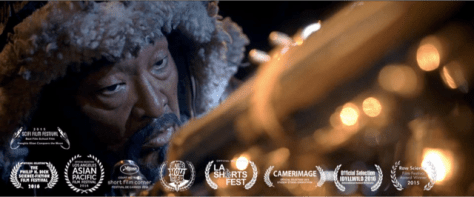
Genghis Kahn Conquers the Moon. The title of this film sounds…well, eccentric. Even its producer Zhen Li admits to being uncomfortable at first with the title and premise. He comments, “At the beginning, I though the idea was a bit bizarre, then I decided it was wacky instead of bizarre. It’s very bold to do a project about a well-known historic figure doing something against the historical fact. However, after reading the script and understanding what the metaphor implies, I abruptly changed this opinion. The story is special and unique with wit, humor, and intellectual sarcasm.” You don’t have to take the word of Li though; the achievements and recognitions of this film speak volumes. Genghis Kahn Conquers the Moon was an official selection at the Cannes Film Festival (France) 2016 (Short Film Corner), Sci-Fi Film Festival (Australia) 2015, Camerimage International Film Festival (Poland) 2016, The London International Festival of Science Fiction and Fantastic Films 2016, Los Angeles Independent Film Festival Awards 2015, Taipei Film Festival (台北電影節) 2017 Nominated for Best Short Film, Los Angeles Independent Film Festival Awards 2015 [Best Actor], and a 20th Century Fox Visual Effects Fellowship 2015 Recipient, and countless others too numerous to list. This diverse list of accolades attests to both the exceptional story and production as well as its universal appeal to different cultures spanning the globe. Celebrated actors James Hong and Cary-Hiroyuki Tagawa perform as the two main characters (Kahn and the wizard) in this film and bring the weight of their impressive Hollywood resumes to this production. Zhen Li’s confident and experienced presence is felt in every aspect of this film from the performers onscreen to its presence on the film festival circuit.

  There is no denying that VFX has created a situation in modern cinema that takes any idea a filmmaker might have and manifests astonishingly believable imagery. This eliminates the need for the viewer to suspend their belief as a courtesy to the storyline; the actions are clearly visible and believable for all to see. One bit of reality that VFX has not suspended is the truth that budgets still exist in filmmaking and it is the role of the producer to figure out what fits into the financial constraints and what does not. Because the premise for Genghis Kahn Conquers the Moon was finalized pre-budget, Zhen Li was faced with a great idea and cast but in need of ways to pay for this. Utilizing crowd funding, studio sponsorship, and other sources, Li created a plan and budget that would allow the film to possess the desired production value. The impressive look of this film allows one to easily understand that the VFX budget was both sizable and well worth it.

Revealing the evolution of his approach, Zhen states, “Our original plan was to shoot scenes in Death Valley with the spectacular landscape of an apocalypse. After some research, we found it will be over 130 degrees Fahrenheit and thus impossible for us to shoot there.  We luckily found Lucern Dry Lake which has a similar look to our vision. It was still extremely hot in summer, as there was no cloud and trees, only with direct sunlight. We rented 4 RVs and had huge fans blowing cool air off of giant ice cubes to cool down the crew.”

While this took care of the Earth scenes, the moon was the actual VFX challenge. Rather than constructing a large scale lunar surface, Li had a miniature of the moon’s topography built with a gradually-changing scale ratio. Scenes were shot on a green stage with the moon’s surface as a plate. These were then composited together in post-production. VFX supervisor Gene Warren III (whose credits include: Hellboy, The Expendables, Resident Evil: Apocalypse, Underworld, The Simpsons) professes, “Genghis Kahn Conquers the Moon is an ambitious project of impressive imagination and great execution. As a producer, Zhen Li did an incredibly amazing job, which allowed us to be able to make Khan land on the Moon.” When a film has a premise that is asking a lot of the audience, the images are often the tipping point for them to invest completely in the story.


It should go without stating that what is paramount to every production is the incredible performances of the actors. For Genghis Kahn Conquers the Moon, Li procured a cast of minuscule size but immense impact. Most notably of these were Cary-Hiroyuki Tagawa (as Kahn) and James Hong (as the wizard). The credits of these two actors spans many of the most beloved films and TV productions of the past thirty to forty years. The gravitas and levity that they brought to this film is evident from the moment they first appear on the screen. Zhen discovered that this is well founded. He notes, “They are both so established and recognizable from their many Hollywood large-scale studio productions; even so, they like to work with younger filmmakers who tell unique stories and experiment with different styles of performance. Working with these experienced actors, their devotion and enthusiasm touched me. Cary-Hiroyuki Tagawa had to wear the Genghis Khan costume including the helm, armors, and leather boots. The costume was more than 20 pounds and he was wearing it in the insanely hot weather. He was sweating like a fountain but he never once complained. He kept working until the sweat ruined his makeup and then we would have to re-do it. The improvisation between these two lead actors brought a great deal to the film.”

  Genghis Kahn Conquers the Moon was an official selection at the Cannes Film Festival; a festival so notable and respected that even those with no knowledge of the film community understand what an achievement and honor it is to have your film selected to appear there. Cannes is more than just recognition; it opens a window of opportunities to both show films and see films from the most talented filmmakers all over the world. It is a community of the upper echelon and provides inspiration and a springboard to future projects. While in attendance at Cannes to support Genghis Kahn Conquers the Moon, Li’s film attracted crowds and garnered him invitations to some of his favorite directors’ screenings, such as:  Woody Allen’s Café Society, Pedro Almodovar’s JULIETA, Asghar Farhadi’s The Salesman, Park Chan-wook’s The Handmaiden, Paul Verhoeven’s ELLE, Maren Ade’s Toni Erdmann, ken Loach’s I, Daniel Blake, and many other internationally lauded productions.

Perhaps the highest indicator of the quality of your work comes not from the critics or the box office but rather, those whom you work with in the industry. James Hong (Daytime Emmy Award-Winner and Genghis Kahn in this film) states, “It’s great to work with this young talented producer. Zhen Li will soon be known as the driving force in the film industry.”


XIANG NAN GONG ENABLES THE PRODUCTIONS THAT TELL THE STORIES OF CHINA TO THE WORLD

IMG_4375

It has been said that everyone has a story. In the world of television and film production, writers and directors are considered to be the creators of these stories. While this may be true, without the mastery of a technical director and producer…none of these tales would ever reach an audience. Having a vision is a very different thing from having the skills and knowledge to manifest it. Xiang Nan Gong has served this role for decades at Shandong Radio and Television, earning him the status as one of China’s most respected professionals in this field. During his time with Shandong he oversaw the multiple technical facets in the creation of documentary and scripted series. From massive scale variety shows to location documentary series which told the history of the Chinese people, Gong designed and facilitated lighting, staging, sound, and a myriad of other components which are essential to delivering the filmmakers vision. Xiang Nan might be the least well-known member the production team but he is definitely the most vital.

As with all cultures, the Chinese people are interested in the history of their ancestors and land. A country of such immense size and variety of inhabitants has many stories to tell. “The Story of Yili River” is a documentary depicting the Yili River from the perspective of the cheerful running water line.  It explores the Yili river people’s folk customs, rich life, and delicacy. Gong focused on his expertise as a recording engineer for this production, recording and placing the authentic music of the inhabitants of this region to tell the folk customs of the people on both sides of the Yili River.

Xiang Nan worked closely with the director and a small team of professionals in the studio to create and recreate the sounds of the Yimeng People for the “Shandong Report.” Layering a series of sounds and sound patterns, Gong created the sound design with a mixture of authentic music, location recordings, and studio sonics which depicted the hard lives of these people. This village is surrounded by high mountains and steep cliffs, streams, and other harsh natural environmental factors. To properly recreate and communicate what these inhabitants experience required a consummate expert like Xiang Nan.

As technical director and producer on Shandong’s “Sun Bin Military Strategist”, Gong aided this production which tells of a man who also lived through a difficult situation but persevered and elevated himself to the level of great respect. Famous for receiving the punishment of face tattooing and having his knee caps removed, Sun Bin later became one of the most respected and trusted strategist of his country’s era. While remarking that his difficulties were nothing compared to Sun Bin’s, Xiang Nan concedes that the equipment of the 90s which he used was less than desirable for this thirteen-episode historical series. He tells, “Historical dramas are grand in scale with many layers of sound. This is what makes it so believable to the viewer. While your conscious mind may not notice it, something in your unconscious tells you that you are really there amidst these battle scenes and different locations due to the small details. Today’s state of the art technology makes the process much less cumbersome but back when we made this series, it took many hours to achieve what can happen in minutes now. Regardless, the finished product is what is important and ‘Sun Bin Military Strategist’ was very well received and popular.”

Another of Gong’s productions, “44 Notes” received international and domestic acclaim. “44 Notes” won the first prize from the State Council Information Office and the Ministry of radio and television, the “Golden Bridge Award” in the United States, Japan, Germany, Taiwan, Hong Kong and other countries and regions, and was adapted for television drama production at the center in Beijing. This documentary shows the bicycling trip of teacher Du Xiangjun and forty- four of his students (of the Zibo Normal School in the Shandong Province) as they made their way to the capitol to perform a concert. Along the way, they sing and experience a number of hardships on their journey. Half way between reality TV and unscripted drama, “44 Notes” called upon Gong to be prepared for an unlimited amount of variables that could affect the filming and recording of this production. Its international acclaim is a testament to his expertise on this project.

As a loving husband and proud father of a daughter, Xiang Nan was especially happy to assume the duties of technical director and producer of Shandong’s “The Charm of Women.”

The program is the first female Chinese series about female characters with outstanding contributions from all walks of life. It introduces the work, study, life, and successful careers of each woman. Shot in documentary style, Gong took particular care to oversee the lighting and sound to present these women with the respect and admiration which their achievements deserve. While certainly not the most famous subjects of the many productions he has overseen, Xiang Nan professes that they are among the most important because they serve as an example to current and future generations like his daughter, exhibiting the great importance and impact that Chinese women have on their families and society.

As the professional who literally “sets the stage” and supplies the sounds on a wide variety of productions, telling the stories of China’s past and present; with international award-winning productions to his credit, the respect of his industry, and a long history at Shandong Radio and Television, Xiang Nan Gong is among the elite technical directors and producers who continues to bring new ideas to an ever expanding production community.