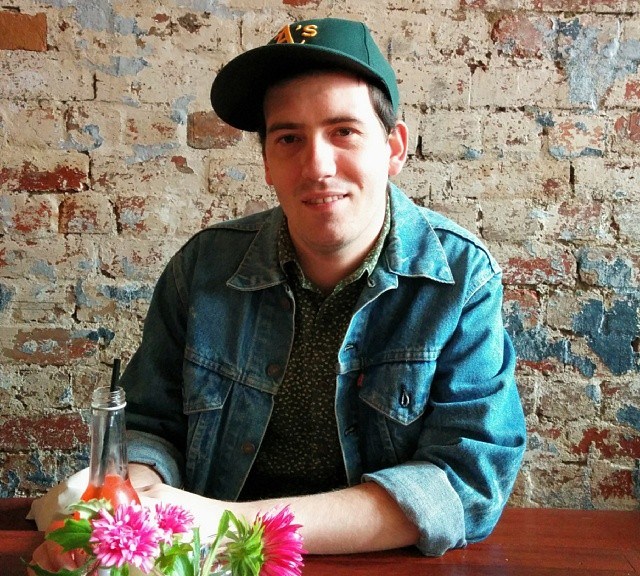
Multicultural Roots Help Actor Ashley Tabatabai Take on Diverse Characters on Screen

Ashley Tabatabai
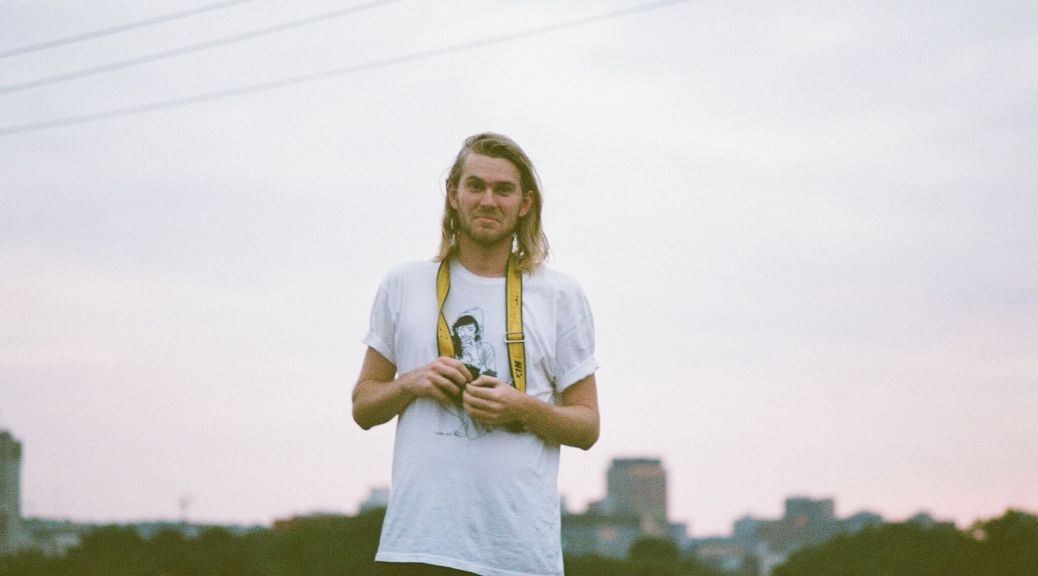
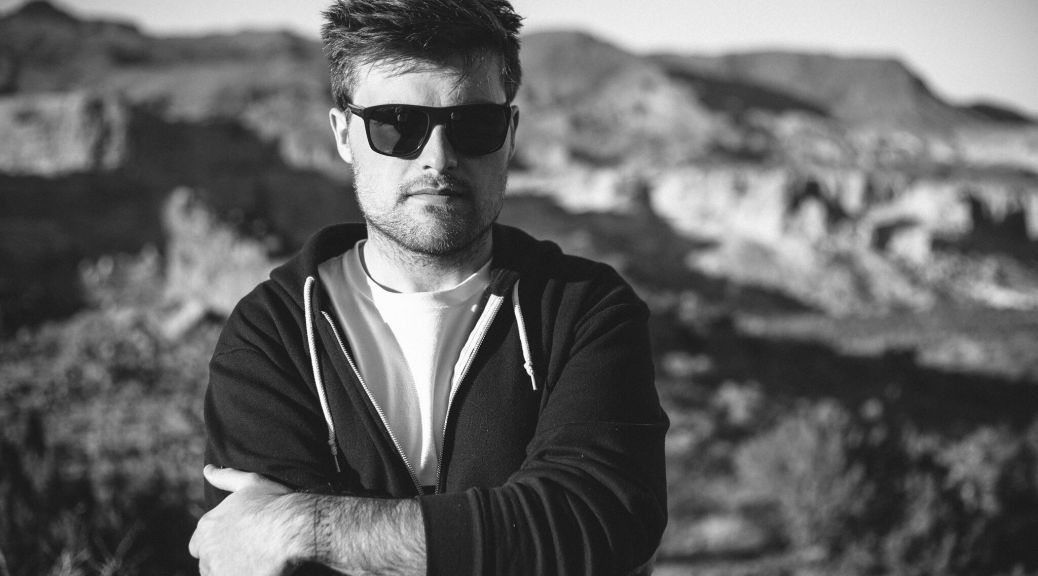
Ashley Tabatabai shot by Adam Lyons


International actor Ashley Tabatabai has benefitted immensely from his worldly background and time spent in an array of countries, surrounded by exotic and varied cultures, languages and people. Born in the UK to parents of English, German and Iranian descent, he was raised in Spain, and picked up an American accent during his years in International school. All of this lends to Tabatabai’s mysterious aura   enhanced by a grasp of dialects which make him an invaluable asset for casting directors. But it’s his raw talent as a performer that forms the keystone in the illustrious career he’s built for himself.

Tabatabai has been extremely active in the industry for years. First and foremost he is an actor, delivering powerful performances in several television series including “Color Me Grey” and “Have I Been Here Before?,” as well as in films such as “Digital You,” “Louis: Lost In Motion,” and the upcoming drama “Falsified.” His love of acting, however, stems from his passion for storytelling. That’s why the extensive list of credits he’s accumulated includes not only his myriad roles as an actor, but also his work as a writer and producer on an array of acclaimed projects.

“I operate on two fronts. One as an actor, auditioning for and booking great roles, and the other as a storyteller and producer who creates his own content. I believe the two to go hand in hand,” Tabatabai said. “I’m a huge advocate of creating original work and telling your own  stories.”

Last year Tabatabai assumed the role of undercover cop Johnny Clemence in the first episode of the upcoming series “Color Me Grey.” Surrounded by mobsters and in too deep to get out, the constant risk that Johnny will be found out grows more and more imminent. As the suspense grows to a crescendo, viewers will find themselves glued to the edge of their seats. Though everyone in this series leads a double life, this is especially true for Johnny.
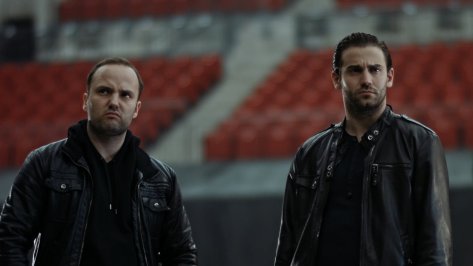
 

Ashley Tabatabai "Color Me Grey"
Scott Michael Wagstaff (left) & Ashley Tabatabai (right) in “Color Me Grey” shot by Adam Lyons


“Johnny is a really enigmatic character, quietly observant and always processing and calculating,” Tabatabai said. “This is a guy who has gone undercover to infiltrate a criminal organization, whose own members lead double lives to help do their underhand business. So in essence Johnny is operating multiple covers at all times.”

Another of Tabatabai’s films, the early 20th century period piece “Louis Lost In Motion,” blew audiences away in 2014 with its imaginative approach to storytelling. Filled with intrigue and mystery, the film focuses on two key figures in early filmmaking — Louis Le Prince and Thomas Edison.

“[This] is a film based on the conspiracy theory around Louis Le Prince, who is famed as the first person to ever record moving images on his single-lens camera. He mysteriously vanished after boarding a train, before ever getting to patent his invention,” Tabatabai said. “To this day, no one knows what happened to him or why.”

Often, it is particularly difficult for actors to play real people, contemporary or historical. When the opportunity to arose for Tabatabai to do so, he jumped at the chance.

“The period costume as well as hair and makeup really helped me to drop into the body of the character. Being immersed in the actual locations where he actually spent time was a great way to picture what his experience might have been like,” he said. “There is always a sense of pressure involved when portraying a real person, especially someone as iconic as this.”

Check out the trailer for “Louis Lost in Motion” below:

Most recently, Tabatabai stars as Javier Baena in “Falsified,” an upcoming film about the reunion between a father and the son who was stolen from him at birth. Tabatabai also wrote and produced the film, which is based on a frighteningly real epidemic of infant thefts that occurred over the course of 50 years.

“It’s very much about the dynamic between a parent and child, and in particular a father and son,” Tabatabai said, describing the stirring drama. “On another level I feel it’s important to raise awareness of the scandal that happened in Spain.”

The vast range of roles he’s portrayed speaks volumes to his talent and reputation as an actor. Eager audiences can catch Ashley Tabatabai in “Falsified” later this year, and in the upcoming film “Digital You,” which is set for release in 2017.


Brazilian actress Priscila Zortea takes Journey to the big screen

A Journey to a Journey Poster (1)
A Journey to a Journey will be screened at the Indie Gathering International Film Festival later this month.

Priscila Zortea’s first love was dancing. Growing up in Brazil, she started dancing young and a few years later, she fell in love with acting as well.

She went on to be a professional dancer for LA KISS, and in terms of acting did stage plays and musicals. When the feature film A Journey to a Journey came along, Zortea really got to show the versatile artist she always was.

A Journey to a Journey is a satire on the hazy goals that keep society running. After a brilliant university student is rejected from a prestigious research program, his subsequent investigation uncovers the shocking truth about the nameless, timeless society in which he lives. The film, shot in June 2015, has been receiving attention. There was a screening in Los Angeles last November, and this month the film will be screened at the Indie Gathering International Film Festival in Ohio, where it won first place in feature sci-fi category. The film is currently a semi-finalist for Los Angeles Cine Fest.

Zortea plays the role of Mysterious Girl in A Journey to a Journey, an important and unique role.

“She’s not exactly real, she only exists in the imagination of the main character of the film, John,” described Zortea. “It was my first feature film on a leading role so this experience will be unforgettable for sure. I love the character because she was extremely playful with John and dared him to be courageous and fight for what he believed was right.”

Zortea had the challenge of playing a pivotal role in the movie. Since Mysterious Girl is only seen by one character in the film, she had to dominate the screen in each scene to truly bring the story to life.

“I really enjoy playing mysterious characters that you don’t know exactly what their story is,” she said. “This one in particular we don’t even know if she exists, so it was really fun.”

Not only was it Zortea’s first feature film, but it was also the first film for many involved. She says this made the experience extremely special.

“Every scene of the film has a different light color and it looks great,” she added.

The role brought challenges for Zortea that she overcame magnificently according to writer, director, and producer Barry Germansky. Zortea describes a scene in particular where her character is supposed to appear to John, played by Riley Neldam, from under his bed and that one was particularly tricky to figure out a way of shooting it to make it look magical.

“It was a pleasure working with Priscila from beginning to end, and it was magical to see her bring her character to life. She appears in one of my favorite sequences in the film: when John, the main character, has a surreal encounter with her in his apartment,” described Germansky. “Not many actresses could have risen to the challenges posed by that sequence. She had to make it believable that she had entered his apartment out of nowhere; she crawls out from under his bed. She performed the sequence in a matter-of-fact sort of way, and this decision went a long way to making the sequence successful.”

Germansky says Zortea conveyed the right balance of mystery, sensuality, and sophistication to portray the role of Mysterious Girl.

“She plays the main character’s imaginary lover, so all of the aforementioned qualities were essential,” he said. “Priscila is dedicated to her art, and her passion at once fuels and cements this dedication. Collaborating with her is always a rewarding experience. I know she will show up ready to perform, and I know that she will put her entire body and soul into her performance. Loyalty is one of the qualities I admire most in a person, and Priscila has it in spades.”

PZ-058
Priscila Zortea plays Mysterious Girl in the film.

Working with Germansky and Neldam was a wonderful experience for Zortea. Because the character of John was the only character that could see her character, the only actor Zortea had the opportunity to work with was Neldam. This led to a great partnership.

“Since before the shoot, Riley and I got together to speak to Barry about the script and it was great to hear him talk about it and explain each character to us in detail. I had seen a play written by Barry in New York City but I was very curious to see what he would do with this film and his directorial debut. I think he did a great job. And working with Riley was great, he’s a very talented and well prepared actor and I think we got along really well, he made me feel very comfortable and made my work easy,” she said.

Zortea had been looking for the opportunity to be in a feature film, and was excited when Germansky invited her to act in A Journey to a Journey.

“I feel like this character is a great one for me since she’s very mysterious and it’s not specified where she comes from. The character is completely ambiguous and I feel that way in the casting world, so to find a character like that, well, it fit like a glove,” she said.

Zortea believes she has a few similarities to her character of Mysterious Girl.

“I think we’re both quite inhibited and say whatever comes to mind,” she said. “But, of course, I live in the real world.”

JAPAN IS A STATE OF MIND

IMG_0222

Everyone knows that person; the one who goes on vacation and returns with an affect. It might be a foreign accent or a way of dressing, possibly even eating patterns or mannerisms. The trait is off-putting to most of us. It can however, be a source of amusement as in the film JAPAN. The film is the brainchild of Canadian comedy group Tony Ho. One of JAPAN’s stars is the affable and amusing Adam Niebergall. Adam plays Marty, a character that all of us know. Niebergall’s performance, along with that of Roger Bainbridge [Nolan] and Miguel Rivas [Pat Dunkling], remind us of the interplay amongst a key group of great comic actors. Whether watching Laurel & Hardy, The Three Stooges, the Marx Brothers, or modern teams like Adam Sandler and Kevin Hart, the joy is always in witnessing their overcompensation towards the mundane and reminding us to laugh at the reflection of ourselves. Comedic greats allow us to remove the weight of things off our shoulders no matter what the setting. Niebergall and his costars fully achieve this goal in a hilarious take on office politics and the idea that the Rolling Stones expressed, “You can’t always get what you want but if you try sometime you find you get what you need.”

Any fan of either the British or American versions of TV’s The Office will readily be amused by JAPAN. An overly eager, somewhat politically incorrect boss like Pat Dunkling will seem incredibly familiar to fans of either show. Pat is not derivative of David Brent or Michael Scott but he is an archetype of this manner.  He is overly exuberant and we get the feeling that he very easily falls in and out of love with anything that he can take on as a persona to make himself more interesting, often to the discomfort of those around him. When Dunkling returns from holiday in Japan, he decides that he will have two interns compete for a paid position with the company via a karaoke battle. Rivas’s performance as Dunkling is well contained and not over the top, which is difficult considering his Japanese stereotype infused wardrobe, hair, and makeup. The true belly laughs are delivered courtesy of Marty and Nolan. While preparing for the competition, we see both men have a glimpse of their past as well as their future. The hyperbolic visions of both are there to tell us how we all invest a little too much of ourselves in every small event that occurs, or at least the ones we have deemed to be truly important.

IMG_0230 (640x640)

Niebergall has shown a wide range in films, although all have comedy at their core. In films like WANDA he plays a man who is at times threatening and quick to become violent; passionate and somewhat menacing. In Dissection it was fear; in Giordano it was desperation, but Marty in this film is a genuinely likeable and harmless guy. Viewer’s get the sense that Marty wants to do well but doesn’t want to step on anyone’s toes in the process…unless he is pushed, which happens in JAPAN. Niebergall (who won a Canadian Comedy Award in 2015) describes his character stating, “Marty is an unmotivated, classic privileged white male. He’s 25 years old and he’s never had anything to be afraid of except for maybe hard work. He comes from a long line of very successful men and he represents the apple that really did actually fall pretty far away from the tree, if trees could throw apples instead of dropping  them. However, when Marty’s sedentary bubble is burst by Pat Dunkling’s offer of a potential promotion he is suddenly willing to put his all into winning the competition. He feels he can make up for his whole life by trying hard for the first time in this moment. He’s a great character because he reminds me of myself and a lot of people I know who don’t really know or appreciate how good they have it sometimes.” Marty shows us that he is willing to do things he would not normally do because of his fear of failure. This includes copying Nolan’s choice of a Sophie B Hawkins song for the Karaoke battle as well as a hilarious attempt at a very uncomfortable lap dance in the work place. As with other Tony Ho films, it is the chemistry even more than the premise of the film which makes it so amusing and entertaining. Miguel Rivas [Dunkling] gives a large amount of credit for JAPAN’s success to Adam’s approach and improvising commenting, “I had a blast working on Japan with Adam and I love working with him in general. He’s super creative, energetic, and really odd in all the best possible ways. I just love his choices. I remember a point in the movie when his character (Marty) gets embarrassed so Adam stuck his whole torso in a filing cabinet drawer like an ostrich would do in order to hide. That’s such a funny way to express his shame. He’s great at adding stuff like that; stuff that isn’t already in the script. Sometimes he would do even more subtle things, like the way he wears his tie just a bit too short. It all comes together to round out a really weird, funny character. He has a really vibrant personality and it shows in his work. And his singing?? Those high notes!?? I think I remember the main reason we used Sophie B. Hawkins in the Karaoke competition was because Adam would go around singing “Damn I Wish I Was Your Lover” all the time as if it were a normal thing to do. Then we thought it would be so funny if both songs were by Sophie B. Hawkins so we chose “As I Lay Me Down” for Roger.” Roger Bainbridge confirms, “Working with Adam on the movie Japan was awesome. His voice was crucial for the piece, because he’s excellent at playing sweet, confused oddballs. He completely nailed the Marty character, this child struggling to be a grown up. His performance helped to set the tone for the entire film. Japan was one we never seemed to stop writing. Adam came up with some of my favorites, like having the misinformed Pat Dunkling character thinking that ‘massages in Japan are just sex’. We had to cut one of his favorites from the movie about Marty and Nolan venturing a guess that ‘Saki’ was ‘soccer for babies.’

IMG_0233 (412x554)

No spoilers here. Adam’s character Marty both does and does not win, you’ll have to go see JAPAN to truly understand. The film’s conclusion is not what the viewer takes away for the experience, rather it is Adams’s performance as Marty that endears you and causes you to hope for his success in spite of himself. It is easy to see the adult that is struggling to break through Adam’s stunted emotional growth. It’s the characteristic that Niebergall most enjoys about Marty. He reveals, “You can’t amuse someone if you can’t amuse yourself. I think the more personal you can make your comedy the funnier it will be. The best comedy often bares some horrible secret. If it draws people in because they are surprised to relate to something or it wakes someone up to how great it is that all people have something strange about them, it creates a feeling of sharing.”


PETER HADFIELD PUTS THE SAW IN “I SAW YOU”

The Canadian film I Saw You is about the unexpected results when one is thrown suddenly into a situation and doesn’t know how to handle things. Specifically, the story is about a young man (know in the film simply as “boy”) who falls in love at first sight. He makes a plan, somewhat spontaneously and proceeds forward, determined to create something wonderful from his passion from his new found feelings of love.  The circumstances may be different but the spontaneous nature of the film’s message resonates with its cinematographer Peter Hadfield. The independent film organization Cineworks paired up artists to create collaborative visual art pieces. The lead actor, Ashley Andel, and Mina Shum (director, writer, and producer) were paired up to make a film. One of the curators at Cineworks suggested Peter to Mina as an accomplished cinematographer who worked well in high pressure situations. Without ever having met or worked together, the two began building the visual schematic that would present the film’s storyline.IMG_3345

Peter Hadfield is a Canadian cinematographer who is more accustomed to working with projects that have a larger than life appearance. Projects like Harrison x and Clairmont the Second’s “It’s Okay, I Promise” with its fast movement, or the heavy adrenaline infused TV series Ice Pilots NWT (on which he worked as an editor) are more indicative of some of Hadfield’s fast movement work but Peter is always looking for a challenge as well as a way to expand his palette as a cinematographer; which made him eager to work with Mina Shum on I Saw You. Mina Shum is a highly respected and award-winning director, writer, and producer whose credits include (among others) Double Happiness (for which she was awarded the Wolfgang Staudte Award at the Berlin Film Festival, Best Feature Film at the Torino Festival of Young Cinema, Best Canadian Feature Film at the Toronto International Film Festival as well as multiple nominations for other films) who quickly signed on Hadfield as the cinematographer for I Saw You after meeting with him. The film called for a much more intimate feel than much of Peter’s prior work but his vision for the shots persuaded Shum; a decision she is happy to confirm was the correct one. Shum comments, “Peter’s personality is strongly displayed in his work. He is intelligent, conscientious, caring, and talented! Peter brought a unique sensitivity to the film. He has a great eye, and a strong work ethic, and most importantly for all artists: vision. His experience was a major asset to the production. When I needed advice, his perspective was always sound. His work was so strong that I was happy to include him on another production, Ninth Floor which is a feature documentary.”

I Saw You was an Official Selection of the Vancouver Film Festival, an achievement that was especially meaningful to Hadfield as the film was such a deviation from his usual large scale work. The boy, who falls in love at first sight with a girl, places an ad in the local paper stating “I saw you.” The action continues over seven days as the boy waits for a call from the girl. He unexpectedly becomes part of a community with three Chinese women who frequent the park near him. Hadfield wanted to capture the emotion and heartache of the boy by the way the shots were framed. He explains, “Most of the film takes place inside an apartment. The use of walls, doorways, and the ceiling became instrumental for metaphor in the frame. I would fill half the frame with a wall to make Boy feel claustrophobic, or frame him in the kitchen through the doorway to make him feel stuck in his situation. I used unconventional and awkward framing, excluding parts of the boy’s face from the frame to make his discomfort more apparent. Towards the end of the film the framing becomes more conventional as Boy’s experience becomes brighter, until we see a full shot of the boy when he bumps into the girl again.” Lighting is a part of cinematography that Peter is especially interested in and recognized for his mastery. Director Scott Cudmore (who used Hadfield as his cinematographer on the “It’s Okay, I promise” seven minute opus music video by Harrison x and Clairmont the Second) notes that, “I am always thrilled with Peter’s understanding of composition and light. It inspires me as a director and always makes me want to work with him again.” Hadfield confirms his preoccupation with this aspect of his job noting, “One of the largest challenges for I Saw You was shooting in a cramped apartment without much space for lights, not to mention the camera. Using practical lights in the frame as well as sculpting available light became essential to light Boy (the film’s main character). A fun challenge! Mina Shum was very flexible and collaborative. When I made bolder suggestions she was totally game to use them. My favorite part was shooting inside the apartment at night. It made for so many opportunities to light the apartment in interesting ways and create interesting frames. Since ninety percent of the film took place in one small apartment, we had to get very creative in finding new angles.”

IMG_3355

Peter is continually searching out new ways of approaching his craft and challenging himself. Utilizing his availability to other filmmakers and even investigating things as mundane as podcasts to increase his awareness of all emerging approaches, Hadfield is constantly improving himself.  The aforementioned director Scott Cudmore recognizes this attribute in Peter and is currently making use of him again on the upcoming video “Needs” for the band Odonis. Peter reveals, “The music video has a very loose narrative of a corporation developing Artificial Intelligence, the AI becoming out of control and the corporation reacting to the problems than ensue. Long camera zooms and intense color, inspired by Dario Argento’s Suspiria and Francis Ford Coppola’s One From The Heart are present throughout the video. The vivid color palette and ominous, constantly zooming lens makes for a very dark and dramatic video. I was stepping out of my comfort zone on this one. I usually prefer to light naturally, or use available light. I poured over different images from both photographers and cinematographers, trying to discern how the artists I respect achieve a look similar to what I was going for. I love being forced to grow as a cinematographer; both myself and those I work with end up with a better product if I am stretched beyond my current limits.”

Actor and writer Adam Niebergall does dark and witty humor with Tony Ho

7edit2
Adam Niebergall formed Tony Ho with high school friends.

Laughing feels great. But one feeling that may be better than laughing is, in fact, making others laugh. It can be extremely difficult to do sometimes, but fills you with pride and joy. And then, once you get the hang of it, you can be unstoppable.

That is the path that comedy writer and actor Adam Niebergall chose in his teens, and continues to shine in the industry today. Originally from Ottawa Ontario, he has gone on to win a Canadian Comedy Award in 2015 as a member of sketch troupe Get Some. Get Some also won Toronto Sketchfest Best of the Fest that year, as well as Best of Fest at Montreal Sketchfest in 2016.

Niebergall realized his passion while attending Holy Trinity Catholic High School, where he joined the school’s improv team.

“I started acting in the drama department at my high school. I always had a knack for making people laugh so I got into it so I could have a platform to do that,” he said.

While attending school, Niebergall got to know Roger Bainbridge, and later they formed the sketch group Tony Ho.

“I actually saw Roger perform at a pep rally before I knew him and he made me die laughing. He was a couple grades older than me but I knew I wanted to meet that guy and make him my best friend and I knew I wanted to learn how to do that,” described Niebergall.

Tony Ho is now an award-winning comedy sketch group, and with film work film work featured on Funny or Die, VICE, MuchMusic, Ain’t It Cool News and at the L.A. Comedy Shorts Festival. Bainbridge says working with Niebergall is always stimulating and engaging.

“In scene work you know you can really lock in with him and commit to that reality. I’ve been friends with him a long time and it’s exhilarating to me to look into his eyes and see that he’s become somebody else. He has an affinity for the bizarre, which means that as both an actor and a writer, his ideas feel spontaneous and fresh, adding a strange and surreal spin to what would otherwise be the everyday. That is where he excels- when twisting an otherwise normal plot or role into his uniquely “Adam” style. He tends towards the darker side of funny, but he’s always sympathetic too. He loves to make you love a character and feel overwhelmingly sad for them at the same time. He works hard and he trusts his instincts. His efforts are self-assured and thoughtful. All this makes it really great working with him but the most rewarding part is that he never stops interesting me,” described Bainbridge. “What makes Adam such a talented actor is his skill at making the standard unique. He always seems to bring a version of the character to the table which is both exactly as one would imagine it, while at the same time being something only Adam could have come up with.”

Niebergall has worked with Tony Ho for going on 6 years, performing all over North America including theSan Francisco Sketchfest, UCB Sunset and UCB Franklin and Nerdmelt Sketchmelt in LA, Philadelphia Sketchfest, Toronto Sketchfest, LA Comedy Shorts Film Fest, and making short films and music videos.

“We’ve spent so much time together and really learned what we each do best and I’ve really learned from them about keeping a high standard for my output,” said Niebergall.

Not only is Niebergall a talented actor, but also an exceptional comedic writer. His work directly contributes to Tony Ho’s success.

“As a writer, you want to write for him because you’ll get to see the part of him that inspires you but then he adds his strange touch and the result is better than you could have hoped. He sees the characters as though they are real people but he has the propensity to add such strange quirks and qualities and still make them feel real – with odd human ticks, with warts and all, with secret inner sadness or pasts that affect the present – all of his choices are completely insane but somehow they all work perfectly,” said Bainbridge.

Actor and comedian Miguel Rivas also worked alongside Niebergall with Tony Ho. Rivas describes Nibergall as vibrant and a pleasure to work with.

“He works hard and he’s positive on set which is really important. The days are long and it helps being with him because he’ll make you laugh while you work. I really believe in concentrating and maintaining a good attitude on projects, especially when it’s harder – it’s hot, it’s late, everyone’s hungry etc. – and Adam knows when to buckle down.  That being said, nobody makes me laugh harder at 6 in the morning after we’ve been shooting overnight,” said Rivas. “I think Adam’s natural gifts are what impress me most about him. I think he’s technically sound, but I’m blown away by his raw talent. He has a huge interesting personality and he’s naturally very funny, confident and likeable, so Adam has so many tools to use when he’s acting. It allows him to be interesting on screen with ease because it suits him. He can make choices that are completely unique to him and they come off very natural for his characters. Ultimately this means he can put so much of himself into his work as an actor and always benefit the project. He’s capable of being transformative to be sure, but I love watching his acting for the personality that belongs to him and only him.”

Tony Ho continues to be recognized both in its home city of Toronto and internationally for its dark and humorous sketch comedy, with Niebergall at the forefront. However, Niebergall says the friendships formed with the people he works with are what makes it so easy.

“Working with Tony Ho is awesome. We all really agree on a certain sensibility and it has made making things together a real fulfilling experience. We all agree it’s important to do things differently and we want to make stuff that stands out,” he concluded. “We’re also really good friends which helps.”

Q&A with Producer Mariana Wahrhaftig

Creating art about art can be a tricky thing. Making a music video that accurately reflects the emotion and integrity of the music is not easy. Directing them in a style that conveys the meaning of the song is art itself, and very different than directing a television program or film. Mariana Wahrhaftig knows this well.

Wahrhaftig is extremely versatile. Not only has she worked with many rising artists on music videos, and ventured into the world of video games. Fans of the games can be extremely critical of the score that accompanies it, and Wahrhaftig, being a fan herself, knows how to deliver.

Wahrhaftig’s lifelong appreciation of music and film have shaped her talents in the combination of the two, which is expressed in the interview below.

In the last year, Wahrhaftig had the opportunity to direct and produce music videos with musical talents such as Chandler Juliet and RVLS, as well as produced The Legend of Zelda: Symphony of the Goddesses third season, working with the world renown gaming franchise Nintendo.

Wahrhaftig is a name to look out for, and you can find out more by reading our exclusive interview.

Where are you from? When and how did you get into producing and directing music videos?

MW: I was born and raised in Curitiba, in Brazil. Growing up. I used to love watching music videos on MTV, it was the perfect way to learn about who the people behind the music were. I moved to Canada when I was 16 to pursue my studies and career in film and video, and the first job I got was as working on a music video for Eric Speed, a violin player. And after that I was hooked. I worked with the same director for a while until I moved to Los Angeles when I started directing and producing them. I love everything about them, the productions are short, fun and you get to be creative with what you do.

Can you tell us a little bit about the projects you’ve done?

MW: My first video as director/producer was for the band RVLS, and a few others were for Chandler Juliet. Before I moved on to work at The Legend of Zelda: Symphony of the Goddesses, where I was a producer for season three, where I got to work with another passion of mine: video games.

What makes you pick one project over another?

MW: I try to work with things that I’m interested on, because that’s how I know I’ll give my best work. I like the artists I worked with, I enjoy their music, and that way I feel confident that I am able to put out a good piece of work. With Zelda it was no different. I grew up playing the Majora’s Mask game, I had the game’s soundtrack and arrangement album by Koji Kondo, the composer, and so to have the opportunity to create a piece that encompasses the feeling of the game, and have it approved by Mr. Kondo himself is truly something I’ll keep in my heart for the rest of my life.

What is your favorite project you have worked on, and why?

MW: I love every project I worked on, I get attached to them on personal level. But producing the Zelda symphony was special to me. I got to produce the new musical arrangement and video from the Majora’s Mask game, which is a dream come true. I also got to write the script and direction for the videos that we recorded with the Zelda creators themselves. I wrote something for my childhood idols! I don’t think I can top that off!

What would you consider your strongest qualities in your field?

MW: My wild imagination? (laughs). I like to push things beyond what’s normally possible, and so it does help a lot. On my first video, A Get Away Plan for RVLS, I don’t think any of the band members knew what they were in for when we started. They told me their idea, what they wanted to do for the video, and what was originally supposed to be a confetti fight in a desert turned into a giant confetti party at the Sepulveda dam – complete with confetti guns! It was really cool for me take their idea and go crazy with it. I’d say they were very happy with the end result.

Who have you worked with that has inspired you and why?

MW: Both RVLS and Chandler Juliet are phenomenal artists that I have a lot of respect for. But I think what had a great impact in my career was the music video director I worked with in Canada – Pierre-Luc Bucher. He was the person that took a risk in hiring someone new to the industry as his production manager and assistant director, and he respected me in my position to do my job. Having someone believe in you at the beginning goes a long way to that person’s career, and I’m thankful for having that.

What projects are you currently working on or have coming up?

MW: Chandler and I are putting the last touches on her upcoming video The World’s Not Ending and we’re pretty excited to release it. I also will be running a video competition for an NGO on water awareness, which I’m really excited about.

What are your plans for the future?

MW: Hopefully more music, video games, and music videos.  I can’t have enough of it in my life. I hope I get to do more projects and collaborate with some awesome artists.

Why music videos instead of films or television programs?

MW: It’s the perfect place for me to work with my passions. I get to mix music with visual productions, and I love everything about that. It’s also the fact that the productions are so short, that you have the flexibility to constantly do different projects, and work with different artists. It’s the perfect balance!

EDITING THE MORE SENSITIVE PARTS: LUIZ SCHIEL

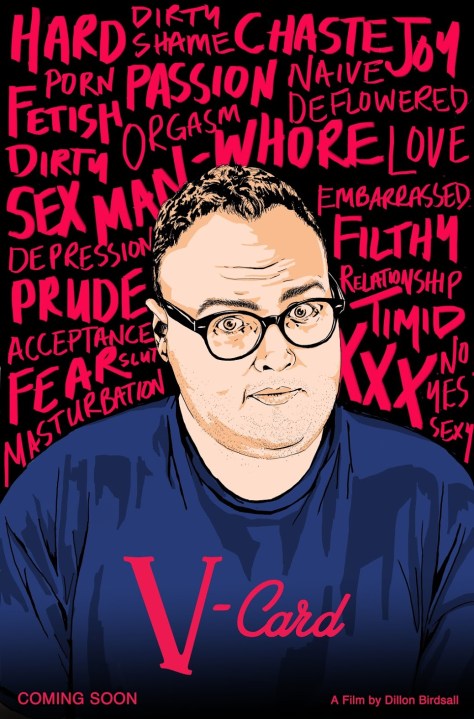
Technology has brought the entire world closer. Social media such as Instagram, Snapchat, and Facebook have given a global platform to anyone who desires it. What one gains in exposure, you lose in privacy. The generational difference of opinion on this is vast. Older generations are wary while younger generations don’t even think about an idea as archaic as privacy. It’s certain that different ages and different cultures feel differently about discussing the topic of sex. V-Card the Film is a perfect example of how society’s discussion of the subject has changed. The film’s editor Luiz Henrique Schiel Gigolotti understood that he needed to be as precise as a surgeon to navigate the subject matter of which could both attract or offend differing viewers. The duplicity was challenging for Luiz as he wanted the artist’s message to ring true while still representing the humor and real social stigma associated with the main character Dillon’s situation. The proper editing can completely change the audience’s decision to respect or feel pity for the protagonist.

IMG_3334

V-Card is the story of Dillon, a twenty-three year old virgin. Dillon has been trying but things haven’t worked out as planned. Depending on your cultural and religious background you might be offended or intrigued by his story. Luiz’s job as an editor is to help the filmmakers find that middle ground that interests everyone without turning them away. Dillon is a likeable, early 20’s New Yorker with a job, friends, & the things that most of us desire. Dillon is the film’s proxy for all of us to examine how we feel about virginity. The question put to the audience is whether we make our own decision about when we lose it or if we feel pressured by society to make it occur within a certain time frame in order to feel “normal.” The documentary examines Dillon’s life and feelings as well as those of random interviewees (and some scheduled ones) from many different cultural, racial, sexual, and social backgrounds. The star and writer of V-Card is Dillon Birdsall. When Dillon approached Luizto be the film’s editor, he was eager to accept. Gigolotti recalls, “When Dillon asked me to edit V-Card, I didn’t think twice about jumping into this project. The challenges of editing a feature documentary are something that I really get excited about, even more so with a film like this that so openly discusses a subject that many people are still uncomfortable talking about on a personal level.”

Editing is sometimes thankless. When it is done poorly, the audience is aware of it and a film seems cluttered and cumbersome. When editing is highly professional, you become lost in the story and don’t notice the skillful editing. An editor’s job is not for those who require constant praise. Still, editors are just as much a part of the creative process as the cinematographer, director, and others involved in filmmaking due to the fact that they have the ability to enhance the emotional impact the audience feels towards the action on screen. In a film like V-Card the emotions are varied and the different people involved in the discussion are very numerous. Once the actual filming has taken place, it’s Luiz’s job to connect the audience with Dillon and his interviewees, even when they sometimes only appear for seconds. Jamaal Green is the director (nominated at the Martha’s Vineyard African American Film Festival in 2014 for Chronicles of a Profiler) of V-Card the Film and the person who most closely works with Luiz on the tone set by the film. Jamal praises Gigolotti’s work stating, “Luiz is a vital asset to any film. He has become my go to person for editing and ‘After Effects.’ I can think of three specific projects we worked on in which his abilities took the films to a higher level. A good editor can present what you have and make it work, but a great editor will make what you have filmed look even better. That’s what Luiz has done with V-Card. He is an amazing artist and a pleasure to work with.”

In terms of his involvement in V-Card, there were some obvious challenges and other, less expected ones for Gigolotti. He explains, “Editing V-Card was a huge challenge in my career. When we talk about virginity or sexuality, there is always some concern to not offend the person we are talking to. In this specific case, I needed to make sure that the edit and the graphics are not offensive to the audience.” Far from offensive, thanks in large part to Luiz’s editing, V-Card achieves a heartfelt tone. Rather than leading the viewer to any judgment of Dillon, we are warmly invited to question our own experiences and how we perceive others who may have had radically different entrees into the world of human sexuality. The subject matter of the film could have taken several different and more highly salacious slants but Gigolotti worked with Dillon and Jamaal to place the topic in a nicely gift wrapped present with a colorful bow on top. That colorful bow was realized in the formatting of animation sequences. Luiz’s skill at combining real life footage and animation is a primary reason that he was asked to edit V-Card the Film. Dillon Birdsall, writer and star of V-Card the Film comments, “The main reason I hired Luiz for the film is because he is a fantastic editor, especially when it comes to after FX and animations. When we first seriously considered the idea of intermingling animation to the film, it was Luiz’s ideas and expertise that enabled us to successfully achieve the results we wanted. We needed a light heartedness that wasn’t gimmicky and also wouldn’t take you too far away from the storyline.  He has been a vital part of the documentary and brings a ton of great ideas and enthusiasm to the project. I’ve known him for a little over two years now and I’ve become a huge fan of his work. I feel very lucky to have worked with him and I definitely hope to do so again.”

IMG_3335

In addition to another documentary currently in production (Luiz admits to being smitten with this approach to telling a story), advertisements, and other films; Gigolotti has most recently been editing for Martha Stewart’s Living. The diversity and amount of work he finds in New York these days reaffirms his decision to move from Brazil to work in the US as an editor. He recognizes, “There are so many great artists, directors, and all around professionals in the industry here in the US. It seems like I am challenged everyday by people who only want the best. That’s what I always have wanted to be a part of, a community committed to always bringing their best.”


LINZEE BARCLAY CHALLENGES HISTORICAL STEREOTYPES IN “HOMEFRONT”

Love and war are the two most prevalent themes in cinema. Perhaps that is because everyone has been touched by one of these factors, all too often by both. The later makes for great action and outrage; portraying the humanity and inspiring sympathy for those on the unpopular side of history can often be a herculean task. Linzee Barclay understands this very well. In 2015’s HOMEFRONT she plays Elisabeth; a mother, wife, and German caught in the middle of one of World War II’s worst battles. The film had many lofty goals, not the least of which was being a bi-lingual with both English and German dialogue. HOMEFRONT won Best Picture, Best Sound, and Best Production Design (as well as nominations for Best Director and People’s Choice) at the Sheridan Screen Art Awards in addition to being screened at the Oakville Film and Arts Festival and the 2015 Buffer Film Festival in Toronto.

The setting of HOMEFRONT is the Ardennes Forest and also the location of WWII’s “Battle of the Bulge.” The film is less about this pivotal confrontation between German, Russian, British, and American forces than the war’s toll on the people in the Ardennes. 1944 was several years into the war and less than a year before its recognized conclusion. All sides had been exhausted and had recognized their losses. For Linzee’s character Elizabeth, it was the realization of many things. Exhausted by a long war, she understood that the war had only brought destruction to her country and her family. Her husband was likely dead and there was danger all around her and her son. When a wounded American soldier finds his way to her home, with an SS officer on his heels; Elisabeth and her son Fritz (played by C.J. Dube) are convinced to protect him at their likely personal peril. Finding the caring and altruistic side of a likely former Nazi sympathizer is not an easy goal for any actress. HOMEFRONT writer and director Jamie Banks confirms that Linzee was an obvious choice for the role of Elizabeth stating, “She just blew me away in casting. Linzee can convey so much with just her face. In real life she is bubbly, outgoing, funny, yet when she became Elisabeth she truly was a different person. She executed the German Dialogue so flawlessly that even Germans were praising the German dialogue in the film. Linzee is extremely intelligent. This allows her to see what makes a character unique. I immediately knew that she was our Elisabeth.”

IMG_3218

The intensity of the storyline needed to be matched in the actor’s performances. Producer Sarah Thompson was looking for something strong, convincing, and understated in Elisabeth. Although Barclay’s execution of the dialogue was impressive, Thompson was looking for an unspoken sense of depth and intensity. Sarah notes, “Linzee brought an entirely new side to Elisabeth that was not on paper. The physicality and mannerisms that she introduced played a huge part in the audience’s reaction to her. The amount of passion and emotion she gave off with just a look sold us. Her eyes said it all. Her interpretation from just the sides let us know that she would give us endless possibilities.”

HOMFRONT may be a war film but it doesn’t glorify war. Rather than an encouraging tale, the film depicts how some people lose the ability to care for others and the desperation with which others cling to it. As a mother who takes part in a ruse to protect a wounded soldier who is by definition at the time, the enemy; Elisabeth protects the American in an attempt to cling to her good side, while risking her own life. Above it all is her goal to protect her son. Barclay’s convincing portrayal brings the viewer to challenge the dichotomous relationship of what historical propaganda may tell us about someone and human nature itself. Jamie Banks attributes much of the film’s success to Linzee stating, “Linzee provided an intense emotional authenticity to the film that allowed it to succeed. In a very real way, she made the film. Any of the intense emotions a viewer feels are channeled through Linzee. She draws you into the film and makes the danger real. She makes you think, ‘God, she’s in a dangerous situation!’ In any period piece, immersion is crucial, and Linzee provided that immersion for our film.”

Barclay has been a part of many award-winning films and television presentations including The Real Inglorious Bastards which won a 2014 Canadian Screen Award & an Official Selection at the Cornwall Film Festival for Frontier. The Screen Media Award which HOMEFRONT received was particularly meaningful to her. The actress explains, “Elisabeth was very special to me. There are things about her that we can all relate to like loving your family and wanting to protect them. It was the differences that we don’t all share that are the joy of discovering and portraying a character like her. I’ve studied a lot about history of that time and women’s roles in Nazi Germany. My knowledge of the German language was obviously a major asset but, to challenge the stereotype of someone like Elisabeth can be a great discovery. I had to be very specific with her body language and the physical approach to her. The key to it is to finding the humanity. Everyone is flawed in some respect. When a character seemingly ‘wins’ in a story, they are also ultimately losing something dear to them. One just takes precedence over the other.”

Although it wasn’t “method producing” or method acting; the film’s location, in a cabin, in Canada, in the dead of winter…obviously aided the cast of Rylan Wilkie, Mike Koras, and CJ Dube in accessing the harsh message of the storyline. Linzee confesses, “On the third night around 3am actor Rylan Wilkie (who played a very convincingly intimidating SS Soldier) and I got a case of the giggles during a take and couldn’t shake them for a bit. Unfortunately for him, he was standing outside in the dead of winter waiting on an apple box to come in to the cabin and I couldn’t open the door without laughing at him. Yet, when it was time to bring the emotional gravitas of the character to the scene, Barclay was always prepared. Producer Sarah Thompson confirms, “Linzee’s portrayal of Elisabeth and the raw emotion she brought to the film is one of the main reasons the film had such a strong reaction from audiences. The way she openly wept while holding her son at the end sent chills through people’s backs and left a lasting impression that could not be shaken.”

IMG_3217

Within days of wrapping HOMEFRONT, Linzee was cast as Sharlene in the CW series Reign. Her portrayal of this sassy, cockney harlot, in many ways the comedic relief of the series, is in sharp contrast to Elisabeth and the weight of her circumstances. Both characters are equally convincing in the hand of this adept actress. Also in Linzee’s immediate future is her appearance on the CBC TV series Murdoch Mysteries. This Canadian actress continues to cross character borders and national borders with a variety of productions, following her muse as fans follow her career.

Music Writer Nick Fulton’s Manifest Destiny

Nick Fulton has deftly parlayed his personal interest in pop music into a successful career as a professional writer. The New Zealand-born Fulton’s concise, insightful style, impeccable taste and natural affinity for his subject have enabled him to go, in a decade’s time, from startup blogger to internationally recognized voice. His groundbreaking Einstein Music Journal was one of the first web presences in the remote island nation and virtually introduced the music blog format there.

For Fulton, it came together almost by chance. “I started writing after a friend encouraged me to start a blog,” he said. “In 2004 very few people in New Zealand were blogging, so it was pretty exciting to enter that space. It also meant that the people I connected with online were mostly outside my local community. I made friends and connected with other writers in Sydney, Los Angeles and London.

“Around that time I tried to connect with a couple of print publications that were based in Auckland, which is where all the major publications in New Zealand are based,” Fulton said. “But I was living in Wellington and struggled to find my way in. As a result, I started writing more frequently on my blog, which later evolved into Einstein Music Journal (EMJ). I got another writer on board and used Myspace to reach out to bands and music blogs in other countries. Before long we had a steady readership, and when we eventually launched Einstein Music Journal in 2006 we were able to throw a massive party and sell out one of Auckland’s best live music venues.”

“We operated slightly differently to the traditional music media,” Fulton said. “We didn’t always go through conventional channels to secure a story. We quickly gained a reputation for being bold and enthusiastic, and many publicists and record labels responded well to us. On several occasions we managed to secure stories that much bigger publications and other established writers in New Zealand missed out on.”

From this somewhat cheeky Do-It-Yourself start, Fulton, thanks to a reputation which was gaining respect and admiration beyond New Zealand, found respectability being thrust upon him and soon eschewed such pop guerilla tactics.

“My biggest achievement is finding an audience for my writing outside of New Zealand,” Fulton said. “With EMJ, I had regular readers in New York. LA and Australia. More recently I’ve worked with influential writers like Jessica Hopper, Cuepoint’s Jonathan Shecter and co-authored a column with hip hop writer Michael ‘DJ’ Pizzo. Being personally asked by Shecter to contribute to his publication was such an honor, and one that I will never forget. He wrote to me after I self-published an article on Medium, asking if he could republish my story on Cuepoint and if I’d be willing to join him as a writer and editor there.”

This natural momentum has served the writer well, and Fulton’s aim is always true—his 2015 Pitchfork magazine editorial “It’s Time to Put Our Cameras Away” (which called for a cessation of fan cellphone recording at concerts) not only inspired a contrarian clickbait response from venerable NYC weekly the Village Voice, it coincided with the practical use at numerous music and comedy performances of a variety anti-cell phone technology, a practice that is steadily growing.

“I like writing about a potential trend, or an unusual observation,” Fulton said. “My Pitchfork Op-Ed started a healthy debate online and had an overwhelmingly positive response. Pitchfork‘s Facebook and Twitter received a lot of comments, mostly agreeing with me, which was good. The only real dissent was shown by that writer at the Voice, who penned a response telling people to keep doing whatever they wanted. I think he thought I was being too politically correct.”

With a kaleidoscopic range of subjects from world class pop superstars to offbeat independents like Italian noise rockers Father Murphy, offbeat New York hip-hop group Das Racist, New Zealand filmmaker-music video director Simon Ward or a behind the scenes piece of music studio production Fulton’s analytical easy going methodology always holds the reader

“Nick’s a great guy and a great writer,” broadcaster David Klein said. “EMJ was one of the key music blogs in the country, and one that was a real defining authority. We met when he was a guest on a radio show I hosted. It was awesome to have Nick onboard, he always presented interesting new music, and could speak about it with a good understanding of trends, composition, and just the way music appeals to you at an emotional level. I’d trust Nick’s taste, and the quality of his writing is what has made him so successful. And he is always expanding his range –I just read something about music studio production he’d written a few weeks ago, and it was great.”

Now an almost ubiquitous figure in the local music scene, Fulton’s achievements and variety of outlets continue to grow.

“Being viewed by the public as an expert in my field is one the highest honors,” Fulton said. “I’m proud of the times I was invited on to radio shows, to comment publicly about a trend in music or share my thoughts on a popular band. Now my goal is to become a trusted voice outside of New Zealand and Australia. I’d like to immerse myself in the American music scene for a while and soak up as much knowledge as possible. I got a taste of it all when I visited in 2012, but there’s still so much to discover and write about.”

Fulton’s elegant yet hard charging style has taken him far, but the writer is just now really coming into his own, and this success is very easily explained.

“Working with Nick was great,“ editor Katy Hall said. “He’s the kind of writer you hope will stumble into your inbox at some point but rarely does. He’s personable, professional, knows how to stick to a deadline, and most importantly, he always delivered really high-quality work. It was engaging, tailored to the publication’s tone and needed no editing. I don’t want this to sound cheesy or overhyped; it was just the reality of working with a great writer.”